Spending evenings outside without getting eaten alive: that’s the goal of anyone looking to get rid of mosquitoes outdoors. In 2025, the solutions available go far beyond traditional bug sprays. At Garden Reclaimer, manufacturers of innovative, eco-friendly mosquito control stations, we help thousands of homeowners achieve this every year. This comprehensive guide covers every method, from mosquito traps to natural remedies, to help you choose the best approach for your outdoor space.
Why are mosquitoes invading your garden?
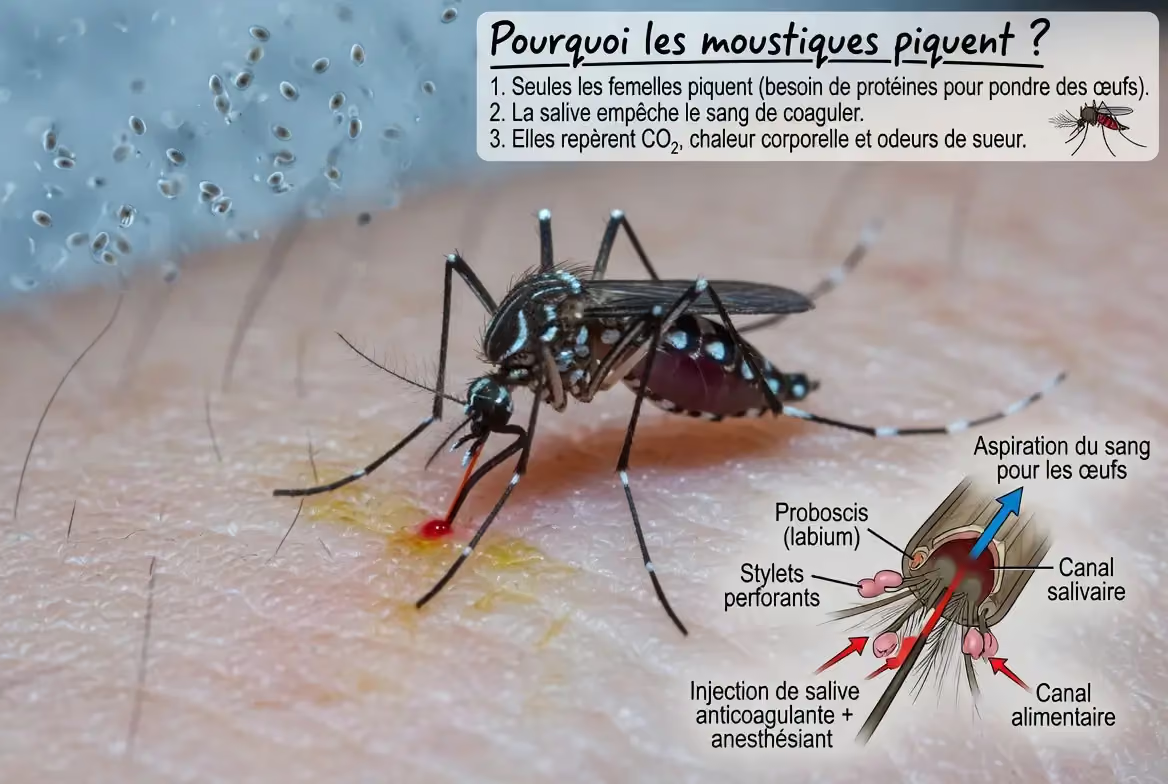
Understanding mosquito behavior is the first step toward effective control. Mosquitoes are attracted to exhaled carbon dioxide, body heat, the scent of sweat, and dark-colored clothing. Only the female mosquito bites: she needs blood to develop her eggs. Males, on the other hand, feed exclusively on nectar.
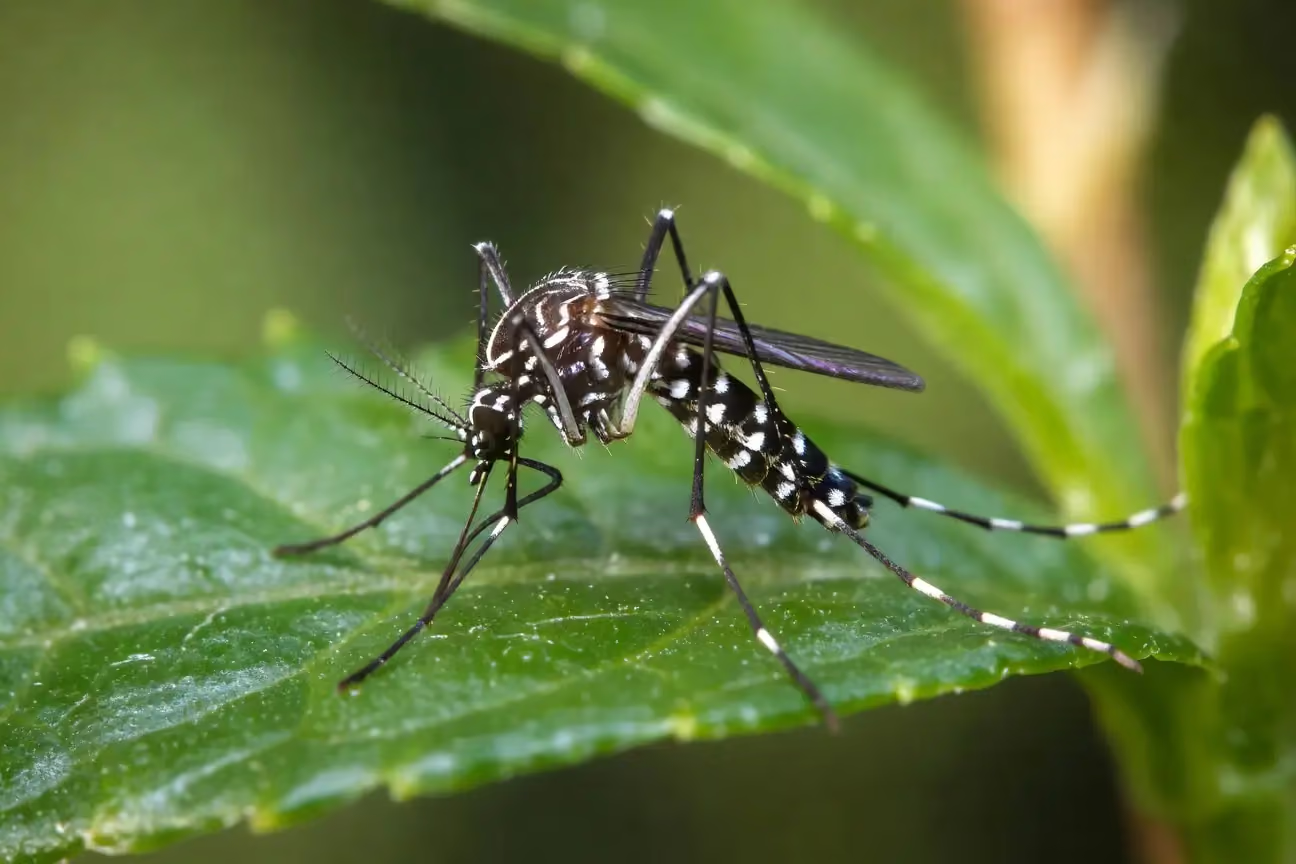
In France, over 60 mosquito species have been identified, including the notorious tiger mosquito (Aedes albopictus), which is present across more than 78 départements according to Anses data (2024). This invasive species bites during broad daylight—unlike the common mosquito—making outdoor protection even more essential.
- Carbon dioxide: the primary attraction signal for female mosquitoes looking for a host
- Heat and humidity: watered and shaded gardens are the preferred habitat for mosquitoes
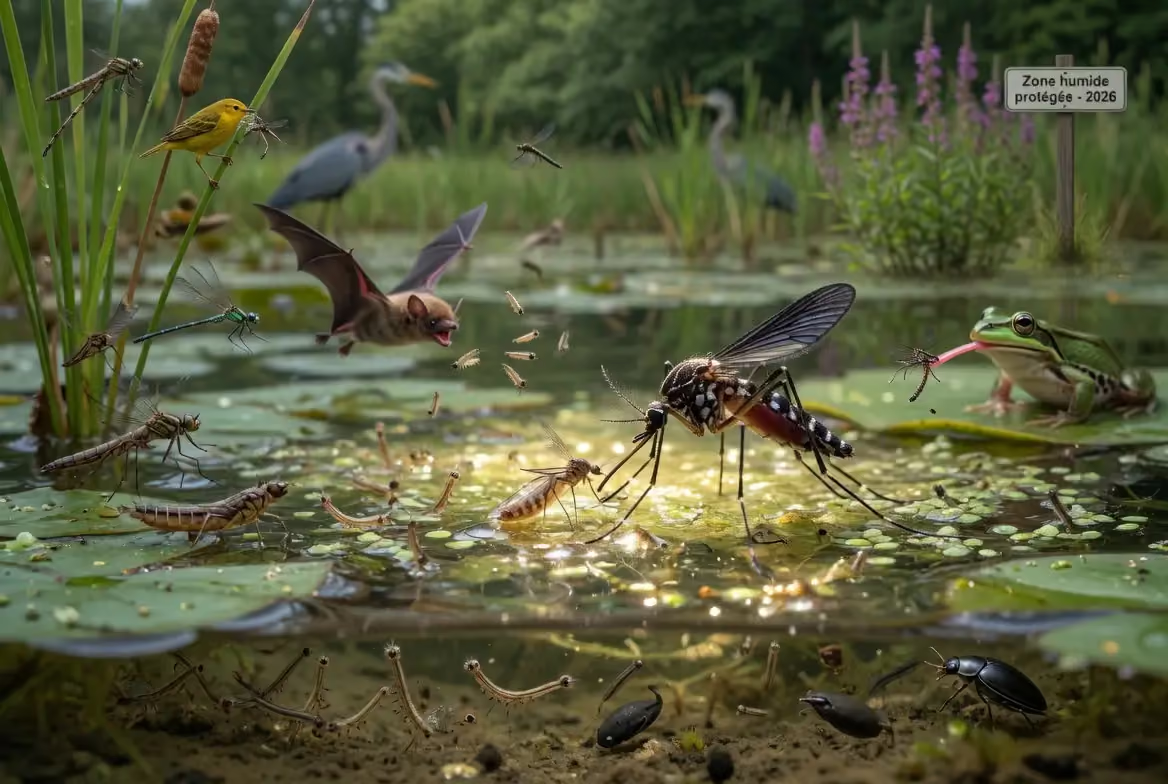
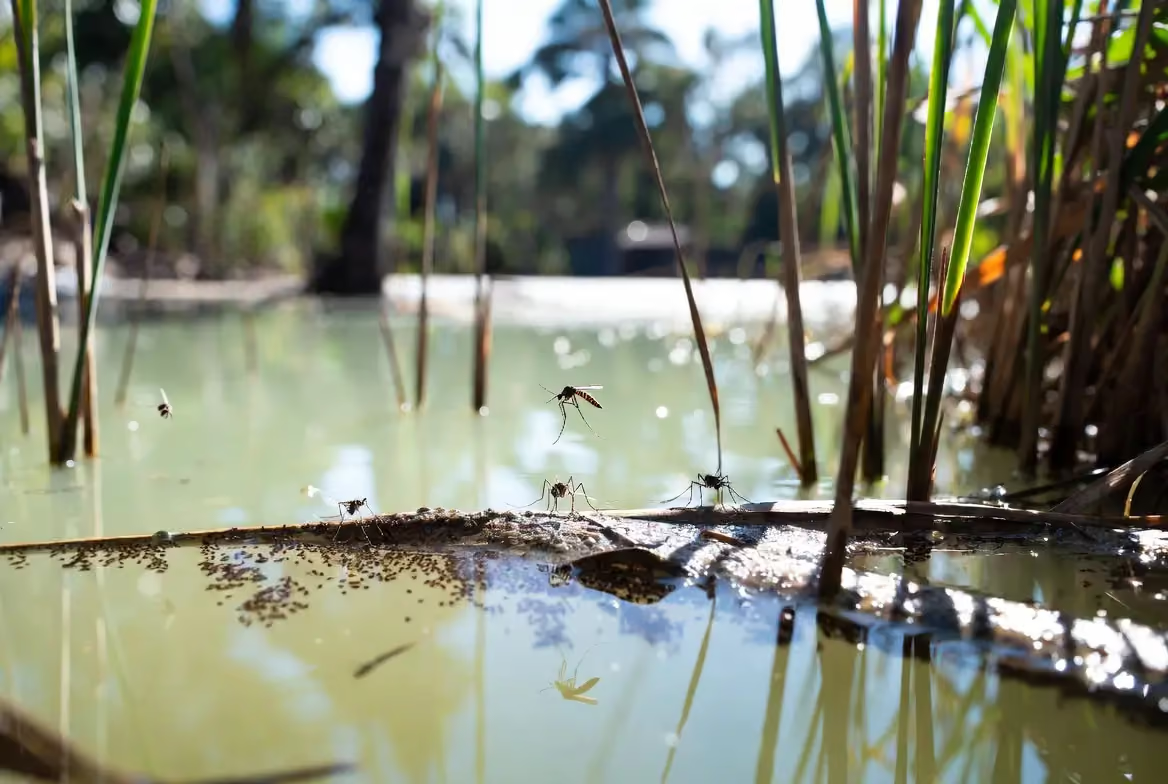
- Stagnant water: one centimeter of water is enough for mosquitoes to lay their eggs
- Dense vegetation: it provides shelter and coolness for adult mosquitoes during the day
Stagnant water: how to eliminate mosquito breeding sites?
Before turning to any mosquito control device, targeting the source is crucial. Mosquitoes breed in standing water, and their life cycle from larva to adult takes just 7 to 10 days in favorable conditions. Eliminating these breeding grounds directly reduces the mosquito population in your yard.
Here are the main breeding grounds to remove or treat regularly:
- Plant saucers: empty them at least once a week, especially after rain
- Pot bases: often overlooked, they accumulate residual water that is perfect for larvae
- Gutters: clogs create a permanent reservoir; check them at every change of season
- Tarps and water collectors: always cover them with a fine-mesh net
- Unused pools: treat the water or drain it completely
Eliminating stagnant water around your home is the most economical and sustainable anti-mosquito measure. It acts directly on mosquito larvae before they even become adults.
What are the most effective outdoor anti-mosquito devices?
Outdoor mosquito control devices have evolved significantly in recent years. Today, they fall into three main categories, each designed to meet different needs and cover different surface areas.
CO2 and heat mosquito traps
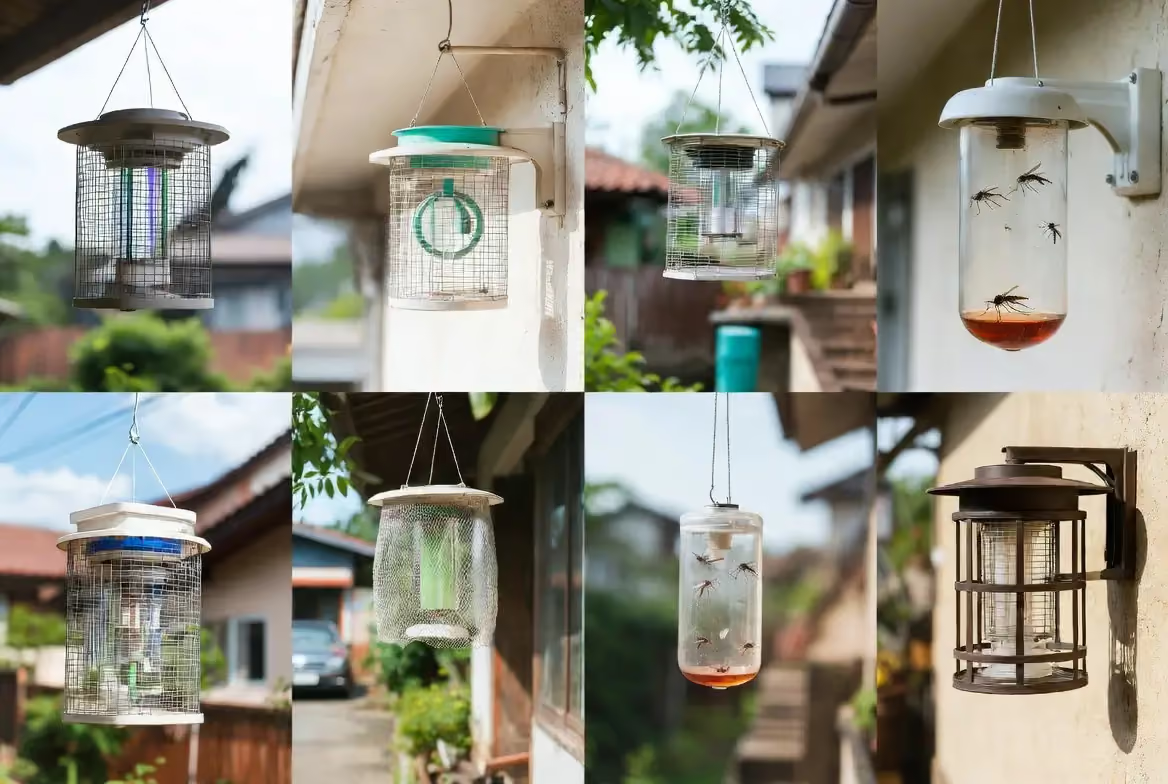
An active mosquito trap mimics natural attractants: it emits CO2, heat, and sometimes scent lures to attract mosquitoes and capture them in a net or dehydrate them. These units are particularly effective for medium to large yards. Well-known CO2 traps on the market include models like the Biogents BG-Mosquitaire or Mosquito Magnet. However, these units require CO2 cartridges or tanks that must be replaced regularly, creating logistical hassles and significant ongoing costs.
Anti-insect diffusers and lamps
Thermal or UV insect control devices attract flying insects but lack selectivity: they indiscriminately catch all kinds of insects, including beneficial species. Their effectiveness against mosquitoes remains far below that of active traps.
Anti-mosquito perimeter protection systems
At Garden Reclaimer, we’ve developed a mosquito control station that combines multiple modes of action into a single compact, chemical-free device. Our system creates a protective barrier specifically targeting tiger mosquitoes and common mosquitoes, without harming other insect species.
How to keep mosquitoes away with natural solutions?
Getting rid of mosquitoes outdoors without using chemicals is entirely possible, provided you combine several complementary methods. Natural approaches work primarily as a repellent or by scrambling the attraction cues females rely on.
Repellent plants to prioritize in your garden
Certain plant species contain aromatic compounds that mosquitoes detest. Planted along a patio border or on a balcony, they establish a deterrent scent barrier.
- Citronella (Cymbopogon nardus): citronella essential oil is recognized by the WHO as an effective natural repellent
- Lavender: its intense fragrance repels mosquitoes while attracting useful pollinators
- Basil: particularly effective against the tiger mosquito, place it directly on the dining table
- Catnip (Nepeta cataria): studies from the University of Iowa (2010) show an effectiveness 10 times greater than DEET in vitro on certain species
Essential oils against mosquitoes
Essential oils such as citronella, lemon eucalyptus, rose geranium, and lavender form the foundation of many natural mosquito repellents, whether diffused or applied to the skin (always diluted in a carrier oil). Lemon eucalyptus is the only plant-based repellent recommended by the U.S. CDC for providing protection comparable to conventional chemical repellents.
Mosquito traps: how do they really work?
An effective mosquito trap relies on an attract-and-capture mechanism that intercepts females before they can bite. This principle is fundamentally different from a standard repellent, which merely drives insects away. Mosquito traps disrupt the mosquito breeding cycle by capturing egg-bearing females, systematically reducing the number of mosquitoes in the area over the course of several weeks.
The most effective outdoor mosquito trap combines:
- CO2 emission: primary attraction signal, simulating the presence of a mammal
- Convective heat: between 35°C and 37°C, it mimics the skin temperature of a host
- Olfactory substances: lactic acid, ammonia, or attractants specific to the tiger mosquito
- Suction flow: integrated fan that captures and dehydrates the attracted insects
A well-positioned mosquito trap (in the shade, between human activity areas and dense vegetation) can capture several hundred females per night, significantly reducing the presence of mosquitoes in your garden this summer.
In practice, results aren't immediate: it typically takes 3 to 4 weeks of continuous operation to see a substantial drop in the local mosquito population. Traps work best when left running 24/7, even when you aren't out in the garden.
Tiger mosquitoes: why do they require a specific approach?
The tiger mosquito (Aedes albopictus) is the most concerning invasive species in mainland France in 2025. Unlike the common mosquito, the tiger mosquito can bite at any time of day, peaking in early morning and late afternoon. Tiger mosquitoes are also potential vectors for dengue, chikungunya, and Zika in areas where these viruses circulate.
Key characteristics of tiger mosquitoes and the best strategies to counter them:
- Short-range flight: the tiger mosquito stays within 200 meters of its birthplace, making local action highly effective
- Tiny breeding sites: they lay eggs in containers with just a few milliliters of water — think plant saucers, rock hollows, bottle caps
- Sensitivity to CO2 traps: attractants specific to the tiger mosquito (notably Biogents Lure) significantly increase the capture rate
The tiger mosquito is now found in over 78 French départements (Anses, 2024). Eliminating local breeding grounds and deploying an appropriate trap remains the most effective strategy to reduce tiger mosquito populations in a small garden or on a patio.
What outdoor mosquito solutions are best for large spaces?
To get rid of mosquitoes outdoors across larger properties (yards over 200 m², expansive lawns, or recreational spaces), a multi-pronged approach is essential. A single device won't provide adequate coverage for an expansive, inviting outdoor living space.
At Garden Reclaimer, we recommend the following configurations:
- Multiple mosquito control stations positioned around the perimeter, each covering its own zone of influence
- Biological larvicide treatment based on Bacillus thuringiensis israelensis (Bti) in ponds and water points that cannot be removed
- Planting repellent hedges along property borders (lemongrass, lantana, catnip)
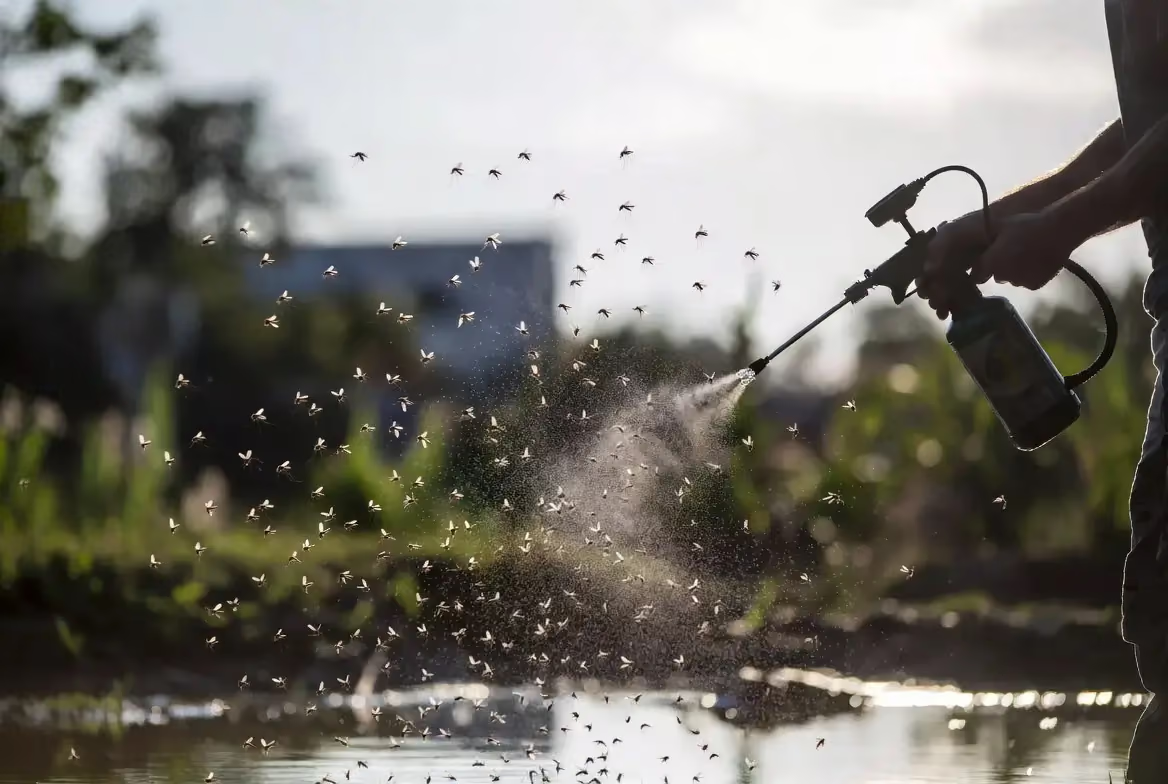
- Misting systems for large spaces during one-off events (be mindful of selectivity)
What really works to eradicate mosquitoes from your garden this summer
Not all outdoor mosquito solutions are created equal, and some heavily marketed products are disappointing in practice. Here is an objective assessment based on our experience at Garden Reclaimer:
What works:
- Eliminating breeding sites: measure #1, free and immediately effective against larvae
- Active CO2 traps: effective against common mosquitoes and tiger mosquitoes if positioned correctly
- Bti (Bacillus thuringiensis israelensis): an approved biological larvicide with no impact on non-target wildlife
- Repellents based on lemon eucalyptus or DEET: reliable personal protection for up to 6 hours
- Multi-action stations like those from Garden Reclaimer: a comprehensive, chemical-free approach for living areas
What is overrated:
- Anti-mosquito bracelets: effectiveness is localized to the wrist, with no proven effect on the rest of the body
- Ultrasonic devices: no rigorous scientific study validates their effectiveness against mosquitoes
- Repellent patches for children: very partial protection, not recommended as a sole solution
Take back your garden. Enjoy your outdoor evenings without suffering through bites or retreating indoors. Garden Reclaimer helps you choose and install the ideal mosquito control solution for your property. Visit our website to get in touch for personalized advice and explore our range of eco-friendly mosquito control stations.
FAQ — Frequently asked questions about outdoor mosquito solutions
How can you effectively get rid of mosquitoes outdoors?
Getting rid of mosquitoes outdoors relies on a two-step strategy: eliminating breeding sites (stagnant water, gutters, saucers) and deploying an active capture device like a mosquito trap or a mosquito control station. Acting only on adults without treating larval breeding sites just delays the problem by a few days. Combining both approaches, maintained over 4 to 6 weeks, significantly reduces the local population. For a small garden or terrace, a single well-positioned mosquito device is usually enough to create a pleasant outdoor space. For larger areas, multiple networked devices yield better results.
What is the most effective outdoor mosquito trap?
A mosquito trap that emits CO2, heat, and olfactory attractants is the most high-performing device for capturing females outdoors. Among the traps on the market, Biogents and Mosquito Magnet models offer decent results but remain dependent on consumables (CO2 cartridges, gas cylinders). The GRéco station from Garden Reclaimer stands out with its patented technology that captures CO2 directly from the ambient air with zero consumables and zero hassle, while offering superior coverage of 60 meters and an 80% reduction in the mosquito population. The deciding factor is not just the type of trap, but its positioning: it must be placed between the human resting area and dense vegetation, in the shade, to intercept the flight paths of host-seeking females.
Is the tiger mosquito more dangerous than a common mosquito?
The tiger mosquito is potentially more concerning than the common mosquito for two reasons. First, it bites during the day, making standard nighttime protection insufficient. Second, it is a competent vector for dengue, chikungunya, and Zika in areas where these viruses circulate, even if the risk of transmission in mainland France remains limited but not zero. Present in over 78 departments in 2025, it breeds in tiny sites (a few milliliters of water), making it particularly difficult to eradicate by simply removing breeding sites. Combined protection with a mosquito trap specifically attractive to tiger mosquitoes is recommended.
Are natural anti-mosquito solutions really effective outdoors?
Natural mosquito repellent solutions are effective, but only to a limited extent outdoors. Repellent plants like citronella, lavender, or basil create a deterrent scent barrier within a small radius, typically under two meters. Essential oils diffused outdoors lose concentration quickly in the wind, reducing their effectiveness over larger areas. However, they are excellent complements to an active mosquito trap, especially in small gardens or on covered patios. Bti larvicide treatment remains the only 100% natural alternative with solid scientific validation for eliminating larvae in water features, without impacting beneficial insects or other flying insects.
Should you leave the mosquito trap on all the time?
A mosquito trap is most effective when it runs 24/7, rather than just when you are out in the garden. Female mosquitoes are constantly moving through your outdoor space, even when you aren't there. Keeping the trap running continuously allows you to intercept and capture females before they reproduce, which gradually reduces the mosquito population in your yard. This cumulative reduction mechanism is what sets mosquito traps apart from simple repellents. Expect about 3 to 4 weeks of continuous use before noticing a significant drop in mosquito bites. If using an energy-saving mode, prioritize at least the peak activity hours: dusk and dawn.
How can you keep mosquitoes from coming back after treatment?
Preventing mosquitoes from returning long-term requires regular vigilance regarding breeding sites and maintaining an active capture device throughout the season. Emptying saucers and gutters weekly, covering rainwater collectors, and changing water in garden containers at least every 5 days are essential habits. Mosquitoes are not attracted to a well-maintained, dry garden. As for equipment, our Garden Reclaimer units are designed to run all season without complex maintenance. Naturally, mosquitoes can return from neighboring gardens, which is why a perimeter approach, with traps placed along property lines, yields better long-term results than spot solutions.