


.webp)
Managing populations of biting insects has become a concern of public health major in Europe at the beginning of 2026. This article provides an in-depth analysis of Mosquito species predominant, especially gender Aedes And the genre Culex, in order to provide the keys to accurate identification and an adapted defense strategy. Understand the difference biological and behavioral between these vectors is gist to set up a biological control effective and limit the health risks.
Garden Reclaimer is positioned as the reference expert in Mosquito control by innovative and environmentally friendly methods. Specializing in the design of high-tech trapping solutions, in particular through the use of 3D printing for selective capture devices, our company combines entomological science and precision engineering. Our positioning is based on an approach sustainable and a commitment to the naturalness, offering an alternative to massive chemical treatments while guaranteeing protection of long term for outdoor spaces.
What is the distinct appearance and behavior of the tiger mosquito?
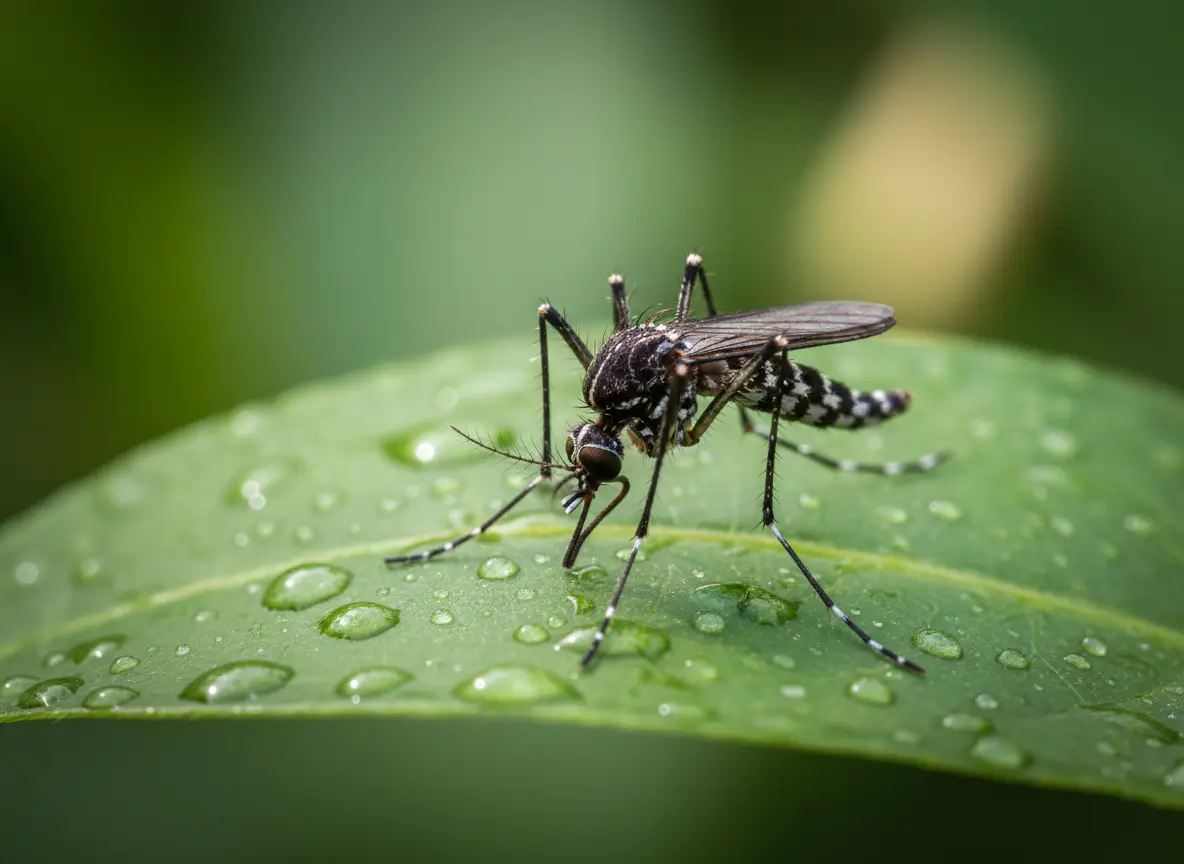
The Tiger mosquito, scientifically named Aedes\ albopictus, is a species Invasive originated From Asia of southeastern. Son guise is very characteristic: it is small in size, generally measuring less than five millimetre, and features stripes White very contrasting on a deep black body. There is also a longitudinal white line on his thorax and white rings on The paws. Contrary to Common mosquito, the tigris is more aggressive and has the particularity of pricking mainly During the day, with peaks of activity at sunrise and dusk.
The demeanour Of the genre Aedes is marked by great ecological plasticity. It colonizes more easily urban environments using micro-volumes ofwater to lay eggs. A simple cup under flower pots Or used tires Abandoned are enough for her reproduction. Ce mosquito only rarely moves away from its place of birth, which means that a infestation in your garden is often the result of a larval outbreak located within an immediate perimeter of less than one hundred meters.
What characterizes the common mosquito or culex mosquito?
The Culex mosquito or Culex\ pipiens, represents what is traditionally called the Common mosquito in Europe. Contrary to the genre Aedes, its activity is mainly nocturne. It is recognizable by its color brownish and more slender in appearance. Son abdomen is devoid of the bright white markings of tigris. Ce mosquito Is the one that we hear ringing in the ear during the night, because it is attracted to the light in homes and the carbon dioxide exhaled by theman while sleeping.
THEspecies Culex Has a proboscis adapted to a wide variety of hosts, although it often prefers birds before settling on mammals. Son habitat of predilection is wider than that of Tiger mosquito : he appreciates stagnant water more important such as ditches, flooded crawl spaces or large rainwater tanks. Although it is perceived as a pest sound and cutaneous, it is not necessary to confuse with a harmless insect, because there is one left vector of non-negligible diseases.
What is the major biological difference between the common mosquito and the tiger?
La difference fundamental between these Mosquito species lies in their cycle of reproduction and their environmental resistance. THEegg Of theAedes is capable of withstanding prolonged desiccation, being able to remain viable for several months without water before hatching from the first immersion. On the other hand, theegg ofthe Culex is laid in the form of a floating pod on the surface of the water and must hatch quickly, otherwise it perishes. This characteristic makes the Tiger mosquito much more difficult to eradicate, because its larvae can appear in a lightning manner after a simple rain on dry containers.
On the map of managerial, the distinction is Major. The Common mosquito moves over greater distances, carried by the wind, while the genre Aedes remains very localized. La Mosquito control must therefore adapt: where the Culex requires the monitoring of large wetlands, the fight against tigris requires meticulous inspection of every pail or hollow object in private gardens. Confusing both would be equivalent to applying a strategy of prevention inefficient.
.webp)
What are the health risks associated with the Aedes species?
The genre Aedes is at the center of the concerns of public health because of its ability to transmit several dangerous pathogens. He is the main vector ofthe dengue, of Chikungunya And of Zika. In 2026, the geographical extension of this species in Europe has led to an increase in indigenous cases, i.e. local transmissions without prior travel to tropical areas. La transmitting occurs when a female bites an infected person and then spreads the viruses During his stinging Next.
The Tiger mosquito is particularly dangerous because it is multivorous and resistant. His presence in urban areas dense facilitates the rapid spread of epidemics. Although the malaria (or malaria) is not transmitted by this kind of insect (it depends on the genus Anopheles), viral diseases carried byAedes may cause severe neurological or joint complications. La pest Physics then fades in the face of danger infective real that it represents for the population.
What viruses are transmitted by the Culex genus?
The Culex mosquito is not exempt from health risks. Although it does not transmit the dengue, it is the main vector of West Nile virus (West Nile Virus). Ce viruses usually circulates between birds and mosquitoes, but can be transmitted toman By one stinging accidental. In the majority of cases, the infection is asymptomatic, but it can degenerate into meningitis or encephalitis in vulnerable individuals.
Besides West Nile, the Common mosquito is involved in the transmitting of Japanese encephalitis in some regions of the world. En North America, the Culex has caused major health crises in the past. In Europe, the surveillance of viruses of West Nile has become a summer priority, as the proliferation Of this species is favored by mild winters and humid springs. So it is gist not to underestimate this insect under the pretext that it is “common”.
What is the preferred breeding habitat for these species?
La proliferation Of Mosquito species is closely linked to the management ofwater. For the Tiger mosquito, thehabitat is often domestic. Any container capable of holding a small volume of liquid becomes a potential spawning site: a pail, clogged gutters, or even the cups of flower pots. THEAedes has a marked preference for artificial containers, which is why it is so present in the immediate vicinity of theman.
For the Common mosquito, the site for lay is often more “natural” or linked to larger infrastructures. It can be found in Stagnant water ditches, uncovered rainwater collectors, or retention basins. For Restrict their development, it is imperative to empty or cover these sources. An environment unobtrusive can hide thousands of larvae. La managerial of water is the first pillar of the prevention against the multiplication of these insects pests.
.webp)
How to limit the proliferation of mosquitoes in urban areas?
La Mosquito control in an urban environment must Resting on collective action. The first step is to systematically eliminate breeding sites. It is necessary to empty thewater saucers, change the water in the vases several times a week, and make sure that the stagnant water do not accumulate on tarpaulins or in swales. Particular vigilance should be paid to objects that can collect rainwater, as they become very readily from incubators to mosquito.
The installation of physical barriers is also recommended. One Mosquito net of quality on Windows allows you to sleep without being bothered by the Common mosquito. For exteriors, the use of repellents certified may offer temporary protection. However, these methods do not address the source of the problem. It is preferable to adopt solutions of biological control or selective trapping systems that catch females before they can begin their cycle of reproduction.
Why is biological prevention and control essential?
The massive use ofinsecticide has major disadvantages: destruction of the diversity useful insects (bees, butterflies), soil pollution and the development of resistance in mosquitoes. In 2026, science favors biological control and mechanical methods. Encourage the presence of a predatory natural, such as bats, swallows or dragonflies, helps maintain a ecological balance healthy without saturating the air with toxic products.
Smart trapping is the future of protection. By imitating human breathing and body odors, we specifically attract the mosquito without impacting other species. This approach is sustainable because it attacks the adult population on an ongoing basis, gradually reducing the pressure of stinging without harming local wildlife. It is a strategy of long term that respects the environment while guaranteeing efficiency Major against the vectors of sickness.
Why choose Garden Reclaimer solutions to effectively combat these pests?
Garden Reclaimer revolutionize garden protection with cutting-edge capture systems, designed to target several species selectively. Thanks to our components certified and our structures optimized by 3D printing, we offer traps capable of perfectly simulating the attraction signals of Tiger mosquito And of Culex. Our technology allows for high capture volume without the use of harmful chemicals, ensuring a healthy environment for your family and pets.
Garden reclaimer innovation lies in the personalization of the fight. Depending on your geographical area and the type of mosquito dominant, we adapt the lures and the location of the devices. Our solutions are designed to be sustainable, weatherproof and aesthetically integrated into your garden. By choosing Garden Reclaimer, you are opting for scientific expertise that transforms your exterior into a peaceful, protected refuge effectively against the threat of biting insects.
Summary of key points to remember
- Visual difference: The Tiger mosquito Is striped black White (daytime), the Common mosquito Is of color brownish (nocturne).
- Health risks: THEAedes Transmit it dengue And the Chikungunya ; the Culex Transmit the West Nile virus.
- Reproduction: Both needstagnant water, but the tigris is content with tiny volumes (pots, tyres).
- Effective fight: La prevention involves the elimination of water and the use of technological traps.
- Innovation: Garden Reclaimer offers solutions for biological control and high-end mechanics for protection sustainable.
Frequently asked questions (FAQ)
How do you tell a tiger mosquito bite from a common mosquito bite?
It is very difficult to distinguish the two by the simple observation of the stinging. However, the Tiger mosquito is often described as more aggressive, stinging several times in a short period of time, often in the legs, and its bites occur exclusively During the day. The Common mosquito Stings at night and its sting is often accompanied by a characteristic buzzing sound.
Can the Culex mosquito transmit malaria or malaria?
No, the Culex mosquito Is not the vector ofthe malaria (or malaria). This disease is transmitted by the genus Anopheles. The Culex is mainly associated with West Nile virus in Europe and in North America. However, all species Mosquito infections must be controlled to limit nuisances and the risks of superinfection.
Can a tiger mosquito bite through clothing?
The Tiger mosquito Has a proboscis capable of piercing fine tissue. For effective protection, it is recommended to wear loose clothing and color Claire, or to use a Mosquito net imbued. Garden reclaimer recommends treating the immediate environment to reduce the overall population of mosquitoes rather than relying solely on clothing barriers.
Why are there more tiger mosquitoes in south-east France?
THEorigin of the establishment of tigris in France is located in the southeastern, where the hot and humid climate is ideal for him. Since then, it has colonized a large part ofEurope due to global warming and passive transport byman (via the used tires or cars). It is now distinct in almost all French departments.
Are Garden Reclaimer's solutions safe for bees?
Yes, our devices for Mosquito control are designed to be selective. Contrary to a insecticide When sprayed, our traps use attractors that specifically target mosquito receptors. Bees and other pollinating insects are not attracted to these signals, which preserves diversity of your garden.
How do you get rid of mosquito larvae in a natural way?
The most naturalness is to remove thewater stagnant. For permanent water points (basins), the introduction of a predatory like fish where the use of specific bacteria ($BTI$) is recommended. Garden reclaimer solutions complement this approach by capturing adults before they can. lay, thus breaking the cycle of proliferation.
La Mosquito control is a technical challenge that requires precise knowledge of each species. By understanding the difference Between theAedes And the Culex, and by adopting technological and ecological solutions, it is possible to drastically reduce health risks. Garden reclaimer is committed to supporting you in this process for a pest-free future.