



THEMosquito egg is the most underestimated threat in mosquito control. Invisible to the naked eye in the vast majority of cases, deposited on surfaces Humid in a few seconds by a female discreet, it is however the starting point for all proliferation. Before becoming a mosquito adult capable of stinging and transmitting vector-borne diseases, each individual begins life in this tiny, resilient and often unobtainable form. At Garden Reclaimer, Mosquito repellent bollards manufacturer eco-responsible, we observe every season that it is at this precise stage that we must intervene to avoid a invasion uncontrollable. Understand where the Mosquito eggs hiding, how they survive and how to destroy them is the basis for effective and lasting protection.
What is a mosquito egg and how do you recognize it?
THEMosquito egg Is an element tiny, of the order of 0.5 to 1 mm in length, which makes it almost invisible to the naked eye without careful observation. Its shape, color and method of deposit vary according to the species of mosquito, but all share a common characteristic: they require the proximity of water so that the larva can hatch and develop.
Here is how to identify eggs according to the two most common species in France:
- Tiger mosquito egg (Aedes albopictus): black in color, deposited individually on the Walls Interns of a containing, just above the surface of the water. Not visible in waterborne, but stuck to the dry surface.
- Common mosquito egg (Culex pipiens): grouped into raft floating at the Water surface, forming a greyish mass of 100 to 300 eggs joined together, visible to the naked eye on calm water.
- Size and shape : each egg is elongated, slightly swollen in the center, with an outer shell called a chorion that protects the embryo from desiccation.
Therefore, pinpoint one Mosquito egg asks to know which species is being targeted. The Tiger mosquito, an invasive species present in more than 78 French departments in 2025, Lays its eggs on dry or slightly dry surfaces Humid, which makes them particularly difficult to detect and eliminate without knowing this precise mechanism.
How the tiger mosquito lays its eggs: the egg-laying mechanism deciphered
Understand the mechanism of spawning ofthe Tiger mosquito is essential to target the right places during an inspection. La female ofthe Tiger mosquito Don't drop off his eggs directly on the surface of water as does the Common mosquito. She the glue On the Walls Of a containing, just above the water level, in an area that will soon be flooded by the rise of liquid or by the next rain.
This behavior of spawning is based on a precise biological logic:
- Site selection : The female Pick a containing dark, sheltered from the wind, with stagnant water slightly loaded with organic matter.
- Individual deposit : unlike the Common mosquito, she deposits each egg separately, which increases the chances of survival in the event of partial disturbance of the lodge.
- Position on the wall : eggs are Glued aux Walls interns, just above of the water level, thanks to an adhesive secretion that keeps them in place even after emptying the container.
- Minimum water volume : The Female can select a site containing as little as 5 ml of standing water, which makes monitoring particularly demanding.
- Repeat the cycle : one female may repeat This operation several times at During his life, by changing the site of spawning In each cycle of reproduction, after each Blood meal.
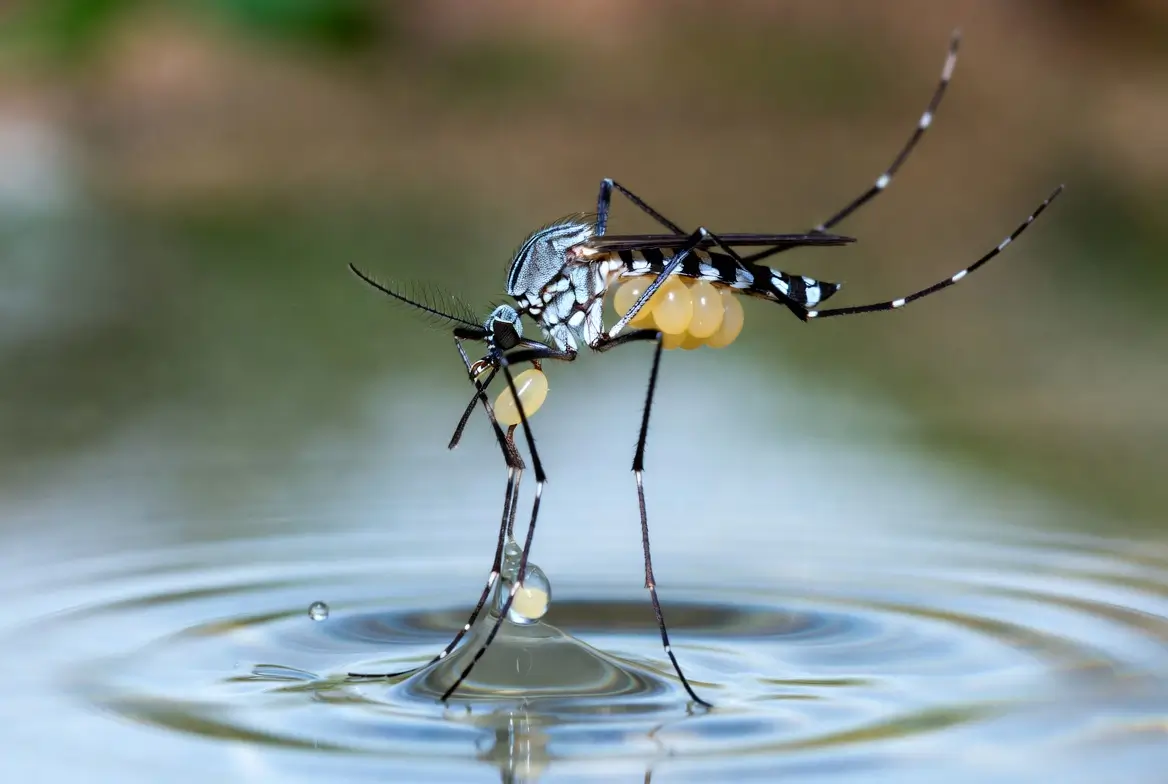
On the other hand, the Common mosquito adopts a different strategy: he files a raft 100 to 300 eggs waterborne directly to the Water surface, in larger collections such as gutters, the ditches or the Ponds. This difference in behavior involves distinct control strategies depending on the target species.
Where the mosquito lays its eggs: the most frequent hiding places around homes
THEMosquito egg is frequently found in places that locals don't think to inspect. The Tiger mosquito is Capable of invading the most banal spaces in a garden or terrace, because it only needs a few milliliters of standing water to lay. It is this rapidity of adaptation and this ability to exploit the smallest water resources that make it a insect particularly difficult to control.
The areas of spawning The most frequent around the houses :
- Gutter clogged or poorly maintained, where rainwater stagnates in decomposing leaves.
- Seau, watering can, Canister or any container left outside without a lid after a rain.
- Flower pots with saucer: the water that accumulates there is an ideal, warm and protected place to stay.
- Tarpaulin stretched over furniture or a vehicle, whose folds hold back puddles after each rain.
- Tire used stored outside: its toric shape retains water and its black surface quickly heats the liquid, promoting ripening eggs.
- Gutter terrace drainage or paving joint where water does not drain properly.
Note that the tiger mosquito eggs, once Glued aux Walls, remain in place even if the containing is emptied. Without active brushing of the internal surfaces, eggs survive and hatch As soon as Return of spring or at the Next rain. This cleaning error is one of the most frequent ones observed during our interventions at Garden Reclaimer.
Comparison of egg-laying behaviors: tiger mosquito vs common mosquito
This ability to resist: how tiger mosquito eggs survive drought and winter
Beyond their discretion, the Mosquito eggs Tigers have a remarkable biological property that makes them particularly difficult to eliminate: This ability to enter the state of Diapause, that is, a suspension of embryonic development in the face of unfavorable conditions. One egg of Tiger mosquito can thus survive the dryness for several months and Hatching as soon as conditions become favourable again, in particular at Return of spring or after the Next rain.
How do they survive under extreme conditions:
- Resistance to desiccation : the outer shell of the egg (chorion) protects the embryo from water loss. A container emptied manually does not destroy eggs stuck to the walls if they are not brushed.
- Winter Diapause : the eggs laid in fall go dormant and remain viable throughout the winter, even under temperatures close to zero. They hatch As soon as Next spring With the return of Temperatures hot temperatures and humidity.
- Resistance to surface treatments : eggs Glued aux Walls are not destroyed by simple rinsing with water, or by most contact insecticides that target adults or larvae.
- Documented longevity : according to data from theEID Mediterranean, eggs from Tiger mosquito viable ones were found after more than 6 months of complete drought in containers stored indoors.
Therefore, After winter, it is not enough to note that a container is dry to consider that it is safe. Systematic inspection and brushing of all internal surfaces prior to the season Hot is essential to neutralize eggs by Diapause.
How to get rid of them: effective methods to destroy mosquito eggs in your garden
Eliminate The Mosquito eggs requires methods adapted to their biology. Unlike larvae that drown or die by ingesting BTI, eggs are resistant to conventional aqueous treatments. Mechanical action is irreplaceable here. At Garden Reclaimer, we find that the combination of systematic brushing of the beds and preventive biological treatment reduces the density of adult mosquitoes by three in one season.

Here are the methods for Destroy them effectively:
- Brushing the walls : use a stiff brush to scrub the internal surfaces of each container before emptying it. It is the only method that detaches eggs Glued to the walls and exposes them to desiccation or flow.
- Regular emptying every 4 days : the eggs of Tiger mosquito hatch in 24 to 72 hours under favorable conditions. Emptying any container before this time stops the cycle even before the larval stage.
- BTI as a preventive measure : the Bacillus thuringiensis israelensis does not destroy the eggs, but eliminates the larvae as soon as they hatch. Used in non-suppressive lodges (basin, gutter), it forms a safety net organic effective.
- Dry heat : exposing empty containers to the sun for several days destroys the eggs by accelerated desiccation, provided that the walls reach more than 50°C on the surface.
- Elimination of lodgings : turning over, covering or storing inside any unused container remains the most radical method for shun all spawning and remove existing eggs.
Where water stagnates without anyone knowing it: the most overlooked mosquito egg sites
Beyond the classic lodgings, there are areas of spawning systematically forgotten during inspections, and who promote The proliferation ofthe Tiger mosquito season after season. La rapidity With which this mosquito colonizes a new site is documented: a female can identify a nest and lay its first eggs in less than 48 hours after the formation of a puddle.
The most often forgotten and most productive lodgings in eggs :
- Drain gutter roof: even partially obstructed, it retains enough water after each rain to allow several cycles of spawning complete by summertime.
- Watering can placed outside with residual water in the bottom, often left in place for several days between uses.
- Tarpaulin to protect furniture or cars: its folds accumulate rainwater in areas unnoticed, creating dozens of micro-lodges each rainy episode.
- Unmaintained flower pots : the saucers not emptied after watering constitute one of the lodgings Aquatics the most productive in urban areas according to EID entomological surveys.
- Deck joints and insufficient slopes: rainwater stagnates on the surface for several hours, sometimes long enough to trigger a spawning If a female is present.
- Watering can, pail or Canister of water recovery not covered: their large surface area and their exposure to Temperatures Hot ones make them sites of spawning very attractants For the Tiger mosquito.
Mosquito egg beds: frequency, risk and corrective action
Sustainable prevention: how to prevent mosquitoes from laying eggs in your living space
La prevention of egg laying is more effective than any curative treatment, because it acts before the cycle of reproduction. In 2025, with an active season of Tiger mosquito which extends from May to November in the south of France and up to fall in the central regions, a protocol of prevention rigorously applied from Return of spring makes it possible to significantly reduce the density of adult mosquitoes and, therefore, the pressure of bites. At Garden Reclaimer, we support individuals in setting up this type of protocol adapted to their outdoor space.
The actions of prevention the most structuring:
- Weekly inspection of all outdoor containers to detect any accumulation of standing water after rain or watering.
- Systematic brushing internal surfaces during each emptying, to detach the eggs from Tiger mosquito stuck to Walls before they hatch.
- Coverage of non-suppressible lodgings with a fine mesh fabric (less than 1 mm) to prevent access to females who seek to lay.
- Preventive BTI treatment in water containers that are difficult to remove (basins, gutters, barrels), to be renewed every 4 to 6 weeks during the active period.
- Garden Reclaimer Mosquito Repellent Bollards : our devices capture mosquitoes active adults in the treated area, thus reducing the number of females available for spawning and limiting the proliferation right from the source.
This last action complements the management of lodgings by directly targeting the adults Before they tackling to a new site of spawning, which is essential in gardens where it is impossible to remove all potential lodges.
FAQ - Common questions about mosquito eggs
How do tiger mosquito eggs withstand drought?
Les Mosquito eggs Tigers are resistant to drought thanks to a biological mechanism called Diapause : the embryo suspends its development when conditions become unfavorable, especially in the absence of water. The outer shell of the egg, the chorion, forms an impermeable barrier that protects the embryo from water loss. This capacity allows them to survive several months in a dry container, both inside and out. They resume their development and hatch as soon as the humidity returns, whether after a rain or during Return of spring. According to data from the EID Mediterranean, viable eggs were found after more than 6 months of complete drought in containers stored out of season. That is why actively brushing the walls of any container is essential, even if it seems dry for a long time.
How do you find mosquito eggs in a water container?
Identify Mosquito eggs depends on the species present. The eggs of Tiger mosquito are lowercase, black, individually glued to Walls of a container just above the water level: they are practically invisible to the naked eye without direct lighting and close observation. Les Mosquito eggs common (Culex pipiens), on the other hand, form a raft greyish waterborne To the Water surface, visible to the naked eye on calm and dark water. For pinpoint Eggs of Tiger mosquito, the most reliable method is to inspect the Walls inside the container backlit with a lamp, looking for black spots less than one millimeter in size arranged in a line at the water/air boundary. The presence of these spots, even in small quantities, indicates recent egg-laying and requires immediate brushing followed by complete emptying.
How many eggs can a tiger mosquito lay in its lifetime?
One Tiger mosquito female Pond between 50 and 150 eggs per cycle of spawning, and can perform several cycles at During his life, which lasts between 2 and 4 weeks under normal conditions. Each cycle starts with a Blood meal, essential for the ripening eggs, followed by a spawning in one or more cottages. One female can thus produce a total of 300 to 500 viable eggs during its life. On the scale of a garden with several active cottages, this rapidity of reproduction Explain the speed at which a population can reach a spiking of nuisance in a few weeks. It is precisely this reproduction exponential that Garden Reclaimer devices aim to interrupt by capturing the adults Before they Repeat their cycles of spawning, thus completing the action of managing larval sites.
Do mosquito eggs survive the winter in France?
Yes, the Mosquito eggs tigris Surviving in winter in France, and this is one of the factors that explains the proliferation of the species on the territory. Filed in fall On the Walls from outdoor containers or stored inside, they come in Diapause and remain viable until Next spring. As soon as the temperature exceeds 10 to 15°C in a stable manner and when the humidity returns, hatching is triggered and the first mosquitoes of the emerging season. On the other hand, the eggs ofthe Common mosquito are less resistant to cold and generally survive the winter as dormant adult females rather than as eggs. Therefore, even a garden that seemed to be free of mosquitoes At the end ofsummertime can experience a rapid infestation as early as April if eggs in Diapause were present in uncleaned containers.
Is emptying a container enough to eliminate tiger mosquito eggs?
No, emptying a container is not enough to eliminate Mosquito eggs tiger. This is one of the most frequent mistakes in managing roosts: eggs are Glued aux Walls internal thanks to an adhesive secretion, just above of the water level. A simple emptying leaves them intact on the dry surface, where they come in Diapause And wait for the Next rain or a filling for Hatching. The only reliable method for Eliminate them Is the active brushing of Walls with a rigid brush, followed by rinsing or sun exposure to accelerate destruction by dry heat. This gesture, applied systematically during each emptying and after each Rain, is the measure of prevention most effective individual to interrupt the cycle of reproduction ofthe Tiger mosquito in a domestic space.
Can you find mosquito eggs in winter?
Yes, it is possible to find Mosquito eggs tigers viable in the middle of winter, especially in containers stored under cover or in habitats that are not very exposed to negative temperatures. These eggs are in a condition of Diapause and are indistinguishable from fresh eggs: they have the same appearance and size. This quality of resistance is specific to Tiger mosquito and absent in the vast majority of others European mosquitoes. It is precisely for shun This phenomenon that we at Garden Reclaimer recommend a thorough cleaning of all containers at the end of each season, before thefall, and not only in spring. Waiting for the month of May to clean the cottages means leaving a new generation of mosquitoes develop from the very first Temperatures hot, with a head start on any corrective measures.
Take action before the season to protect your outdoor space
The fight against Mosquito eggs starts at the end of winter, well before the spiking of activity ofsummertime. Inspect the lodges, brush the containers, treat preventively and install a device to catch adults : this integrated protocol is the most effective response to proliferation ofthe Tiger mosquito in a domestic environment, and it is available to any owner of a garden or terrace.
At Garden Reclaimer, our eco-responsible mosquito terminals complete this protocol by targeting active females before each cycle of spawning. Discover all of our solutions on garden-reclaimer.com and prepare your outdoor space before the return of the active season.