


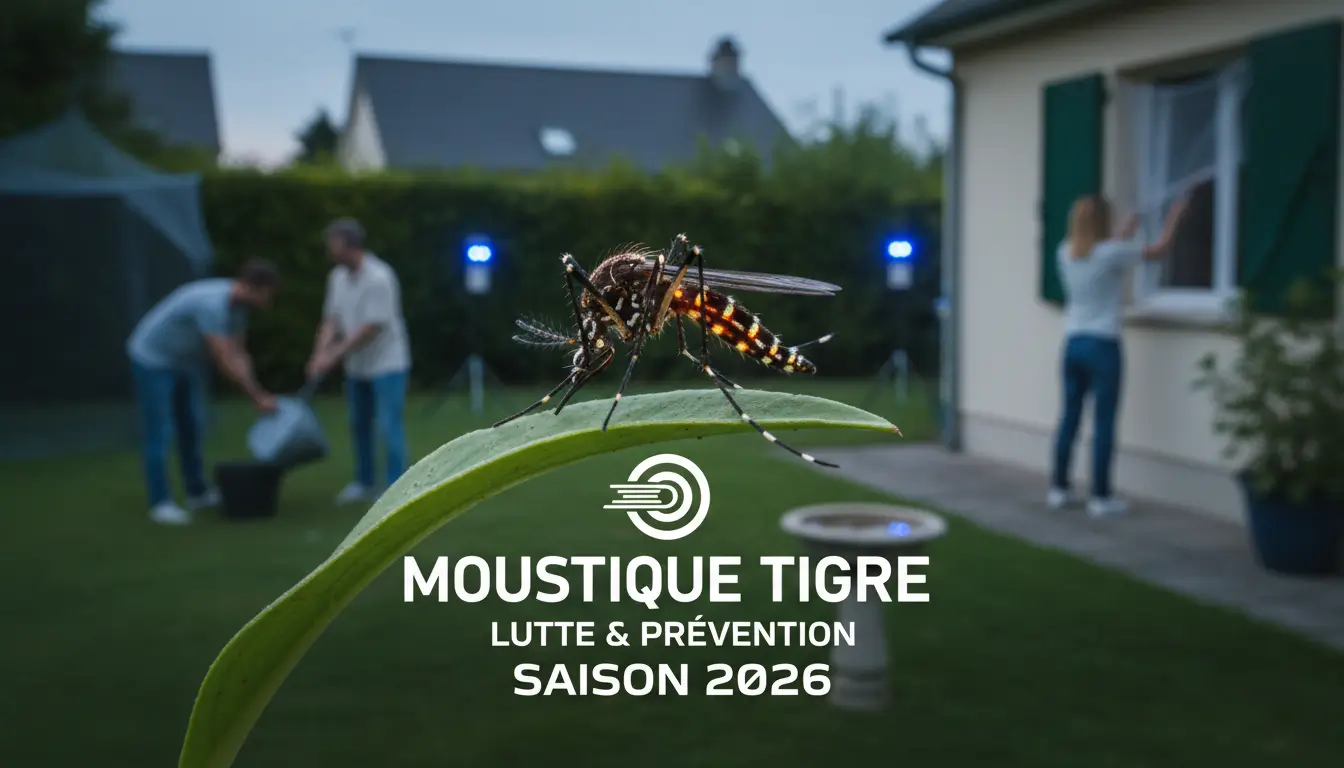
Face à l'expansion continue du moustique tigre en France métropolitaine et l'augmentation des cas de dengue et chikungunya, la lutte contre les moustiques devient un enjeu sanitaire majeur pour 2026. Cet article vous livre toutes les clés pour comprendre la menace, adopter les bons gestes et vous protéger efficacement contre les piqûres de moustiques. Rédigé par Garden Reclaimer, pionnier français des solutions innovantes de lutte anti-moustiques, ce guide s'appuie sur une expertise technique solide et une collaboration étroite avec les autorités sanitaires pour vous offrir des conseils scientifiquement validés et immédiatement applicables.
Pourquoi lire cet article ?
Avec tous les départements français désormais concernés et des premiers cas autochtones détectés dès juin 2025, la menace n'a jamais été aussi présente. Garden Reclaimer, à travers sa borne anti-moustiques GRéco brevetée, accompagne particuliers et collectivités dans la réduction des populations de moustiques. Notre borne capte le CO2, la chaleur et l'humidité de l'air ambiant pour attirer et capturer les femelles moustiques par aspiration sélective et sans aucun produit chimique ni bouteille de gaz.. Lisez ce guide pour transformer votre jardin en zone protégée et contribuer à la santé publique.
Qu'est-ce que le moustique tigre et pourquoi représente-t-il un risque sanitaire en 2026 ?
Le moustique tigre (Aedes albopictus) est une espèce invasive originaire d'Asie du Sud-Est qui a connu une expansion fulgurante en Europe depuis les années 2000. Reconnaissable à ses rayures noires et blanches caractéristiques, le moustique tigre n'est pas seulement une nuisance : il fait l'objet d'une surveillance renforcée car il peut transmettre des virus graves comme la dengue, le chikungunya et le zika. Contrairement au moustique commun, le moustique tigre pique principalement en journée, notamment au lever et au coucher du soleil.
En 2026, le risque sanitaire s'intensifie. Le changement climatique favorise l'extension géographique de l'espèce vers le nord et l'allongement de la saison de surveillance, qui s'étend désormais de mai à octobre 2025 et probablement jusqu'en novembre pour 2026. L'augmentation des voyages internationaux multiplie les cas importés de dengue et autres maladies vectorielles, créant un risque de transmission locale. Santé Publique France a enregistré une hausse significative du nombre de cas autochtones en 2025, signalant une circulation active du virus de la dengue sur le territoire.
Le moustique tigre est présent désormais dans tous les départements de France métropolitaine, avec une densité particulièrement élevée en Nouvelle-Aquitaine, PACA et Occitanie. Les autorités sanitaires, via les ARS, coordonnent des opérations de démoustication autour des cas détectés, mais la responsabilité citoyenne reste primordiale pour supprimer les gîtes larvaires et limiter la prolifération.
.webp)
Quelles maladies transmettent les moustiques tigres ?
Le principal danger du moustique tigre réside dans sa capacité à transmettre plusieurs virus tropicaux. La dengue est la maladie la plus fréquemment transmise par le moustique en France métropolitaine. Elle provoque de fortes fièvres, des douleurs articulaires intenses et, dans certains cas graves, des hémorragies potentiellement mortelles. En 2025, plusieurs cas de dengue autochtones ont été confirmés en région PACA et Nouvelle-Aquitaine.
Le chikungunya est une autre maladie vectorielle transmise par les moustiques tigres. Les symptômes incluent une fièvre élevée brutale, des douleurs articulaires invalidantes pouvant persister plusieurs mois, des maux de tête et des éruptions cutanées. Le nombre de cas importés augmente chaque année avec les voyageurs revenant de zones endémiques comme l'Océan Indien ou les Caraïbes.
Le virus Zika peut également être transmis par le moustique tigre, bien que les cas restent plus rares en métropole. Zika est particulièrement dangereux pour les femmes enceintes car il peut provoquer de graves malformations congénitales chez le fœtus. La surveillance épidémiologique mise en place par Santé Publique France permet de détecter rapidement les premiers cas et de déclencher des opérations de démoustication ciblées autour des personnes infectées pour prévenir la transmission locale.
Comment reconnaître un moustique tigre et ses piqûres ?
Reconnaître un moustique tigre est relativement simple grâce à ses caractéristiques physiques distinctives. Mesurant environ 5 millimètres, il est plus petit que le moustique commun. Son corps noir est strié de rayures blanches bien visibles, notamment sur les pattes et le thorax. Une ligne blanche centrale parcourt son thorax et sa tête. Le moustique tigre est actif en pleine journée, principalement tôt le matin et en fin d'après-midi.
Les piqûres de moustiques tigres se distinguent par leur caractère répété et localisé. Le moustique tigre pique souvent plusieurs fois de suite, généralement au niveau des chevilles, jambes et bras. Les piqûres provoquent des démangeaisons intenses et un gonflement localisé qui peut persister plusieurs jours.
Si vous développez une fièvre élevée brutale, des douleurs articulaires intenses, des maux de tête sévères ou des éruptions cutanées dans les 7 à 10 jours suivant une piqûre, consultez immédiatement un médecin. Ces signes peuvent indiquer une infection par la dengue, le chikungunya ou un autre virus transmis par les moustiques tigres.
Quels sont les bons gestes à adopter pour éviter la prolifération des moustiques ?
La lutte contre les moustiques commence par la prévention de leur reproduction. Le moustique tigre pond ses œufs dans de très petits volumes d'eaux stagnantes : soucoupes de pots de fleurs, gouttières mal entretenues, pneus usagés, jouets d'enfants oubliés dans le jardin. Supprimer les gîtes larvaires est le geste le plus efficace pour réduire drastiquement la population de moustiques.
Les bons gestes à adopter au quotidien incluent :
- Vider toutes les semaines les contenants pouvant accumuler de l'eau (soucoupes, arrosoirs, seaux)
- Couvrir hermétiquement les récupérateurs d'eau de pluie avec un tissu moustiquaire ou un couvercle étanche
- Nettoyer régulièrement les gouttières pour éviter la stagnation d'eau
- Ranger à l'abri de la pluie tous les objets pouvant retenir l'eau (brouettes, bâches, jouets)
- Entretenir les piscines et bassin d'ornement avec un système de filtration ou des produits adaptés
- Vérifier que les dessous de pots, les vases et les coupelles ne contiennent pas d'eau stagnante
Ces actions doivent être réalisées toute l'année, mais particulièrement de mai à octobre pendant la saison active des moustiques. Un seul gîte larvaire oublié peut générer plusieurs centaines de moustiques adultes en quelques semaines. En complément de ces gestes préventifs, la borne GRéco de Garden Reclaimer capture les moustiques adultesfemelles dans un rayon de 60 mètres grâce à sa technologie brevetée (CO2, chaleur, humidité, phéromones) réduisant la population de moustiques de 80% en 6 à 8 semaines.
.webp)
Comment se protéger efficacement contre les piqûres de moustiques au quotidien ?
Protection vestimentaire et physique :
Porter des vêtements longs, amples et de couleur claire réduit significativement le risque de piqûre. Le moustique tigre est attiré par les couleurs sombres et la chaleur corporelle. L'installation de moustiquaires aux fenêtres et portes, ainsi que sur les lits pour les jeunes enfants, constitue une barrière physique efficace.
Répulsifs cutanés :
L'utilisation de répulsifs cutanés homologués est recommandée par les autorités sanitaires. Recherchez des produits contenant des principes actifs efficaces comme le DEET, l'IR3535 ou l'Icaridine. Pour les enfants et femmes enceintes, privilégiez des formulations adaptées. Renouvelez l'application toutes les 4 à 6 heures et après chaque baignade.
Aménagement des espaces extérieurs :
Créez des zones de protection autour de vos espaces de vie extérieurs en installant des ventilateurs (le moustique tigre vole mal en présence de vent), en évitant les plantes retenant l'eau dans leurs feuilles, et en éliminant systématiquement les eaux stagnantes. La borne GRéco de Garden Reclaimer complète parfaitement cette approche en capturant les moustiques
adultes dans un périmètre de 60 mètres, grâce à un signal combinant CO2, chaleur, humidité et phéromones —
le tout capté directement dans l'air ambiant, sans bouteille de gaz ni produit chimique.
Quelles sont les solutions innovantes de lutte contre les moustiques en 2026 ?
Solutions biologiques et écologiques :
Les méthodes de lutte biologique se développent pour remplacer progressivement les insecticides chimiques. L'utilisation de larvicides biologiques (Bacillus thuringiensis israelensis - Bti) cible spécifiquement les larves de moustiques sans affecter les autres organismes aquatiques. Cette approche sélective préserve la biodiversité tout en réduisant efficacement la prolifération des moustiques.
Technologies connectées et automatisées :
Garden Reclaimer représente la nouvelle génération de solutions anti-moustiques avec sa borne GRéco : un
réacteur breveté qui capte le CO2, la chaleur et l'humidité présents dans l'air ambiant pour générer un signal
imitant la respiration humaine. Les femelles moustiques sont attirées à longue distance (jusqu'à 60 mètres) puis
aspirées et piégées de manière sélective. Des phéromones en formule liquide sont diffusées en continu, goutte
à goutte, tout au long de la saison. Résultat : 80% de réduction de la population de moustiques en 6 à 8
semaines, sans aucun produit chimique, sans bouteille de gaz, et avec une autonomie de saison complète.
Approches communautaires :
Les collectivités territoriales déploient des stratégies intégrées combinant surveillance entomologique, opérations de démoustication ciblées et sensibilisation citoyenne. L'avenir de la lutte anti-vectorielle repose sur cette synergie entre technologies individuelles comme Garden Reclaimer, actions citoyennes et coordination des autorités locales.
Comment lutter contre le moustique tigre dans son jardin ?
Votre jardin constitue souvent le principal réservoir de moustiques de votre environnement immédiat. Commencez par un audit complet de tous les points d'eau potentiels : dessous de pots, gouttières, rigoles d'évacuation, regards d'eau pluviale, bassins ornementaux, piscines gonflables, bâches, jouets d'enfants. Le moustique tigre pond dans seulement quelques millilitres d'eau, la vigilance doit donc être maximale.
Plan d'action par type de gîte :
Pour les contenants amovibles : videz-les chaque semaine ou retournez-les. Pour les récupérateurs d'eau : couvrez-les hermétiquement avec une moustiquaire fine. Pour les piscines et bassins : maintenez une filtration active et un traitement approprié. Pour les gouttières : nettoyez-les deux fois par an minimum. Pour réduire la population de moustiques adultes sur l'ensemble de votre terrain : installez la borne GRéco de Garden Reclaimer. Placée à minimum 10 mètres de vos zones de vie, elle capture en continu les femelles moustiques dans un rayon de 60 mètres, rompant ainsi le cycle de reproduction.
La lutte contre le moustique tigre exige une vigilance constante pendant toute la saison de surveillance (mai à octobre). Établissez un calendrier d'entretien hebdomadaire. Cette approche proactive permet de réduire de 80 à 90% la population de moustiques autour de votre domicile.
Que font les autorités sanitaires pour la surveillance et la démoustication ?
Santé Publique France coordonne la surveillance épidémiologique nationale en collectant et analysant tous les cas de dengue, chikungunya et zika déclarés sur le territoire. Cette surveillance s'intensifie pendant la saison active (mai-octobre) avec un suivi hebdomadaire des cas importés et autochtones. Les Agences Régionales de Santé pilotent la surveillance entomologique avec des pièges installés dans les zones à risque pour détecter précocement la présence de moustiques tigres.
Lorsqu'un cas de dengue, chikungunya ou zika est confirmé, un protocole d'intervention rapide se déclenche. Les autorités locales organisent une opération de démoustication within a radius of 150 to 200 meters around the home of the infected person. These treatments use approved insecticides, sprayed at night to limit the impact on non-target insects. These operations have no effect on eggs and larvae, hence the crucial importance of the suppression of larval sites by citizens.
The ARS and local authorities deploy massive communication campaigns every year to raise awareness among the population about Good actions to adopt. This collective mobilization is essential because no authority can Eradicate the tiger mosquito alone.
.webp)
Key Points to Remember
Threat and expansion
- The tiger mosquito is now present in all French departments
- The active season extends from May to October (or even November depending on the climate)
- The health risk increases every year with the increase in aboriginal cases
Transmitted diseases
- Dengue, chikungunya and Zika virus are the main vector-borne diseases
- Symptoms: sudden high fever, joint pain, headache
- Urgent medical consultation in case of symptoms within 10 days after a sting
Essential preventive actions
- Remove all breeding sites: empty, turn over or cover any container
- Check your garden on a weekly basis, especially after the rains
- Clean gutters and manholes regularly
Personal protection
- Wear long, light-colored clothing during mosquito activity hours
- Use approved skin repellents on all exposed areas
- Install mosquito nets on windows and doors
Innovative solutions
- Biological larvicides allow effective ecological control
- The Garden Reclaimer GréCo terminal captures adult mosquitoes within a radius of 60 meters, without chemicals
- The combination of individual and collective solutions is the most effective
Frequently asked questions (FAQ)
How do you recognize a tiger mosquito?
The tiger mosquito measures about 5 millimeters and has distinctive black and white stripes on the body and legs. A characteristic white line runs through his chest. Unlike other mosquitoes, it bites mainly during the day, especially in the early morning and late afternoon.
What are the symptoms of dengue transmitted by the tiger mosquito?
The symptoms of dengue usually appear 4 to 7 days after the bite: sudden high fever (39-40°C), intense joint and muscle pain, severe headache, pain behind the eyes, and sometimes skin rashes. Seek immediate medical attention if these symptoms occur after a sting.
Where does a tiger mosquito lay its eggs?
The tiger mosquito lays its eggs in very small volumes of stagnant water: flower pot saucers, clogged gutters, used tires, children's toys, watering cans, watering cans, buckets, cups, vases. A female can lay up to 200 eggs every 12 days in just a few milliliters of water.
How can you effectively protect yourself against mosquito bites?
Wear long, light-colored clothing, use approved skin repellents (DEET, IR3535, Icaridin), install mosquito nets on windows and doors, eliminate all breeding sites around your home and use fans outside (tiger mosquitoes don't fly well in the presence of wind).
Are the authorities' mosquito control operations sufficient?
No Mosquito control operations spray insecticides against adult mosquitoes but have no effect on eggs and larvae. Only the systematic suppression of breeding sites by each citizen makes it possible to permanently control the mosquito population. Collective action is essential.
Is Garden Reclaimer effective against the tiger mosquito?
The Garden Reclaimer GréCo terminal is a solution for capturing adult mosquitoes, designed and manufactured in France. Its patented reactor captures CO2, heat and humidity from the ambient air to generate a signal imitating human presence. Female mosquitoes are attracted and then sucked up selectively within a radius of 60 meters. Without chemicals or gas bottles, the terminal reduces the mosquito population by 80% in 6 to 8 weeks. Coupled with daily preventive actions (suppression of breeding sites), it offers complete protection.
When does the tiger mosquito season start in 2026?
The surveillance season starts in May when temperatures exceed 15°C for a long time and extends until October, or even November in case of mild autumn. The eggs laid in autumn withstand the winter cold and hatch the following spring. Vigilance must therefore be maintained from April to November.
Can the tiger mosquito be eradicated in France?
No, it is impossible to eradicate the tiger mosquito once it has settled on a territory. The objective is to control its population to limit the nuisance and health risk. This requires permanent collective mobilization: suppression of larval sites by citizens, epidemiological surveillance and targeted interventions by health authorities.
Should you treat your garden with insecticides?
Chemical insecticide treatments are not recommended for individuals because they also destroy beneficial and pollinating beneficial insects. Prioritize the mechanical suppression of breeding sites and the use of biological larvicides (Bti) that specifically target mosquitoes. Automated solutions like Garden Reclaimer's GréCo terminal capture adult mosquitoes by selective suction, without any insecticide or chemical product, an approach complementary to biological larvicides that you can apply yourself to breeding sites.
What should I do if I am stung after a trip to the tropics?
If you return from an area where dengue, chikungunya, or zika circulate, always protect yourself from being bitten for 15 days after your return. If you develop symptoms (fever, joint pain), consult immediately and tell your doctor about your trip. You could be a carrier of the virus and risk transmitting it locally via tiger mosquitoes.