


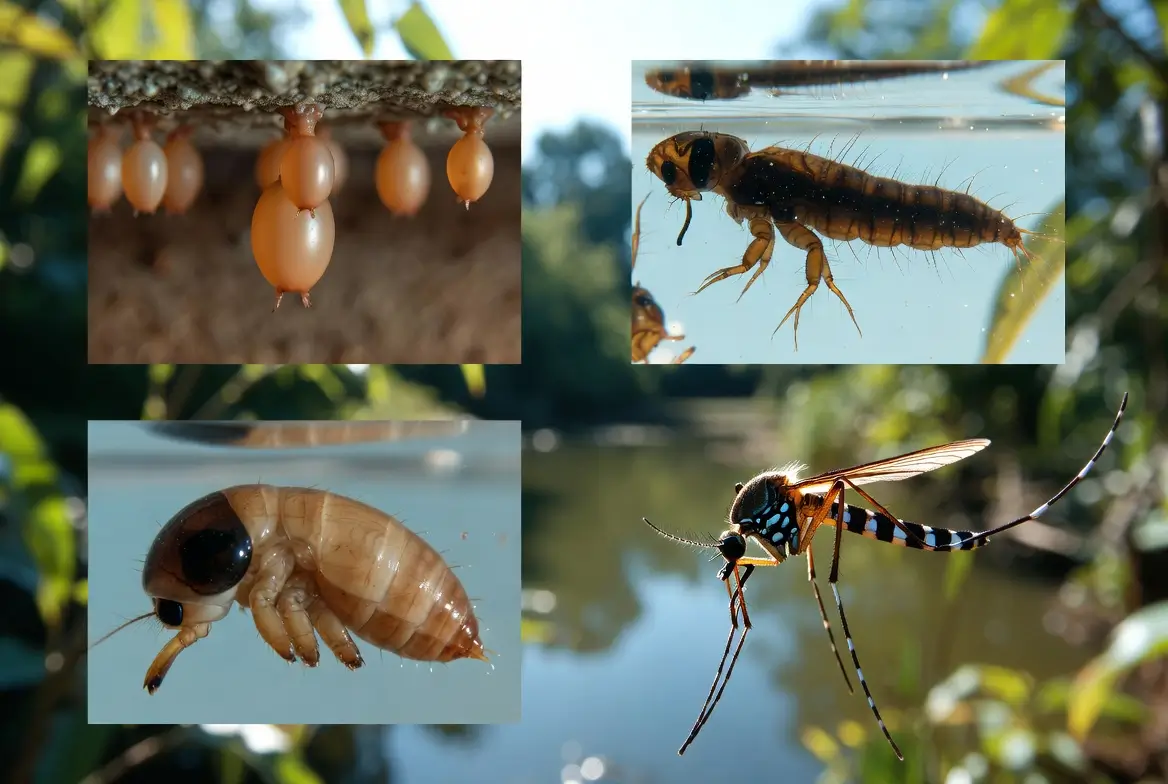
The Mosquito life cycle is one of the most consulted topics from the first sunny days. And for good reason: understanding how a mosquito develops is the first step in taking effective action against it. At home, at Garden Reclaimer, we design innovative and eco-responsible mosquito repellent terminals, and this biological knowledge is at the heart of our approach. The mosquito passes by four stages of development distinct, egg, larva, nymph, adult, the majority of which takes place in water. This guide explains, point by point, each phase of this cycle.
What is the mosquito life cycle?
The Mosquito life cycle refers to the set of transformations that allow the mosquito to pass from a microscopic egg to a flying and biting adult insect. This cycle is said holometabolum, that is, it includes a complete metamorphosis in four successive stages.
Concretely, this development takes place in an aquatic environment for the first three stages, before switching to the terrestrial environment in an adult state. The total duration varies according to Mosquito species, the ambient temperature and the resources available, but it generally oscillates between 7 and 30 days under favorable conditions.
The four stages are as follows:
- Oeuf : first stage, deposited on the surface of the water or in a humid zone
- Larva : active aquatic stage, divided into four sub-stages (instars)
- Nymph : transition stage, non-food, before emergence
- Adult : winged insect, active on land and in the air
The egg stage: bridge, resistance and hatching
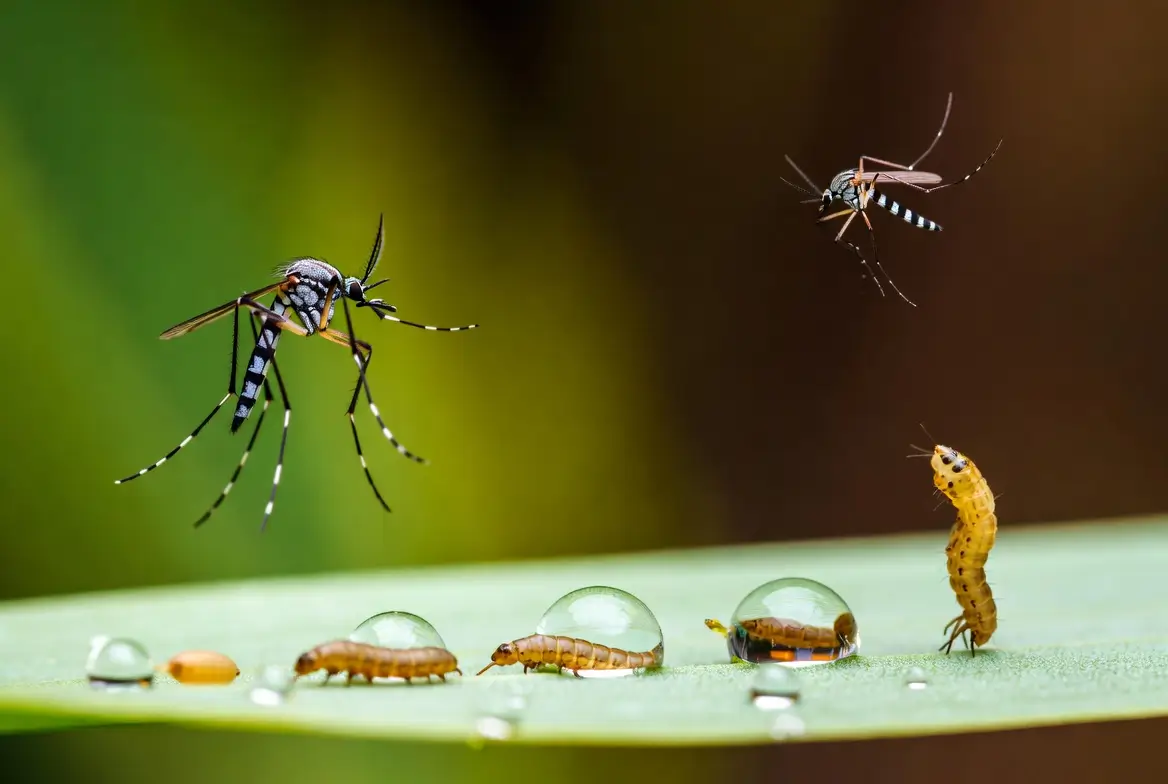
The bridge marks the starting point of Mosquito life cycle. The female mosquito lays its eggs after taking a blood meal, which is essential for egg maturation. In fact, only the female stings: she needs the proteins contained in the blood to ensure the Development of its eggs.
The methods of laying eggs vary according to the species:
- Culex pipiens (common mosquito): lays egg rafts grouped together at the Water surface, often in stagnant water in urban areas
- Aedes albopictus (tiger mosquito): lays its eggs separately, on the walls of containers just above the water line
- The Aedes in general: produce eggs resistant to drought, capable of remaining viable for several months in dry condition before being put into water
A female can lay eggs all 2 to 3 days, with 50 to 300 eggs being laid in each cycle. The outbreak occurs in 24 to 72 hours as soon as the eggs are in contact with water, depending on the temperature and certain conditions environmental.
The larval stage: aquatic development in four phases
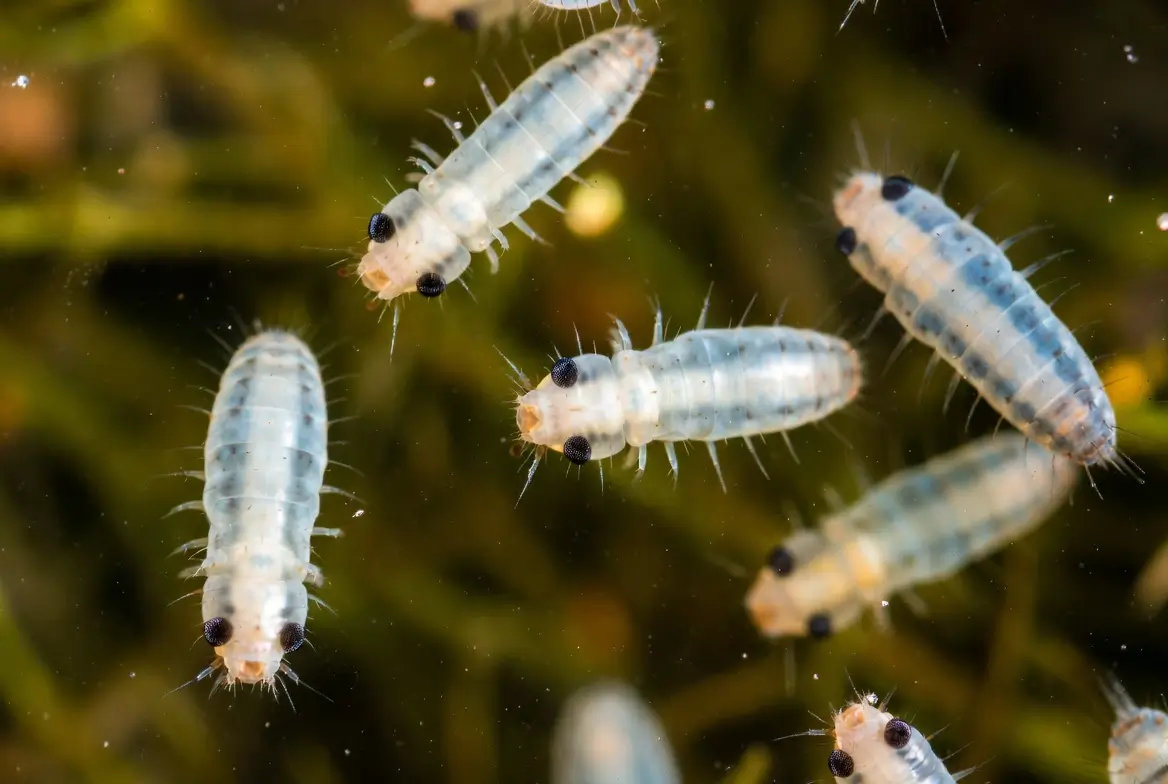
Once thehatching Once this occurs, the mosquito larva enters the most active phase of the cycle. The larval stage is aquatic: the larvae live in water and feed on organic matter in suspension, microalgae and bacteria. The duration of this stage varies from 5 to 14 days depending on water temperature and species.
Larval development includes four instars (sub-stages), separated by Molts successive. With each molt, the larva increases in size. The final size reached 2 to 12 mm depending on the species in question.
How do larvae develop in water?
La Head of the larva is well differentiated, equipped with mouth brushes that filter suspended particles. All mosquito larvae breathe to the surface via a respiratory siphon, which is why they regularly rise to the surface. This characteristic is exploited by control devices such as mosquito traps that disturb the larval environment.
- Instar 1 : larva a few mm in size, very vulnerable
- Instar 2 and 3 : gradual growth, intensive feeding
- Instar 4 : end of larval development, preparation for pupation
Larval mobility is such that larvae can occupy all available water collections, from pools to simple flower pot cups.
La larval density is an indicator of parasite pressure: larvae are found in all stagnant water collections, including urban environment.
The nymph stage: silent transformation before flight
At the end of larval development, the larva changes into nymph by the phenomenon of lysis of larval organs. The nymph does not feed: it draws on reserves stored at the larval stage to ensure its survival. ripening. It is a fundamental transition phase, comparable to the chrysalis of butterflies.
As with the larva, the nymph breathes on the surface, but it is distinguished by its characteristic comma shape. Nymphs generally remain on the surface of the water, motionless most of the time, but able to dive in case of danger.
- Duration : 1 to 4 days depending on the temperature
- Mobility : passive, without power
- Transition : transition from aquatic to terrestrial environments as soon as adults emerge
The transformations that allow the mosquito to pass from the pupal stage to the adult stage take place in a few hours. The adult mosquito emerges by splitting the pupal cuticle on the surface of the water.
The adult mosquito: reproduction, feeding and lifespan
The adult is the final stage of Mosquito life cycle. At this stage, the mosquito has all its functional structures: wings, legs, oral apparatus. Les males and females have different diets: male mosquitoes feed exclusively on Flower nectar and sweet juices, while the female mosquito needs a blood meal to ensure the development of its eggs.
What is the lifespan of an adult mosquito?
La Lifespan of a mosquito adult varies significantly by sex and species:
- Male mosquito : lives between 7 and 10 days on average
- Culex female : lives between 2 and 4 weeks in optimal conditions
- Aedes female : life expectancy of 3 to 4 weeks, sometimes longer
- Some species in diapause (hibernation): fertilized females can survive several months
In 2025, entomological data confirms that the Mosquito lifespan is strongly conditioned by temperature: above 25°C, metabolism accelerates and shortens the life of the insect, but also accelerates the reproductive cycle.

The tiger mosquito: an accelerated development cycle
The Tiger mosquito (Aedes albopictus) deserves particular attention as its establishment in mainland France has intensified in recent years. In 2025, more than 70 French departments were colonized by this invasive species native to Southeast Asia.
The development cycle Is a tiger mosquito faster than that of Culex in hot conditions:
- Eggs : resistant to desiccation, can remain viable for up to 6 months
- Larval development : 5 to 7 days at 28°C
- Nymphal stage : 1 to 2 days
- Total egg-adult duration : 8 to 10 days in summer
Therefore, the tiger mosquito generates several successive generations between May and October. Its ability to lay eggs in tiny deposits (bottle cap, pot saucer) makes it particularly difficult to control in a urban environment dense.
Hibernation and factors that influence the development cycle
The Mosquito life cycle does not stop in winter: it adapts. Depending on the species, the hibernation strategy differs. At the Culex, fertilized female mosquitoes enter hibernation (diapause), sheltered in cellars, garages or basements, and resume their activity in spring. At the Aedes, it is the egg stage that ensures winter survival.
Factors that modulate the speed of development cycle are well identified:
- Temperature : main factor — below 10°C, development stops; above 30°C, it accelerates sharply
- Water quality : larvae develop better in waters rich in organic matter
- Length of day (photoperiod) : influences the onset of diapause in some species
- Predation and competition : density of larvae in the aquatic environment
Depending on climatic conditions, several generations of mosquitoes can follow one another between May and October in temperate regions. It is this rapid breeding dynamic that explains the peaks in summer activity.
Why understanding the lives of mosquitos helps to better protect ourselves
La Life of a mosquito is short but extremely productive: a female can, during her life, lay between 500 and 1,000 eggs in total, spread over several laying cycles. This is why taking action against mosquitoes from the larval stage is much more effective than waiting for adults to emerge.
At Garden Reclaimer, we designed our mosquito trap by precisely integrating this biologically informed logic: acting on the cycle at the source, by disrupting the conditions favorable to larval development, while offering an eco-responsible alternative to Mosquito traps classical chemicals.
Les Mosquito bites are not just a nuisance: in many regions of the world, female mosquitos transmit vector-borne diseases (dengue, chikungunya, malaria). Understanding the cycle means understanding why it is urgent to act before eggs produce winged adults.
To reduce mosquito populations in your garden, the most effective approach combines:
- Suppression of larval lodges : empty any standing water (saucers, gutters, tarpaulins)
- Biological control : introduction of Larvivorous fish in ornamental basins
- Innovative mechanical solutions : like our Garden Reclaimer terminal, designed to capture and disrupt the reproductive cycle chemical-free
Discover our solution on garden-reclaimer.com and effectively protect your outdoor space now.
FAQ — Everything you need to know about the lifespan and life cycle of mosquitoes
What is the lifespan of a mosquito?
La Lifespan of a mosquito depends on sex and species. A male mosquito lives an average of 7 to 10 days. The female lives between 2 and 4 weeks under normal conditions, sometimes up to several months for species capable of hibernating. It is the female that stings and ensures reproduction, which gives it a naturally longer lifespan than the male. In 2025, these data were confirmed by entomological studies conducted under semi-natural conditions, which showed that temperature was the first factor of variation for this duration.
How long does the mosquito life cycle last from the egg stage to the adult stage?
The mosquito's life cycle lasts between 7 and 30 days depending on the species and temperature. Under optimal conditions (stagnant water, temperatures around 25-30°C), some species such as the tiger mosquito complete their development in less than 10 days. Culex pipiens takes an average of 10 to 14 days at 20°C. The lower the temperature, the more the cycle slows down. Below 10°C, larval development practically stops. This plasticity of the cycle explains why mosquito populations explode during hot and humid summers.
How do tiger mosquitoes reproduce and where do they lay their eggs?
The tiger mosquito (Aedes albopictus) reproduces by laying its eggs on the inner walls of small containers of water, just above the water level. This egg-laying strategy makes its eggs very resistant to drought: they can survive up to 6 months without water. Once the container is filled, the eggs hatch in 24 to 72 hours. A female can lay eggs every 2 to 3 days, which generates a rapid multiplication of populations. Regularly emptying the saucers of flower pots, buckets and tarpaulins is the most effective gesture to break your reproductive cycle.
What is the difference between the mosquito larva and the nymph?
The mosquito larva is an active aquatic stage that feeds on organic matter and passes through four instars (sub-stages) separated by molts. It can measure from 2 to 12 mm depending on the example. The nymph, on the other hand, is a transitional stage that does not feed: it draws on the reserves accumulated in the larval stage to complete its metamorphosis. The nymph looks like a comma and stays on the surface. Its lifespan is short, between 1 and 4 days, before the adult mosquito emerges. These two stages take place entirely in the aquatic environment.
Can mosquitos survive the winter?
Yes, mosquitos can survive the winter, but with different strategies depending on the species. In Culex pipiens, fertilized females enter into winter diapause in cool shelters (cellars, garages, basements) and resume their activity as soon as the first heat of spring arrives. Among the Aedes, including the tiger mosquito, it is the eggs that ensure winter survival thanks to their exceptional resistance to cold and desiccation. These eggs can remain viable for several months and hatch the following spring. In other words, winter doesn't kill mosquitos: it stops them.
How to act effectively against mosquitoes by knowing their cycle?
Acting effectively against mosquitoes involves intervening at each stage of the cycle. Suppressing larval hosts is the most cost-effective measure: a single container of standing water can produce hundreds of larvae. For areas where suppression is impossible (ponds, basins), biological solutions such as Bacillus thuringiensis israelensis larvae or larvivorous fish offer eco-responsible alternatives. For adults, devices like the Garden Reclaimer terminal disrupt the reproductive cycle without the use of insecticides. By combining these three levers of action, the pressure exerted by mosquitoes can be significantly and sustainably reduced.