



The Tiger mosquito is today one of most invasive species in the world, and its progress on French territory is documented, measurable and worrying. In 2025, according to Public Health France, Tiger mosquitos are located in more than 78 departments in mainland France, compared to only 1 in 2004. Identify this insect with certainty, understanding their behavior and knowing where to report their presence are reflexes that every inhabitant can acquire. Chez Garden Reclaimer, manufacturer of eco-friendly mosquito repellent bollards, we are working precisely in this field: to help individuals regain control of their outdoor spaces in the face of Proliferation of the tiger mosquito. This article gives you all the keys to recognize, understand, and act.
What is the tiger mosquito? Origin, classification and characteristics of the species
The Tiger mosquito (Aedes albopictus) is A mosquito from the Culicidae family, native to tropical forests OfSouth East Asia. This invasive species has progressively colonized all of the world's temperate zones over the last forty years, transported mainly via the international trade in used tires and potted plants containing diapausing eggs. Aedes albopictus is now present on all inhabited continents, with the exception of Antarctica.
The tiger mosquito is an insect of smallness, measuring between 5 and 10 mm in length, recognizable by its appearance black and white striped characteristic. It belongs to the genre Aedes, which brings together several Mosquito species vectors of tropical diseases, including Aedes aegypti, the main vector of dengue in intertropical areas.
Key points that define this species:
- Classification : order Diptera, family Culicidae, genus Aedes, species Albopictus.
- Geographical origin : tropical rainforests ofSouth East Asia, including Japan, South China and Indonesia.
- Global dispersion : introduced in Europe in the 1990s, present in mainland France since 2004 (first detection in the Alpes-Maritimes).
- Lifespan : between 2 and 4 weeks for the adult female under normal conditions.
- Range of action : the Tiger mosquito does not generally move further than 150 to 200 meters away from sound birthplace, which facilitates the location of cottages near an observation area.
How to recognize the tiger mosquito: its distinctive physical characteristics
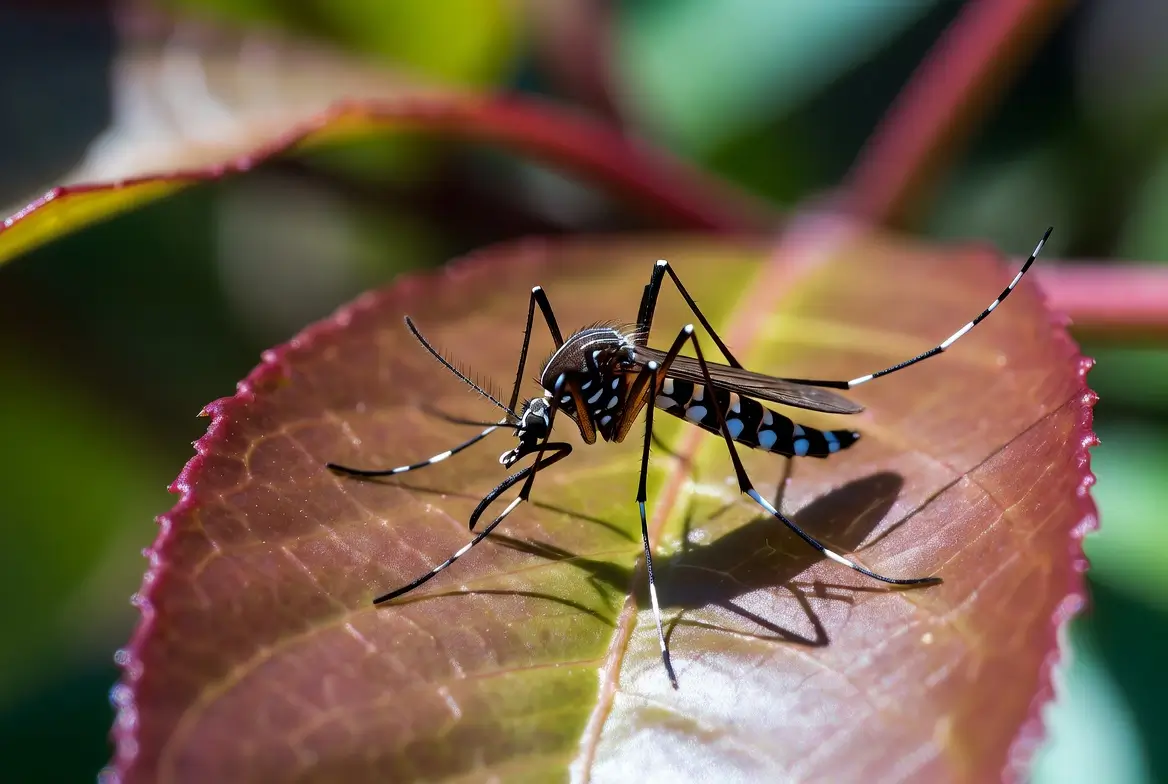
Recognize the Tiger mosquito with the naked eye is possible, provided you know exactly what to observe. The tiger mosquito does Part of the insects the Smaller than a 1 cent euro coin : its adult size is generally less than 10 mm, making it difficult to distinguish it in the environment. However, several morphological signs make it possible to identify it reliably.
The visual characteristics to remember:
- Black and white stripes : the Mosquito body Tiger is entirely striped contrasting black and white bands, visible on The paws, abdomen and thorax.
- Central white line : one white line distinctive longitudinal runs through the dorsal part of the thorax (the back of the insect), of the Head and back toward the abdomen. It is the most reliable sign to differentiate it fromother mosquitos.
- Reduced size : between 5 millimeters and 10 mm for an adult, which is significantly smaller than the Common mosquito (Culex pipiens).
- Dark, unscratched wings : unlike some other species, its wings are uniformly dark, with no pattern.
- Daytime presence : the Tiger mosquito Bites during the day, mainly at dawn and late afternoon, which clearly distinguishes it from the common mosquito, active at night.
Note that Tiger mosquitos are often confused withother species striped present in France. The combination of reduced size + dorsal white line + daytime activity is the most reliable identification trio for a non-specialized observer.
Why does the female tiger mosquito bite and how does it act?
Beyond visual identification, Get to know better The behavior of the female ofthe Tiger mosquito makes it possible to understand why and how it represents a real health nuisance. Only the female Spades: she needs human blood to ensure the egg development after mating. The male, on the other hand, feeds exclusively on nectar and vegetable juices, without ever sting.
The sting cycle of female Tiger mosquito works like this:
- After mating : The female is actively looking for a Blood meal on a person or an animal to trigger the maturation of its eggs.
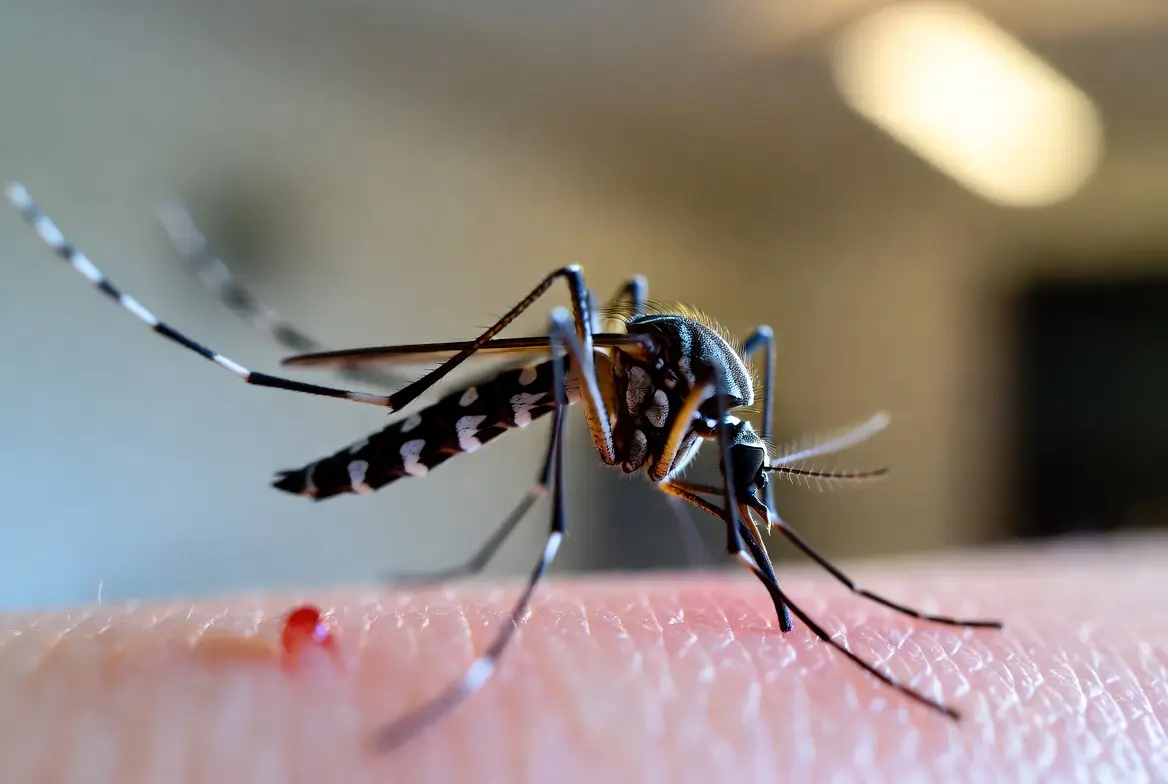
- During the sting : The female mosquito injects his saliva in the skin to prevent blood clotting. It is this saliva that causes the skin reaction Looking like a blister, of 5 millimeters to 2 centimeters in diameter, characteristic of a tiger mosquito bite.
- Hunting behavior : unlike the common mosquito, which enters The houses to sting a person At night, the Tiger mosquito hunting outside, in the shade, during the day.
- Frequency : one female can perform several Blood meals during the season, changing hosts with each cycle, which increases the risk of viral transmission.
- Post-meal bridge : When a mosquito bites and draws enough blood, the female lays her eggs in the following 3 to 5 days, in a site ofstagnant water nearby around its place of usual hunting.
What diseases can the tiger mosquito carry: dengue, chikungunya, Zika and other viruses
The Tiger mosquito can carry diseases serious, and that is precisely what justifies the active surveillance of its establishment. Tigers can carry diseases Like the dengue, the Chikungunya And the Zika when he has previously completed a Blood meal on a person infected. When a mosquito bites A person carrying the virus, he ingests it with the blood and can transmit during his next bites.
Les viruses what The tiger mosquito can transmit:
- Dengue : the most common arbovirus disease in the world, with 100 to 400 million cases per year according to the WHO. La Dengue or chikungunya represent the two most documented threats in metropolitan France.
- Chikungunya : viruses causing intense and disabling joint pain that can last for several weeks.
- Zika : viruses at major teratogenic risk in pregnant women, associated with cases of fetal microcephaly.
- West Nile virus : circulating in the south of France, also transmitted by mosquitoes of the genus Culex, but also by Aedes albopictus under certain conditions.
The tiger mosquito is not not always carrying these viruses : for Transmit the virus, he must first have stung a infected person in an endemic or active traffic area. In mainland France, the risk of local transmission exists during the period of activity of Tiger mosquito, from May to November. That's why the vector control coordinated by the Ministry of Health And the regional health agencies relies first on the monitoring of thesiting of the species.
Tiger mosquito vs common mosquito: comparative table
Presence of the tiger mosquito in France: state of establishment and colonized municipalities
La Presence of the tiger mosquito In mainland France, there has been a documented and continuous increase since 2004. Starting from a single department in the Alpes-Maritimes, This species colonized 78 departments in 2025 according to data from Public Health France, with an extension to the north and east that is accelerating under the effect of climate change. To date, more than 67% of the French population lives in an area where Tiger mosquito is present or actively monitored.
Key data onsiting in France:
- First detection : 2004 in the Alpes-Maritimes, via a seaport.
- Progression : from 1 to 78 departments colonized in twenty years, i.e. an unprecedented geographical expansion for an invasive species in temperate Europe.
- Distribution map : updated every year by Public Health France on the signalement-mosquie.fr portal, with the colonized municipalities identified jointly by municipality.
- Active season : from May to November in the south, from June to October in the more northern regions.
- Acceleration factor : hotter and humid summers promote the multiplication of larval lodges in urban and peri-urban areas.
In Europe, the Tiger mosquito in Europe is now present in more than 30 countries according to the ECDC (2024), including Spain, Italy, Greece and the Netherlands. This reality requires continent-wide surveillance, coordinated by the regional health agencies and national entomological services.
How to report the presence of a tiger mosquito: tools and official procedures
The Reporting ofthe Presence of the tiger mosquito is a concrete civic act that feeds directly into the databases of health authorities. In France, the system of Reporting is mainly based on the national platform signalement-mosquito.fr, managed jointly by Santé Publique France and the Ministry of Health. Each validated observation contributes to the refinement of the national cartography ofsiting and to trigger operations of vector control targeted.
How to perform a Reporting in practice:
- Through the site signalement-mosquito.fr : file an observation with a photo, the precise location and the date. La presence on the site an assisted identification tool makes it possible to validate the species before submission.
- Through the mobile application : available on iOS and Android, it allows Reporting geolocated in a few seconds directly from the field.
- Via the local ARS : in case of doubt or if an area that is not yet colonized is reported, contact theRegional Health Agency competent makes it possible to trigger a professional entomological inspection.
Note that the quality of Reporting depends directly on the photo submitted: a clear shot of the insect placed on a surface, showing the white line dorsal and the white on the legs, is sufficient for reliable identification by the teams oftotal population entomological referents trained by Public Health France.
How to limit the proliferation of tiger mosquitoes around your home
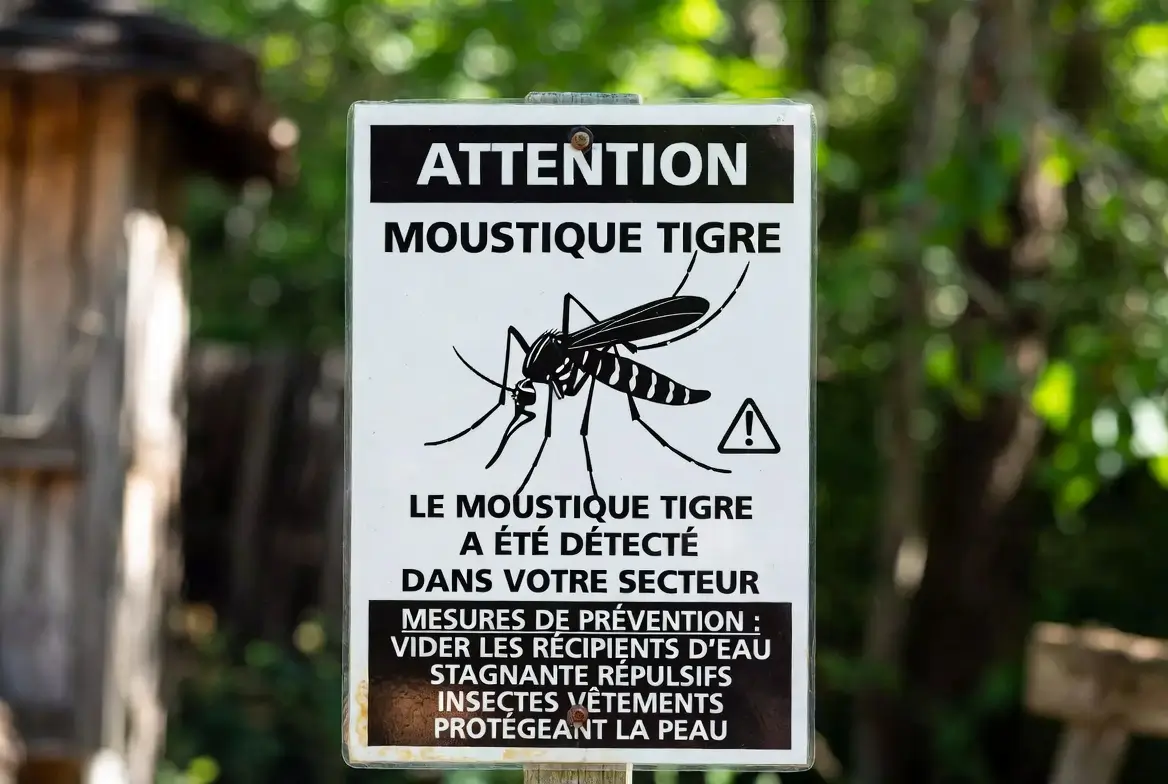
La Proliferation of the tiger mosquito is directly linked to the availability of larval lodges near homes. Contrary toother species that lay eggs in remote natural wetlands, the Tiger mosquito exclusively exploits artificial micro-lodges created unintentionally by humans in their immediate environment. Removing these lodgings is therefore the most effective and most accessible preventive measure.
Priority actions to limit larval lodges :
- Empty the flower pot saucers every 4 days, brushing the inner walls to destroy the eggs stuck to the surface.
- Cover or store any container likely to retain thestagnant water : buckets, watering cans, cans, tarpaulins.
- Maintain gutters and check their good flow after each rain.
- Treating non-suppressive lodges (basins, ponds, barrels) with BTI (Bacillus thuringiensis israelensis), a biological larvicide that is safe for fauna and flora.
In addition to these measures, at Garden Reclaimer, our mosquito bollards form an active protection perimeter against Mosquitos adults working in your garden or terrace, without diffuse chemical insecticide. Get to know better The enemy also means choosing the right tools to effectively protect yourself from it.
Tiger mosquito reporting: tools, actors and usefulness
FAQ - Frequently asked questions about the tiger mosquito
How do you recognize a tiger mosquito from an ordinary mosquito?
The Tiger mosquito differs from an ordinary mosquito by three reliable visual signs. First of all, it is significantly smaller than the Common mosquito, with a size generally less than 10 mm. Her body is entirely black and white striped, with a white line longitudinal clearly visible on the dorsal part of the thorax, from head to abdomen, and white on the legs. Finally, unlike the common mosquito that bites at night, the Tiger mosquito is active during the day, mainly at dawn and late afternoon. If a small black mosquito and white stings you in the middle of the day in your garden, in the shade and close to the ground, it is most likely a Tiger mosquito. This combination of criteria (size, stripes, activity schedules) is sufficient for practical identification without specialized equipment.
Is the tiger mosquito dangerous in France?
Yes, the Tiger mosquito is potentially dangerous in France because it is vector of viruses Like the dengue, the Chikungunya And the Zika. To transmit these diseases, it must first have bitten an infected person returning from an endemic area. In mainland France, cases of local transmission of dengue have been documented every summer since 2010, especially in the south. In 2023, Public Health France confirmed more than 130 indigenous cases of dengue in France. The risk is therefore not theoretical: it is real, measurable and increasing. La tiger mosquito bite itself causes a skin reaction that is more intense than that of the common mosquito, with a plaque Looking like a blister of 5 millimeters to 2 centimeters in diameter, often very itchy. The double threat, direct nuisance and potential viral transmission, fully justifies increased vigilance.
How do I report a tiger mosquito in France?
Report a Tiger mosquito in France is mainly done via the official platform Signalement-Moustique.fr, accessible on computer and mobile, or via the mobile application of the same name available for free on iOS and Android. Simply take a clear photo of the insect, fill in the location and date of observation, and submit the form. An entomologist from Public Health France validates the identification within 48 to 72 hours. Ce Reporting is important because it feeds directly into the national map of colonized municipalities and may trigger an intervention by theRegional Health Agency or the local EID in case of first detection in a new area. Plus the reports are early and precisely geolocated, the more rapid and targeted the response of the health authorities is to limit the Proliferation of the tiger mosquito.
Where does a tiger mosquito lay its eggs?
The Tiger mosquito lays its eggs in very small volumes of stagnant water, starting from only 5 ml, which fundamentally differentiates it from other mosquitos. La female Select larval lodges small, dark and sheltered: saucers of flower pots, buckets, watering cans, flower pots without drainage holes, tarps, tires, obstructed gutters. She deposits her eggs not on the surface of the water but stuck on the Walls inside the container, just above the water level. This characteristic makes eggs very resistant to drought and difficult to remove by simple emptying. Concretely, a standard garden or terrace contains on average 5 to 10 potential larval sites not identified by an untrained observer, whose suppression or treatment with BTI is sufficient to significantly reduce the density of tiger mosquitos in the area concerned.
Since when has the tiger mosquito been present in France?
The Tiger mosquito has been present in France since 2004, when it was first detected in the Alpes-Maritimes. Its arrival is directly linked to international trade, via used tires and plants transporting eggs in diapause. From 1 department in 2004, Tiger mosquitos colonized 78 departments in 2025, according to Public Health France, a geographical increase of more than 7,000% in twenty years. This invasive species, Capable of invading of new territories very quickly, thanks to its tolerance to cold and its ability to exploit urban micro-environments, is now present in the vast majority of major French cities. In 2025, Paris, Lyon, Bordeaux, Bordeaux, Toulouse, Toulouse, Nantes and Strasbourg are among the areas where Tiger mosquitos are active and monitored throughout the summer season.
Can the tiger mosquito be attacked without chemical insecticide?
Yes, it is entirely possible to tackling At Tiger mosquito without chemical insecticide, and it is even the recommended approach to protect local biodiversity. The most effective and environmentally friendly methods combine the removal of larval lodges (emptying, brushing, covering all containers ofstagnant water), biological treatment with BTI for non-suppressible lodges, and the installation of adult capture devices. At Garden Reclaimer, we have developed eco-responsible mosquito repellent terminals that capture Mosquitos adults in an active radius around the terminal, without diffusing chemicals into the air or into the ground. This integrated approach, which acts simultaneously on larvae and adults, is the most effective in permanently reducing the density of tiger mosquitos in an outdoor living space, while maintaining the quality of life And the public health occupants.
Protecting your outdoor space from the tiger mosquito: the Garden Reclaimer approach
Faced with the documented progression of Tiger mosquito on French territory, wait-and-see attitude is no longer a reasonable option. Identify the insect, report its presence to the competent authorities, remove larval sites and install a device for capturing adults: this protocol in four steps is accessible to all individuals, without prior technical expertise.
At Garden Reclaimer, we support garden and terrace owners in implementing sustainable and eco-responsible solutions against Tiger mosquitos and other harmful species. Discover our mosquito repellent terminals and our integrated approach on garden-reclaimer.com and take action before the start of the next active season.