



Choosing the right one garden mosquito treatment has become a necessity for anyone who wants to enjoy their outdoors with total peace of mind. At Garden Reclaimer, designer of the Mosquito repellent terminal GréCo, we see every season that owners are multiplying their attempts before finding the right combination of solutions. This guide aims to save you time and money by detailing the options available, their real performance and the winning strategy for a sustainably protected garden.
Before choosing a treatment, it is essential to understand the mosquito cycle. A female lays 100 to 300 eggs in the stagnant water in your garden. Larvae develop in 7 to 14 days before becoming flying adults. Adults live 2 to 4 weeks, and females sting every 2 to 3 days to feed their eggs. An effective protection strategy must therefore act both on larvae (prevention) and on adults (active reduction).
Preventive treatments: eliminating mosquitoes at the source
%20(1).webp)
Suppression of larval sites
It's the first step in any garden protection plan, and it's free. Mosquitoes lay eggs in stagnant water, even in minute quantities. A methodical garden tour makes it possible to identify and eliminate breeding sites.
- Flower pot saucers : empty them after every rain or fill them with wet sand to prevent egg laying.
- Gutters : clean them regularly to avoid plugs that trap water.
- Rain water collectors : cover them with a fine mosquito net or add Bti pellets.
- Children's toys, wheelbarrows, buckets : turn them over or store them away from the rain.
- Tarpaulins and blankets : check that they do not form water pockets.
For a comprehensive guide to identifying and eliminating breeding sites, check out our in-depth article on The life cycle of mosquito larvae.
Bti larvicide treatment
Bti (Bacillus thuringiensis var. israelensis) is a natural bacterium that destroys mosquito larvae in water. Available in the form of pellets, granules or briquettes, it can be used in all water points that are impossible to empty (ornamental basins, ponds, ditches). Its action is highly selective: it only affects Diptera larvae and preserves other aquatic organisms (fish, frogs, dragonflies).
Bti tablets remain active for 2 to 4 weeks depending on the temperature of the water. Plan for regular renewal throughout the season. The cost is moderate: €15 to €30 for a full season on a standard garden.
Chemical garden treatments: effectiveness and limits
Insecticide sprays in the garden constitute a garden mosquito treatment with immediate but temporary effect. Two options exist for individuals.
Professional treatment. A licensed operator sprays insecticide (usually deltamethrin) on vegetation, hedges, and mosquito resting areas. The effect lasts 2 to 4 weeks depending on weather conditions. Count 150 to 400€ per pass, with 3 to 5 passages required per season (i.e. 600 to 2,000€ in total).
Self-applied treatment. Products in spray or diluted concentrate are available in garden centers (10 to 50€ per bottle). The effectiveness is lower than a professional treatment because the application is less precise and the concentrations are often lower. The duration of action does not exceed 1 to 2 weeks.
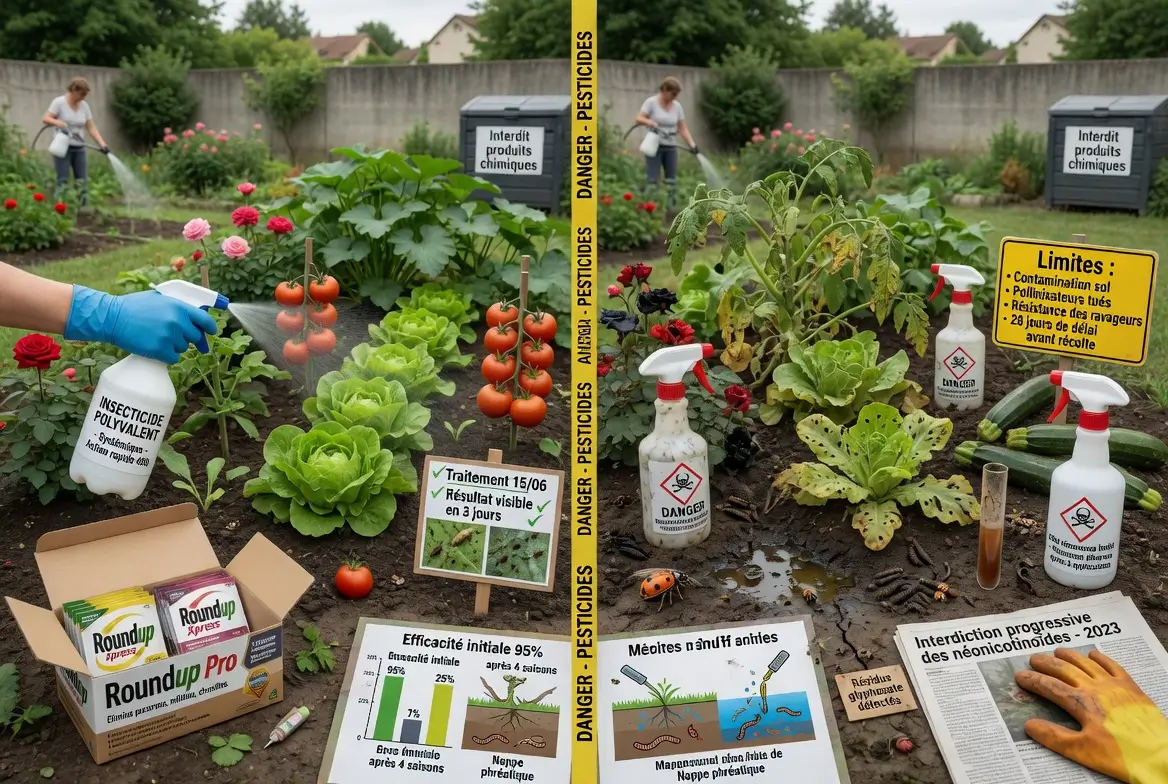
In both cases, insecticides pose documented environmental and health problems. They indiscriminately kill insects present in the treated area, including pollinators (bees, butterflies) and useful helpers (ladybugs, lacewings). ANSES recommends limiting the use of pyrethroids in residential areas, and several studies associate chronic exposure to endocrine disturbances. Insecticide resistance is also developing in mosquito populations, reducing the effectiveness of treatments over the seasons.
Natural solutions to protect the garden
Natural alternatives appeal to homeowners who want to preserve their garden ecosystem. Their effectiveness varies but they are good complements to a global strategy.
Repellent plants. Lemongrass, lavender, geranium, basil, basil, basil, rosemary, and catnip release volatile compounds that disrupt mosquitoes' olfactory receptors. Their effect is real but limited: you have to wrinkle the leaves to release the essential oils, and the radius of action does not exceed 50 cm to 1 m around the plant. They are ideal in pots along a terrace, in addition to an active trap.
Natural predators. Installing bat and swallow nesting boxes promotes natural predation. A bat consumes 500 to 1,000 insects per night, but mosquitoes represent only a fraction of this diet (5-10% according to studies). Dragonflies are fearsome predators of mosquitoes, both in the larval stage (in water) and in the adult stage (in flight). Encouraging clean waterholes with diverse aquatic vegetation encourages their installation.
Essential oils. Lemongrass, lemon eucalyptus or geraniol essential oil can be diffused outside via torches or diffusers. The effectiveness is temporary (1 to 2 hours) and limited to a radius of 2 to 3 meters. These solutions are suitable for occasional meals on the terrace, not for continuous garden protection.
CO₂ trapping: the most efficient garden mosquito treatment
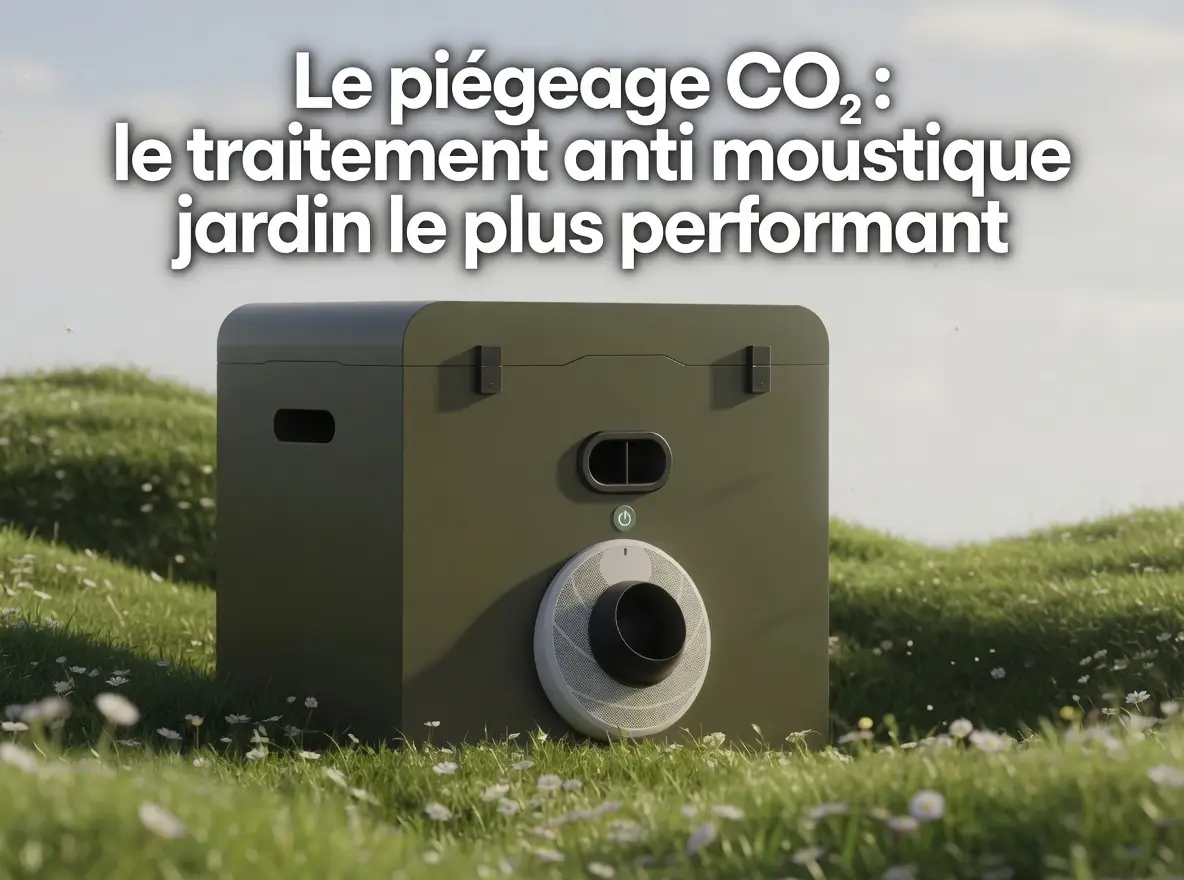
Trapping by CO₂ attraction represents the most effective category in garden protection. The principle is simple: a device reproduces the human respiratory signal (CO₂, heat, humidity, pheromones) to attract female mosquitoes from several tens of meters, then captures them by suction in a net.
The Garden Reclaimer GréCo terminal stands out in this category for its atmospheric concentration reactor. This patented technology captures CO₂ from the ambient air and concentrates it to generate an attractive plume, without any gas bottles. The result: fully autonomous operation, a cost of €50 to €100 per season and an efficiency of 85 to 95% reduction after 6 to 8 weeks.
To find out more about this technology, visit our page Operation of the GréCo terminal.
An advantage specific to the garden: the CO₂ trap does not disturb the ecosystem that you have patiently built. The bees in your vegetable garden, the ladybugs in your roses, and the butterflies in your buddleia are not attracted to the CO₂ + pheromone signal and are never caught. Field surveys on GréCO show that more than 98% of the insects trapped are mosquitoes or related species (ceratopogonids). This is a crucial point for gardeners who practice permaculture, organic gardening or who have set up an insect hotel.
The positioning of the trap in a garden follows specific rules. Place the boundary between dense vegetation (hedges, beds, undergrowth) and your living area (terrace, pool, playground). The ideal distance is 10 to 15 meters. Raise the trap 60-80 cm from the ground on a stable support, away from the dominant wind. If your garden has a water point (pond, pond), position the terminal halfway between this water point and your terrace to intercept mosquitoes that emerge from the breeding area.
Comparison of mosquito repellent treatments for the garden
The optimal strategy: combining approaches
No single treatment guarantees 100% protection. The most effective strategy combines three complementary levels of action.
Level 1: prevention (free). Remove any standing water from the garden. Make it a weekly ritual: empty the saucers, turn the containers upside down, clean the gutters. Prune dense vegetation around living areas to reduce the daytime refuges of adult mosquitoes.
Level 2: larvicide treatment (15-30 €/season). Place Bti tablets in water points that cannot be emptied (basins, pools, manholes). Renew every 3 to 4 weeks from May to October.
Level 3: active capture (50-100 €/season). Install a GréCo terminal positioned between the vegetation and your living area. Activate it 4 to 6 weeks before the peak of the season to break the reproductive cycle before summer arrives. Ask for free investment advice to optimize results.
The advantage of this approach is that it is progressive and scalable. You can start with Level 1 (free) and assess the results. If the pressure is still too strong, add level 2. If you want maximum protection with minimum effort, Level 3 is the most profitable investment in the long term.
This combination acts on the three stages of the cycle: eggs/larvae (suppression of habitats + Bti), emerging adults (CO₂ trap) and adults in flight (CO2 trap + natural air current). The result: 90 to 95% protection over the season, without any chemical products.
Garden mosquito treatment: the ideal calendar
Timing is a critical factor that is often underestimated. A treatment started too late loses a significant portion of its potential effectiveness.
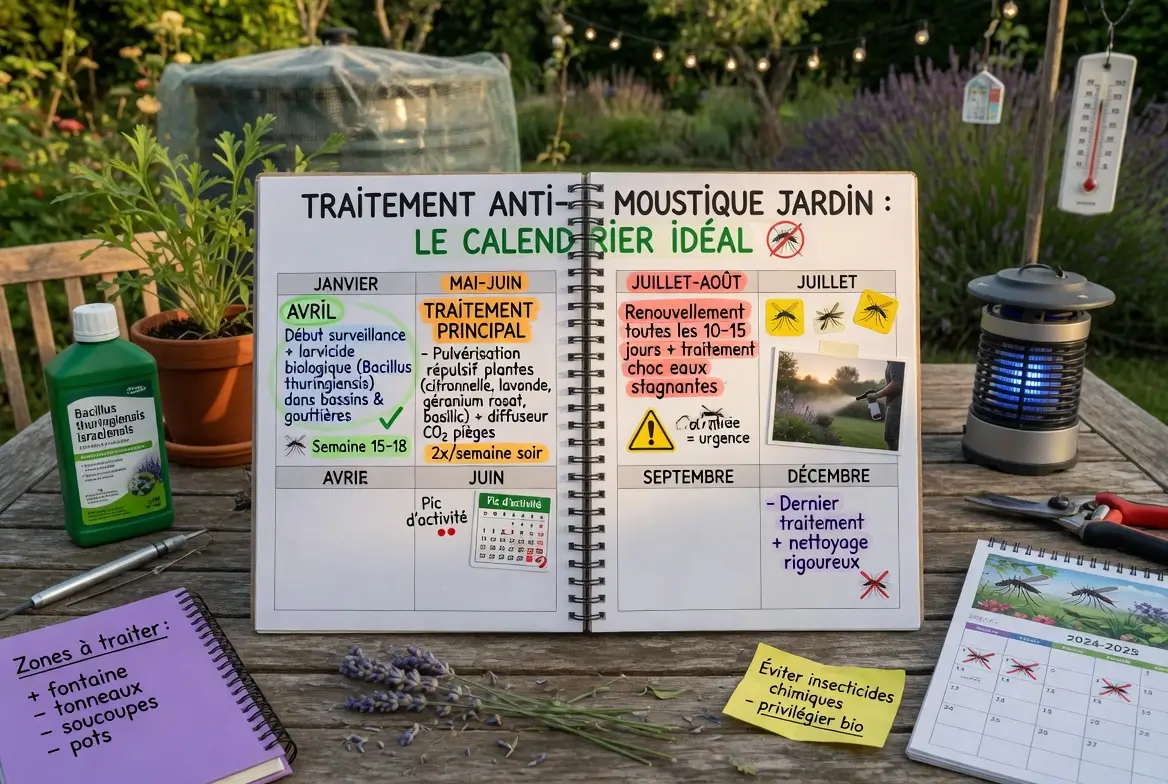
Mars (south)/April (north) : first inspection of larval sites. Installation and commissioning of the GréCo terminal. Place Bti tablets in fixed water points. This is the most important moment: intercepting the first breeding females prevents the constitution of the summer population.
May-June : the mosquito population is increasing. The trap works continuously and accumulates catches. Check the larval sites every week and renew the Bti. The reduction starts to be felt after 3 to 4 weeks.
July-September : peak of season. The cumulative effect of the trap reaches its maximum. Empty the catch net every 2 to 4 weeks. Remain vigilant about breeding sites, especially after summer storms that create new temporary water points.
October-November : end of season. Nighttime temperatures drop below 10°C and mosquitos enter into a diapause. Clean and store the GréCo terminal in a dry place for wintering. Last inspection of larval sites before winter. Take advantage of the low season to landscape your garden: cut the excessively dense hedges that serve as a daytime refuge for mosquitoes, fill in the hollows that retain water and check the tightness of the rainwater collectors.
An additional tip: note the number of mosquitoes caught each time the net from the GréCo terminal is emptied. This data will allow you to notice the gradual decrease in the local population from year to year. Connected GréCo offers this functionality in a digital version via its mobile application, with capture statistics and maintenance alerts. A garden treated continuously for 2 to 3 seasons sees its mosquito population drop permanently, because the trap prevents the reconstitution of numbers every spring. To understand the seasonal behavior of mosquitoes and recognize the species found in your area, consult our guide on The tiger mosquito.
FAQ: garden mosquito treatment
What is the most effective garden mosquito treatment?
The most effective combination combines the suppression of larval sites (free), Bti treatment of fixed water points (€15-30 per season) and a CO₂ trap such as the GréCo terminal (€50-100 per operating season). This multi-layered approach acts on all three stages of the cycle (eggs, larvae, adults) and offers 90 to 95% reduction without any chemical product. The GréCo terminal differs from other traps by its total autonomy (no gas bottle) and its range of 60 meters in radius.
Are chemical treatments dangerous for garden animals?
Yes. Insecticides based on pyrethroids (deltamethrin, permethrin) do not only target mosquitoes. They also kill bees, butterflies, ladybugs, and many beneficial garden insects. Cats are particularly sensitive to pyrethroids, which can cause serious neurological disorders in them. Insectivorous birds (chickadees, swallows) suffer from the scarcity of their prey. Mechanical CO₂ trapping, on the other hand, only targets female mosquitoes and poses no danger to other garden inhabitants.
What time of year should treatment be started?
Treatment should begin before the first adult mosquitoes appear. In the south of France, that means the end of March. In the center and the north, at the end of April. Installing a CO₂ trap 4 to 6 weeks before the peak of the season allows the first breeding females to be captured before they lay eggs, breaking the multiplication cycle from the start. A treatment started in July, at its peak, will take 6 to 8 weeks longer to produce significant results.
Is Bti treatment enough to protect a garden?
Bti is very effective in destroying larvae in your garden waterholes, but it does not protect against adult mosquitoes from neighboring properties, public areas, or untreated areas. A garden surrounded by other gardens with uncontrolled breeding sites will constantly receive mosquitoes from outside. This is why the Bti must be complemented by a trap targeting adults, such as the GréCo terminal, for a truly effective protection of the living area.
Does a garden mosquito treatment also protect the interior of the house?
Yes, indirectly. By reducing the mosquito population in the garden by 85 to 95%, a trap like GréCo proportionally decreases the number of mosquitoes that enter the house through windows and doors. Most of the mosquitos that bite you at night inside come from your own garden or the immediate neighborhood. An effective exterior treatment therefore results in a significant improvement in interior comfort, even without additional devices inside the house.