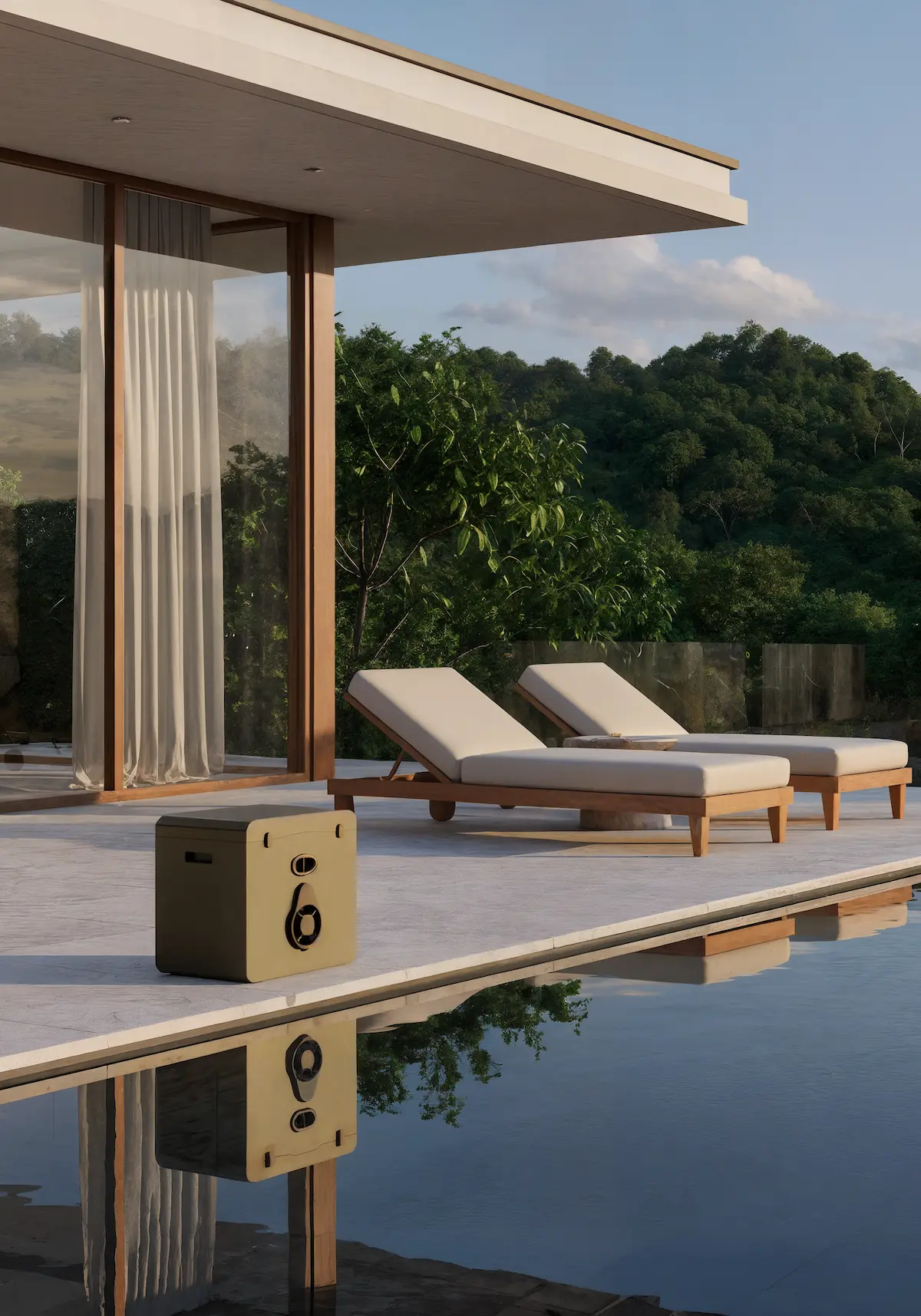



Choose a protective device effective among the dozens of products available on the market is a challenge. At Garden Reclaimer, manufacturer of Mosquito repellent terminal Every year, GréCo supports thousands of individuals and professionals in this process. This guide details existing technologies, their real performance, and the criteria to consider before investing.
The mosquito control device market has evolved considerably in recent years. Consumer solutions have multiplied, ranging from simple repellent bracelets to autonomous CO₂ traps. Unfortunately, not all of them live up to their promises. Some product categories have efficiency rates of less than 20% under real conditions, which generates frustration and distrust among consumers. The objective of this guide is to give you the keys to distinguishing truly effective solutions from marketing gadgets.
The main categories of mosquito repellent devices
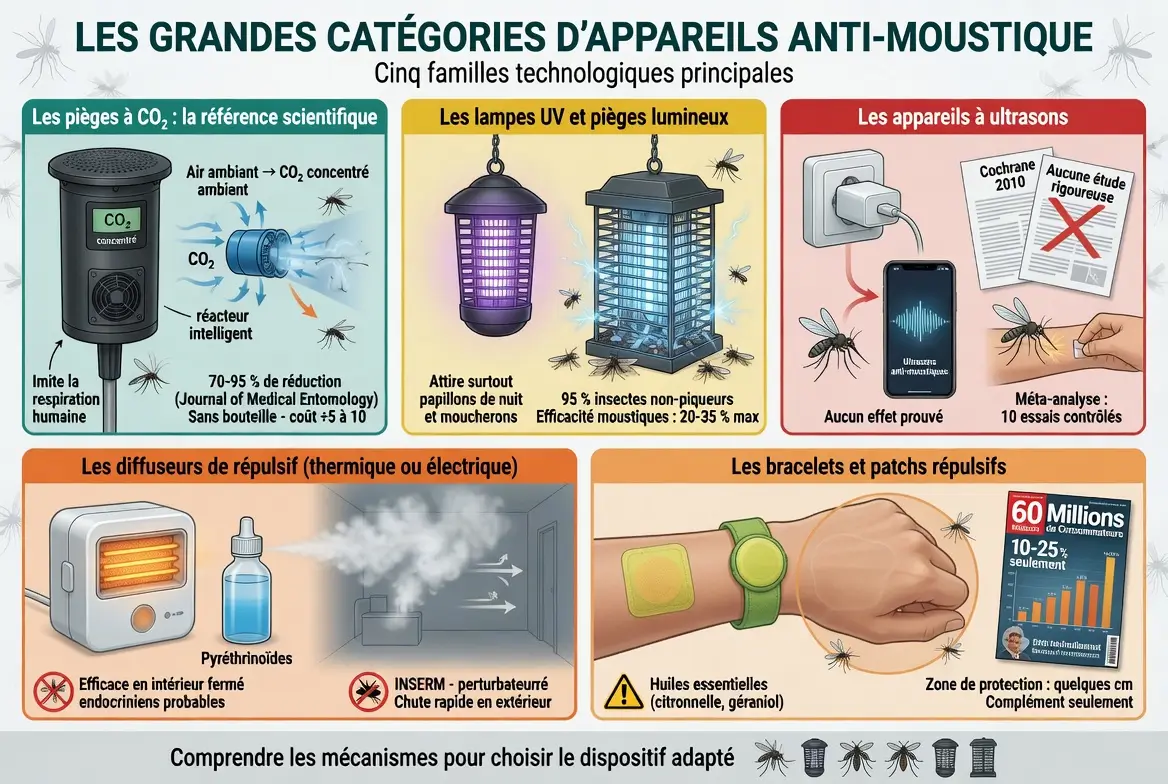
There are five main technological families, each based on a different operating principle. Understanding these mechanisms is essential in order to choose the right device for your situation.
CO₂ traps: the scientific reference
The carbon dioxide trap mimics the human respiratory signal to attract female mosquitoes in search of blood. It is the technology most studied by entomologists and the one that shows the best results in real conditions. Studies published in the Journal of Medical Entomology show reduction rates of 70 to 95% depending on models and conditions of use.
The Garden Reclaimer GréCo terminal belongs to this category, with one major particularity: it concentrates the CO₂ already present in the ambient air thanks to an intelligent reactor, without requiring a gas bottle. This autonomous operation eliminates recharging constraints and divides the operating cost by five to ten compared to conventional bottle traps.
UV lamps and light traps
These devices use ultraviolet light to attract flying insects to an electrified grate or holding tank. Widely distributed in shops and catering areas, they have a major defect: mosquitoes are only weakly attracted to UV light. Studies show that 95% of the insects captured by these lamps are non-biting species (moths, flies, gnats). The actual effectiveness on mosquitoes rarely exceeds 20 to 35%.
Ultrasound devices
Marketed in the form of electrical boxes or smartphone applications, ultrasonic devices claim to repel mosquitoes by means of high-frequency sound waves. Scientific research is unanimous on this point: no rigorous study has demonstrated the effectiveness of this technology. A meta-analysis published in 2010 in the Cochrane Database of Systematic Reviews, involving 10 controlled trials, concludes that ultrasound has no significant effect on mosquito behavior. Despite these results, these products continue to sell massively thanks to aggressive marketing.
Repellent diffusers (thermal or electric)
Platelet or liquid heating diffusers disperse synthetic pyrethroids in the ambient air. Effective within a perimeter of 2 to 5 meters indoors, their performance drops rapidly outside where the slightest draft disperses the active product. They also raise health questions: prolonged exposure to pyrethroids is associated with endocrine disruptions, and these substances are classified as probable endocrine disruptors by INSERM.
Repellent bracelets and patches
These accessories release essential oils (lemongrass, geraniol) upon contact with the skin. Their protection zone is limited to a few centimeters around the point of application. Tests carried out by the magazine 60 Millions de Consommateurs in 2023 showed an effectiveness of only 10 to 25%, far below the promises shown on the packaging. They are a complement at best, never a primary solution.
Mosquito repellent device comparison: summary table
This table summarizes the performances, costs and constraints of each type of device. The GréCo terminal is in the lead thanks to its long-term efficiency/cost ratio and its absence of gaseous consumables.
How to choose your mosquito repellent device: the 5 essential criteria
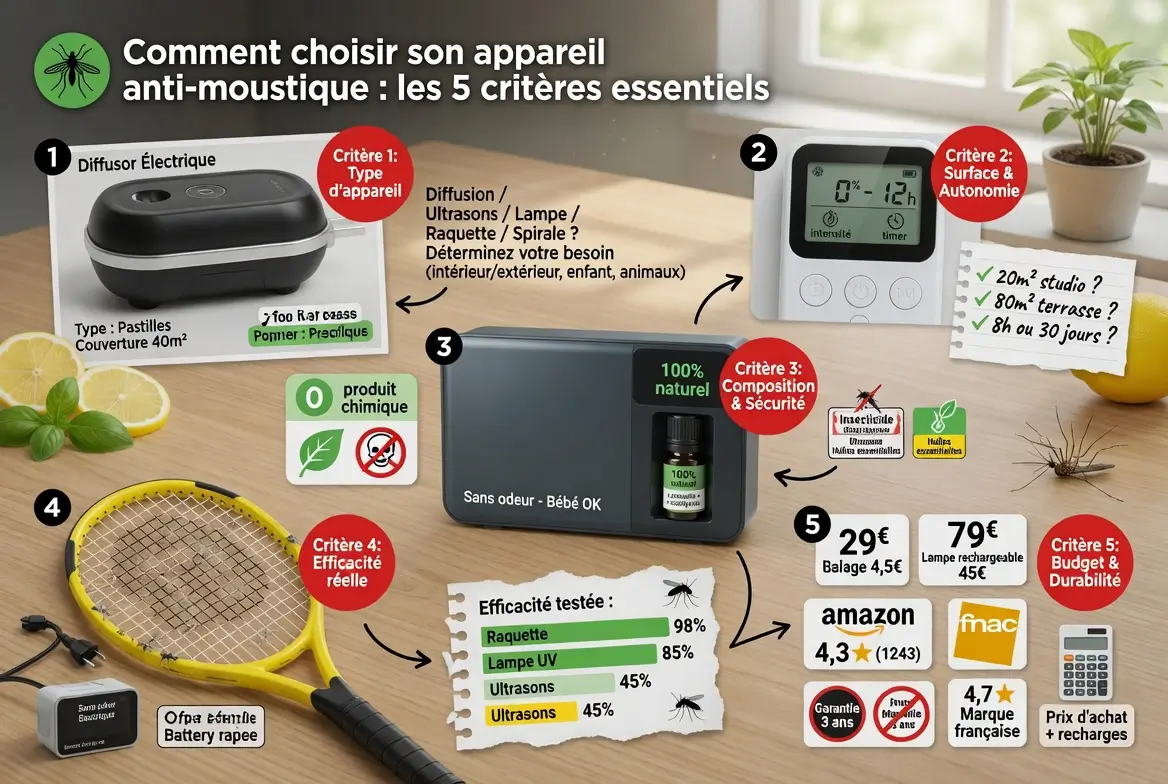
Beyond technology, several factors determine the suitability of a device for your situation. Here are the criteria we recommend evaluating before making a purchase.
1. Intended use: indoor or outdoor? That is the first question to ask. Chemical diffusers and UV lamps work properly in an enclosed environment but lose most of their effectiveness outside. For a garden or terrace, only a CO₂ trap provides sufficient coverage. The GréCo terminal, with its radius of action of 60 meters, is designed specifically for open spaces.
2. The surface to be protected. A 10 m² balcony and a 5,000 m² domain do not require the same equipment. Smaller areas can do with a mosquito net or a fan. Above 50 m², an active trap becomes necessary. For very large areas, Garden Reclaimer offers a free mesh diagnosis to determine the optimal number of terminals and their positioning.
3. The total cost of ownership. A device sold for €30 in a supermarket can be much more expensive than an initial investment of €1,200 if consumables accumulate season after season. Think over 3 to 5 years: add up the purchase price, recharges, electricity consumption and the possible replacement of the device. Over this period, GréCo (1,200€ + 50-100 €/year) is cheaper than a bottle trap (700€ + 300-500 €/year).
4. The environmental and health impact. Synthetic insecticides don't just kill mosquitoes. They also decimate pollinators and useful garden helpers. One Mosquito repellent device mechanical, such as the CO₂ trap, exclusively targets female mosquitoes attracted by the signal and preserves the rest of the ecosystem. This is an increasingly decisive criterion for consumers concerned about biodiversity.
5. Maintenance and ease of use. An efficient but restrictive device will quickly be abandoned. Check how often to recharge, how much cleaning is required, and what handling is required. The GréCo works continuously with only one attractant replacement per season and net cleaning every 4 to 6 weeks, making it one of the easiest devices to maintain on the market.
Mistakes to avoid before buying a mosquito trap
Some mistakes come up regularly among consumers disappointed by their purchase. Identifying them makes it possible to avoid an unnecessary investment.
Rely on online reviews only. The mosquito repellent market is saturated with fake reviews and undeclared sponsored content. Give preference to tests carried out by independent organizations (60 Millions de Consommateurs, UFC-Que Choisir) and entomological studies published in scientific journals. Beware of promises of “100% efficiency”: no device can guarantee the total elimination of mosquitoes.
Confusing attraction with protection. A UV lamp that captures hundreds of insects every night feels like it's working. But if 95% of the catches are moths and gnats, the mosquito population is not impacted. The relevant indicator is not the total catch volume, but the rate of reduction in bites on people in the protected area.
Underestimate the importance of positioning. The best Market trap loses half of its potential if it is misplaced. A CO₂ trap installed in the face of the dominant wind or in the immediate vicinity of people will be less effective than a model correctly positioned between mosquito rest areas and the living space. Consult our experts for personalized investment advice.
Buying too late in the season. The effectiveness of a CO₂ trap is cumulative: it takes 4 to 8 weeks of continuous operation to significantly reduce the local population. Investing in a trap in July means losing the benefit of spring catches that break the reproductive cycle. For optimal results, install your device as early as March-April in the south, at the end of April in the north.
Focus on GréCo technology: why it is changing the game
The GréCo terminal differs from traditional CO₂ traps by its atmospheric concentration reactor. This patented technology captures the CO₂ naturally present in the air (around 420 ppm) and concentrates it to create an attractive plume comparable to human breathing. The result: the device produces its own gaseous attractant without any cylinders, without connections and without gaseous consumables.
The signal emitted combines four components that mimic the human signature: concentrated carbon dioxide, heat (37°C at the outlet), controlled humidity, and a liquid pheromonal decoy replaced once a season. Female mosquitoes, guided by their sensory receptors, travel up this feather several tens of meters before being sucked up by a fan into a retention net. The process is entirely mechanical and selective: non-target insects (bees, butterflies, ladybugs) do not react to the CO₂ + pheromone signal and are not captured.
To find out more about how this technology works in detail, check out our page GréCo technology. To understand the biological cycle of mosquitoes and the importance of preventive control, read our article on Mosquito larvae.

For whom and for what use?
Individuals with gardens. It is the main segment of the market. A garden of 200 to 5,000 m² with a terrace, swimming pool or playground requires a device with a large coverage. A single GréCo terminal is sufficient for most residential configurations. For larger areas, a network of two or three terminals provides complete coverage.
Hotel and restaurant professionals. Campgrounds, hotels, restaurants with terraces, theme parks: these establishments cannot afford to lose customers to mosquitoes. The GréCo rental formula (from €300/month, installation and maintenance included) guarantees them reliable protection without heavy investment. Several campsites on the Mediterranean coast are already using this system with measurable positive feedback on customer satisfaction. A campsite manager in Hérault reports a 70% drop in mosquito-related claims from the first season of use.
Outdoor events. Weddings, festivals, garden receptions: the presence of mosquitoes can ruin a carefully planned event. The GréCo terminal can be installed in a few minutes and starts producing results in the first hours. For one-off events, the short-term rental formula makes it possible to secure the area without investment. It is recommended to put the trap in place at least 48 hours before the event for the best effect.
Farms and livestock farms. Mosquitos aren't just a nuisance to humans. They transmit pathogens to livestock (bluetongue fever, equine encephalitis) and disturb grazing animals, reducing their productivity. CO₂ terminals protect breeding areas without using insecticide treatments that contaminate production. Enquire with Garden Reclaimer for a personalized quote adapted to agricultural areas.
Local authorities. Urban parks, picnic areas, cemeteries, leisure centers: municipalities are facing a growing demand for mosquito control in public spaces. Chemical solutions (biocide sprays) are increasingly contested for their environmental impact. Autonomous CO₂ terminals offer an alternative that respects biodiversity, without chemicals and without any nuisance for users.
FAQ: mosquito repellent device, your questions
What is the best mosquito repellent for outdoor use?
For outdoor use, CO₂ traps represent the most effective category, with rates of reduction of 70 to 95% in bites depending on the model. The Garden Reclaimer GréCo terminal stands out in this category for its autonomous operation (no gas bottle), its range of 60 meters in radius and its operating cost of 50 to 100€ per season. UV lamps, ultrasound, and repellent bracelets are not very effective outside or not very effective. The mosquito net remains a good solution for closed spaces (pergola, veranda) but does not protect open areas.
Do ultrasonic devices work against mosquitos?
No Despite convincing marketing campaigns, no rigorous scientific study has demonstrated the effectiveness of ultrasound against mosquitoes. A Cochrane meta-analysis of 10 controlled trials concluded that there was no effect at all. Mosquitoes do not have receptors that are sensitive to the frequencies emitted by these devices. The World Health Organization and several national health agencies formally discourage these products as a means of protection against mosquito bites.
How much does an effective mosquito repellent cost?
The price varies considerably depending on the technology. The cheapest solutions (bracelets, spirals) cost €10 to €50 but offer limited efficiency (10-45%). UV lamps cost between €30 and €80, with low effectiveness on mosquitoes (20-35%). Bottle-based CO₂ traps cost €500 to €900 the first year (purchase + refills). The GréCo terminal represents an initial investment of €1,200 with an operation of €50 to €100 per season, which makes it more economical over 3 years than a bottle trap. Garden Reclaimer also offers a rental package starting at €300 per month for professionals.
Can a CO₂ trap replace body repellents?
An efficient CO₂ trap like GréCO reduces the local mosquito population by 85 to 95%, which drastically reduces the need for body repellents in the protected area. However, during outings outside this zone (hiking, walking in the forest), a skin repellent based on DEET or icaridin remains recommended. The most effective approach combines a home zone trap with a body repellent for trips in the natural environment.
What is the lifespan of a CO₂ mosquito trap?
Lifespan varies by range. Entry-level bottle traps last 3 to 5 years with regular maintenance. The GréCo terminal is designed for a lifespan of at least 10 years thanks to its weather-resistant materials (aluminum housing, anti-UV treatment) and the simplicity of its mechanism. The wear parts (fan, gasket) are individually replaceable, which eliminates the need to replace the entire device. Garden Reclaimer provides after-sales service and spare parts throughout the life of the product.