



Recognizing tiger mosquito symptoms has become an almost mandatory skill in mainland France. In 2026, Aedes albopictus is now established in over 80 departments, and Anses estimates that nearly 9 out of 10 French people live in a colonized area. At Garden Reclaimer, designers of the mosquito trap GRéco, we receive dozens of questions every summer about the appearance of a bite, the warning signs that should prompt a consultation, and what to do if a child is bitten. This guide compiles the physical symptoms of a bite, the signs of transmitted diseases (dengue, chikungunya, Zika), and useful actions for a quick response.
Before detailing the symptoms, it's important to understand a key fact. The vast majority of bites remain benign: only 0.5 to 1% of tiger mosquito bites, when the insect carries a virus, trigger severe symptoms. But when the tiger mosquito transmits, it transmits quickly. In 2025, Santé Publique France recorded over 1,600 autochthonous cases of dengue, nearly 700 cases of chikungunya, and several Zika outbreaks in the southeast. Therefore, knowing how to read your body after a bite is no longer a hypochondriac's reflex; it's a useful seasonal vigilance.
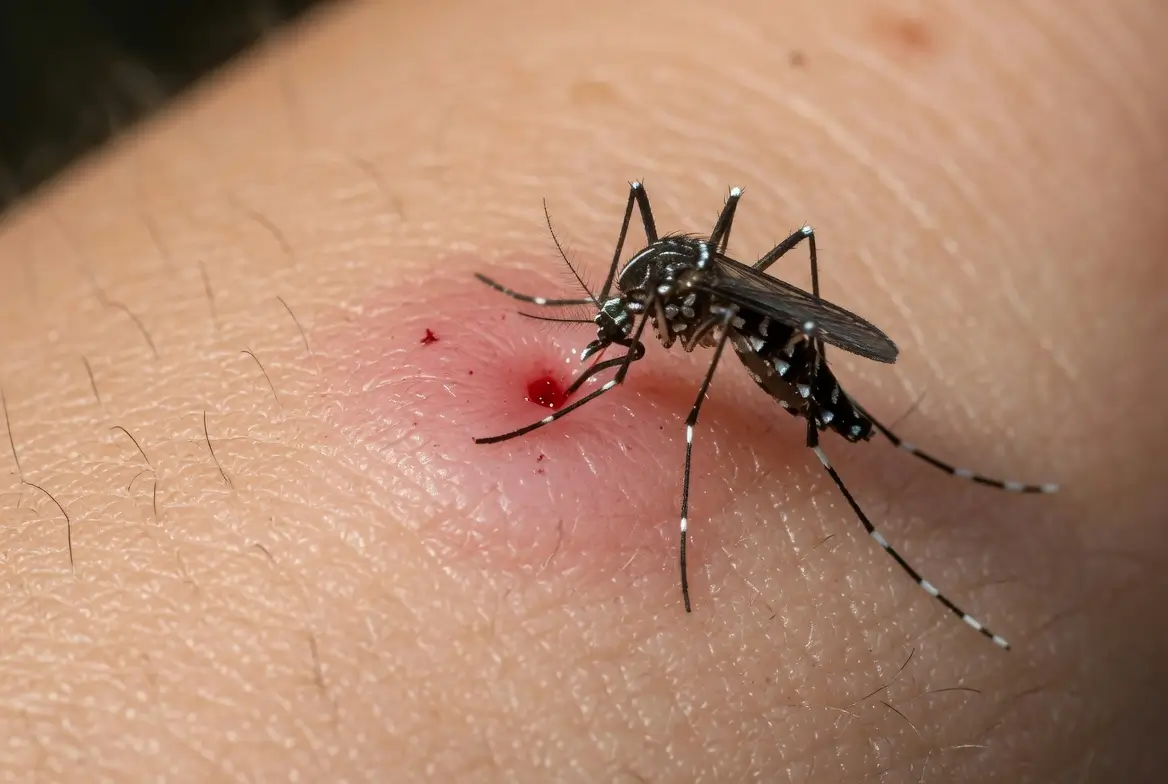
What does a tiger mosquito bite look like?
Local symptoms of a simple bite
A tiger mosquito bite is quite easily distinguished from a common mosquito bite because Aedes albopictus injects more irritating saliva. The first tiger mosquito bite symptoms appear within 5 to 15 minutes and reach their maximum intensity within 24 to 48 hours. The bump is often described as harder, warmer, and redder than a classic bite.
- Firm, raised bump : the papule measures 1 to 3 cm in diameter, sometimes more in reactive skin types.
- Extended redness : a pinkish halo surrounds the bump over 2 to 5 cm, whereas a common mosquito bite remains more localized.
- Intense itching : it lasts 3 to 7 days, compared to 1 to 3 days for a classic bite.
- Local sensation of heat : the bitten area is significantly warmer than the surrounding skin.
- Moderate pain to the touch : the bite remains sensitive for several days, especially on the ankles and legs.
Another typical sign of the tiger mosquito: clustered bites. The Aedes albopictus often bites several times within a few minutes, in the same area, because it is easily disturbed during its blood meal. You will therefore frequently find 3 to 5 closely spaced bumps, aligned or in a triangle, rather than an isolated bite. To understand how the species moves and confirm its presence in your region, consult our map on the presence of the Aedes tiger mosquito in France.
Typical bite locations
The tiger mosquito primarily bites the lower body. This anatomical signature greatly aids diagnosis. Unlike the common mosquito, which tends to target exposed areas (face, arms, neck), the tiger mosquito targets the legs, ankles, and feet in 70 to 80% of cases, according to entomological observations.
- Ankles and shins : primary areas for adults wearing shorts or skirts.
- Bare feet : highly targeted on patios in summer.
- Calves and back of the knees : sweaty areas, attractive to the insect.
- Forearms : especially at the end of the day, when reading outdoors.
- Nape of the neck and ears : less frequent, more common at dawn and dusk.
This species also bites in broad daylight, unlike the common mosquito which prefers dusk and night. So, if you're bitten at 11 AM or 3 PM, while active, on your legs, the tiger mosquito is the prime suspect. This difference in activity is crucial for adapting protection: a classic nighttime mosquito repellent is no longer sufficient.
Differences between tiger mosquito bites and common mosquito bites
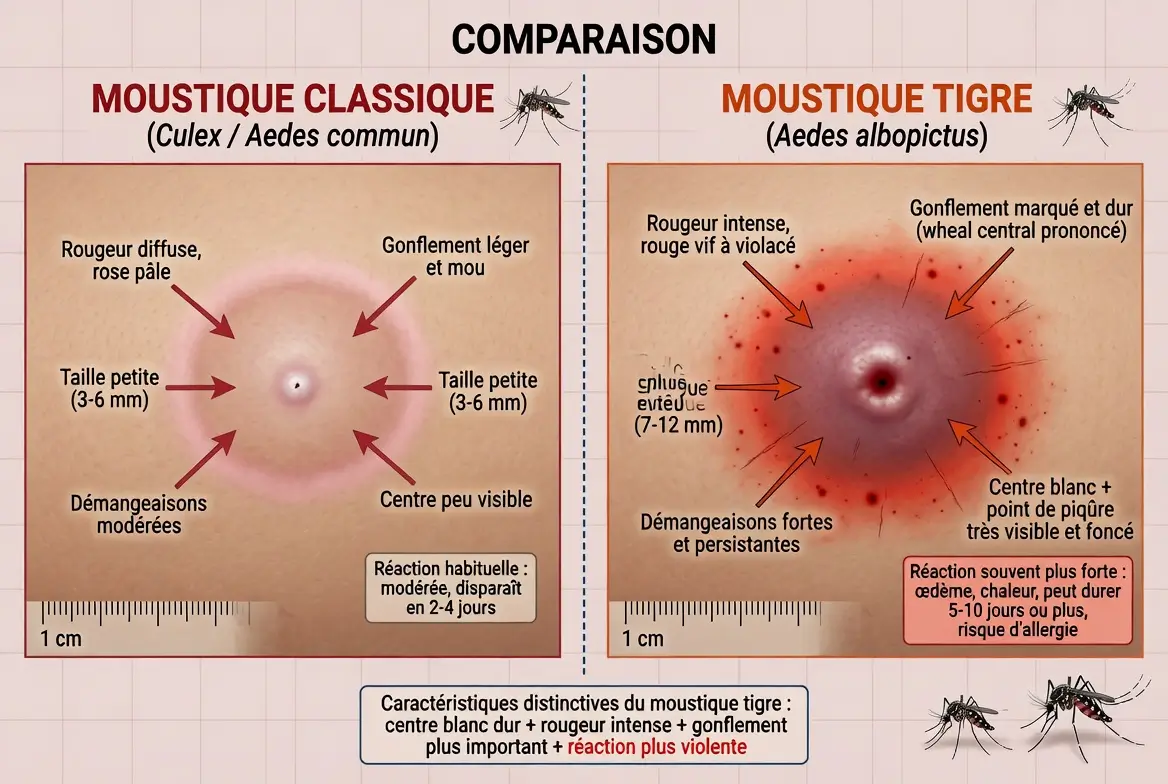
Many people confuse the two types of bites and downplay the symptoms. However, the differences are real and useful to know in order to adapt your response.
The common mosquito (Culex pipiens). Its bite causes a small, flat red bump, an intense but short-lived itch (24-48 hours), and a gradual disappearance without further complications. It mainly bites at dusk and night, especially on exposed areas above the waist. The health risk remains very low in mainland France.
The tiger mosquito (Aedes albopictus). Its bite is harder, more raised, longer-lasting, and often multiple in the same area. It bites in broad daylight, especially on the legs. It can transmit dengue, chikungunya, Zika, and more rarely, the West Nile virus. This vector capacity radically changes the level of attention required for general symptoms.
To learn more about visually identifying the insect itself (black and white stripes, 5 mm size, dark wings), consult our guide on how to recognize and report the tiger mosquito. It perfectly complements what you're reading about symptoms and explains how to alert authorities via the Mosquito Reporting portal.
Warning signs: severe symptoms after a tiger mosquito bite
The vast majority of bites only cause a local reaction that resolves within a few days. However, in a minority of cases, the tiger mosquito can transmit a virus. And these viruses produce systemic symptoms that must be recognized quickly, because early management significantly improves the prognosis.
The time between the bite and the appearance of the first symptoms (incubation period) varies depending on the virus: 3 to 14 days for dengue, 1 to 12 days for chikungunya, 3 to 14 days for Zika. Therefore, monitor your condition for two weeks following a suspicious bite, especially if you are returning from a tropical area or if a local outbreak has been declared in your department.
Signs that should alert you and prompt you to consult a doctor without delay:
- Fever above 38.5 °C occurring 2 to 14 days after a bite.
- Intense headaches with a feeling of fatigue and pain behind the eyes.
- Debilitating joint pain (chikungunya, incidentally, means "he who walks bent over" in Makonde).
- Widespread skin rash (red spots on the torso and limbs).
- Unusual bleeding (gums, nose, red spots on the skin) requiring urgent medical attention.
- Conjunctivitis with red eyes and tearing (often associated with Zika).
- Nausea, vomiting, abdominal pain persisting for more than 24 hours.
If several of these symptoms appear together, contact your primary care physician or call 15 in an emergency, and specify if you have been bitten recently. To understand the viral transmission mechanism in detail, the guide mosquito-borne diseases details dengue, chikungunya, and Zika.
Symptom chart by transmitted disease
Specific symptoms in children and infants
Children often show more pronounced reactions than adults. Their thinner skin and still-developing immune system amplify local symptoms. Therefore, a tiger mosquito bite on a child can sometimes look like a worrying reaction, when it is actually a standard bite.
In infants aged 0 to 2 years, the bite can reach 5 to 8 cm in diameter, become purplish, and be accompanied by significant swelling. This reaction is normal and benign in the vast majority of cases. It disappears in 4 to 7 days without lasting effects. Avoid self-medicating with corticosteroids and prefer a soothing cream approved by your pediatrician.
In children aged 2 to 10 years, itching is intense and repeated scratching can cause a superinfection (impetigo). Watch for the appearance of yellowish discharge, a thick crust, or spreading redness. These signs require a consultation for local antibiotic treatment. Keep nails short and apply a soothing cream 2 to 3 times a day to limit the urge to scratch.
Signs requiring an urgent pediatric consultation: fever above 38 °C in an infant, fever above 38.5 °C in an older child, abnormal drowsiness, refusal to drink, a rash that spreads within a few hours, or breathing difficulties. For pregnant women bitten by a tiger mosquito, medical follow-up is particularly important because the Zika virus can cause severe fetal malformations (microcephaly). A serological test is recommended even for moderate symptoms.
Course of action: what to do after a tiger mosquito bite?
Acting quickly limits inflammation and itching. Here are useful steps to take in order, starting in the first few minutes after the bite.
Step 1: Clean the bite. Wash the area with lukewarm water and mild soap for 30 seconds. This removes any mosquito saliva still on the surface and limits the penetration of allergens. Pat dry, do not rub.
Step 2: Apply cold. An ice pack or a cold compress for 10 to 15 minutes calms the sensation of heat and reduces swelling. Cold also significantly reduces itching for 1 to 2 hours.
Step 3: Apply a soothing product. Zinc oxide cream, aloe vera gel, calamine lotion, or over-the-counter antihistamine cream. Avoid pure essential oils on the skin (citronella, peppermint) as they can cause additional irritation.
Step 4: Do not scratch. Easier said than done, but scratching prolongs inflammation and increases the risk of secondary infection. If the itching is unbearable, press the bite with a fingernail (without scratching) to create a slight pain that temporarily 'masks' the sensation.
Step 5: Monitor for 14 days. Note the date of the bite. Watch for the appearance of fever, headaches, joint pain, or a generalized rash for two weeks. If in doubt, consult your doctor and mention the bite.
To limit the risk of future bites, the ideal solution is to reduce the tiger mosquito population around your home. The borne GRéco captures breeding females before they bite, within a 60-meter radius, and offers lasting protection for your entire outdoor living area.

Long-term prevention: fewer tiger mosquitoes, fewer symptoms
The best strategy against the symptoms of tiger mosquito bites is to prevent the bite. Three complementary levels of action offer robust protection throughout the season.
Level 1: Individual protection. Covering clothing made of tightly woven fibers, skin repellents based on DEET (20-30% concentration), picaridin, or IR3535 on exposed areas. Reapply every 4 to 6 hours during outdoor activities. For children under 2 years old, prioritize IR3535 in an appropriate concentration and consult your pharmacist.
Level 2: Larval breeding site elimination. The tiger mosquito lays eggs in tiny amounts of water, sometimes just the bottom of a saucer or a bottle cap. Check your garden weekly to empty any containers that might hold stagnant water. This free measure reduces the local population by 30 to 50% in a few weeks.
Level 3: Active adult capture. A GRéco trap placed between dense vegetation and living areas captures females before they bite. The atmospheric concentration reactor generates an attractive plume without gas cylinders, at a cost of €50 to €100 per operating season. A reduction of 85 to 95% in mosquito pressure is observed after 6 to 8 weeks of continuous use.
This combination acts on individuals (repellents), reproduction (larval breeding sites), and flying adults (CO₂ traps). It's the same logic as a defense-in-depth system: if one layer fails, the others compensate. Request a free placement consultation from the Garden Reclaimer team to optimize your setup according to your garden's configuration.
For areas with high viral circulation (ARS Sud-Est, outbreaks reported by Santé Publique France), combining all three levels is no longer an option but a public health measure. Reducing the local tiger mosquito population also protects your neighbors and breaks the chain of viral transmission at the neighborhood level.
FAQ: Tiger Mosquito Symptoms
How to distinguish a tiger mosquito bite from other bites?
A tiger mosquito bite can be identified by several signs: a bump that is harder and more raised than a classic bite, a diameter of 1 to 3 cm, redness extending 2 to 5 cm, intense itching lasting 3 to 7 days, and often several bites close together (in a cluster). The location is also typical: Aedes albopictus mainly bites the legs, ankles, and feet, in broad daylight. A common mosquito, on the other hand, leaves a small, flat bump, bites mostly at dusk, and tends to target exposed areas above the waist. If you are bitten at 2 PM on an ankle, the tiger mosquito is the number one suspect.
What are the severe symptoms after a tiger mosquito bite?
Severe symptoms appear 3 to 14 days after an infected bite and indicate viral transmission (dengue, chikungunya, Zika). Warning signs include: fever above 38.5 °C, intense headaches with pain behind the eyes, debilitating joint pain (hands, feet, knees), generalized rash, conjunctivitis, persistent nausea and vomiting, or more rarely unusual bleeding (nose, gums). If several of these symptoms appear together, consult your doctor without delay and specify the date of the bite. Only 0.5 to 1% of bites cause viral transmission, but Santé Publique France recorded over 1,600 autochthonous dengue cases in metropolitan France in 2025.
How long do the symptoms of a tiger mosquito bite last?
Local symptoms of a simple bite last 3 to 7 days. Redness and itching peak 24 to 48 hours after the bite, then gradually fade. In reactive skin types or children, the bump may remain visible for up to 10 days. If a viral infection develops (dengue, chikungunya, Zika), systemic symptoms (fever, joint pain) last 5 to 10 days, but chikungunya joint pain can persist for several months in some patients. A bump that lasts more than 14 days, oozes, or spreads with progressive redness should raise suspicion of a bacterial superinfection and requires medical consultation.
My child has a large bump after a bite, should I be concerned?
A large bump (5 to 8 cm) with purplish edema in a child is a normal reaction, because their thinner skin and still-maturing immune system amplify the local response. This reaction disappears in 4 to 7 days without sequelae. Apply cold compresses for 10 to 15 minutes several times a day, use a soothing cream approved by the pediatrician, and keep nails short to limit scratching. However, seek urgent medical attention in case of fever above 38 °C in an infant, abnormal drowsiness, refusal to drink, a rash that spreads within a few hours, or respiratory difficulty. Redness that oozes or spreads at the edges suggests a bacterial superinfection (impetigo) that requires local antibiotic treatment.
Do all tiger mosquito bites transmit disease?
Fortunately, no. For a bite to transmit a virus, the mosquito itself must be a carrier, which is rare in mainland France in 2026. Health estimates place the proportion of infectious bites at 0.5 to 1% in areas with viral circulation, and significantly lower in areas not affected by an outbreak. Practically speaking, 99 out of 100 bites only cause a benign local reaction. The risk increases significantly in areas where Santé Publique France (French Public Health Agency) declares an autochthonous outbreak of dengue or chikungunya, mainly in the south of France and the Mediterranean arc. The best protection remains to reduce mosquito pressure around your home with a combined strategy (larval breeding site management, repellents, CO₂ traps like the GRéco terminal).
What treatment for a tiger mosquito bite?
The five-step protocol yields the best results: clean with lukewarm water and mild soap, apply cold for 10 to 15 minutes to calm inflammation, use a soothing cream (zinc oxide, calamine, over-the-counter antihistamine), avoid scratching to prevent superinfection, and monitor for 14 days for the appearance of systemic symptoms. Avoid pure essential oils on the skin (citronella, peppermint) as they can cause additional irritation, especially in children. If the itching is unbearable, an oral antihistamine (cetirizine, loratadine) prescribed or recommended by your pharmacist can provide relief within 30 to 60 minutes. The best 'prescription' remains preventive: capturing tiger mosquitoes before they bite with a GRéco terminal eliminates the root cause.