


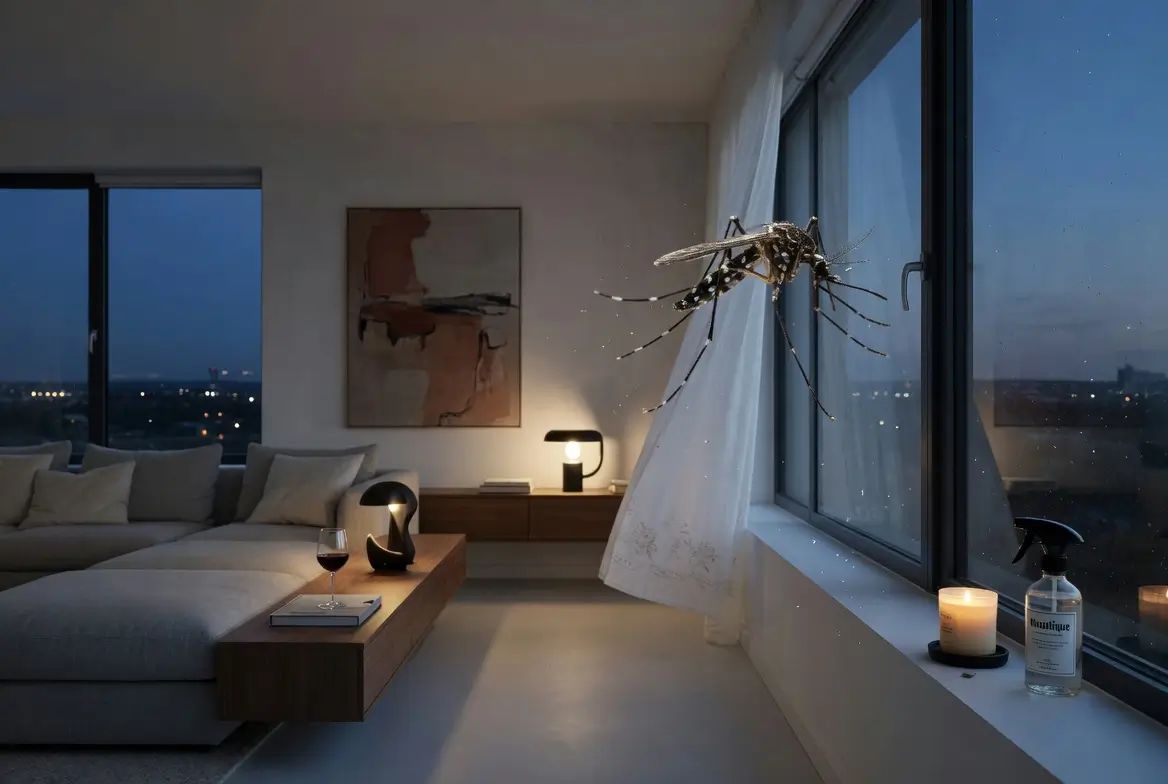
Ending up with a Mosquito in the house In the middle of the night is an experience that everyone knows. This annoying buzzing, the stings when you wake up, the impossibility of going back to sleep: the problem seems trivial but it really impacts the quality of life, especially when it is repeated every evening from May to October. At Garden Reclaimer, designer of the Mosquito repellent terminal GréCo, every week we receive testimonies from individuals exasperated by this nocturnal intrusion.
The good news is that mosquitos that come into your home don't fall from the sky. They follow specific signals and use identifiable entry routes. Understanding their behavior makes it possible to implement an effective strategy, from prevention to active capture. This guide gives you the keys to finding peaceful nights and a nuisance-free interior.
Why do mosquitos come into the house?
Female mosquitoes enter homes for one reason only: to find blood. They need blood proteins to produce eggs. The interior of the house concentrates all the signals they are looking for: CO₂ (your breath), body heat, humidity, and specific skin odors.
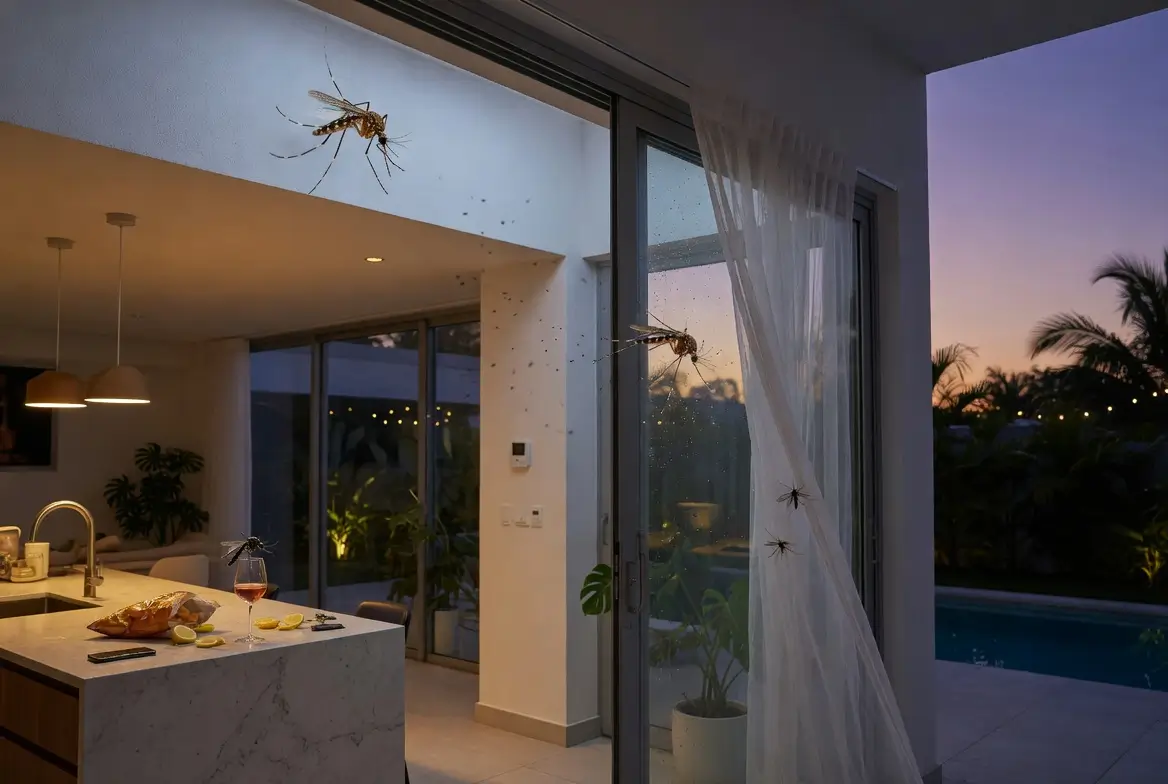
Nocturnal breathing. During sleep, you exhale around 200 ml of CO₂ per minute. This gaseous plume accumulates in the chamber and creates an olfactory gradient that mosquitoes can ascend from outside. The more the room is closed and poorly ventilated, the more the CO₂ concentration increases and the stronger the signal is for mosquitoes located near the openings.
Warmth and light. Mosquitos are attracted to body heat (detected by their infrared receptors at close range) and by certain light wavelengths. Lighted windows in the evening are a preferred entry point: the light attracts insects to the opening, and the CO₂ that escapes confirms the presence of a potential host inside.
The entry routes. Mosquitos take advantage of any opening to enter the house. Screenless windows are the main way, but they also come through doors left open for a few seconds, bathroom vents, gaps around air conditioners, poorly protected VMC ducts, and holes in used mosquito nets. A single mosquito is enough to ruin an entire night.
The amplifying effect of the garden. If your home is surrounded by vegetation, hedges, or waterholes, the mosquito population in the immediate vicinity of your windows can be very high. An untreated garden with active breeding sites (saucers, clogged gutters, open water catcher) produces hundreds of adult mosquitoes per week in high season. These mosquitoes concentrate within a radius of 100 to 200 meters from where they were born, that is, directly around your home. The more mosquito-friendly the garden is, the more frequent indoor intrusions will be and more difficult to manage with purely indoor solutions.
Mosquito in the house: immediate solutions
When the mosquito is already inside, you have to act quickly. Here are the most effective ways to get rid of it without turning your bedroom into a chemical warfare zone.
The electric racket. It is the quickest and most satisfactory solution. The snowshoes with electrified grid (€10-20) eliminate the mosquito on contact. Tip: Switch on a bedside lamp and wait for the mosquito to land on the wall closest to the light source. Slowly approach and hit. Mosquitoes detect sudden movements, patience is your best ally.
The handmade CO₂ trap. Place a small USB fan near a CO₂ source (a burning candle in a safe container) to attract the mosquito to a specific area. This method is imperfect but can concentrate the mosquito in a limited area, making it easier to eliminate it manually.
The electric diffuser. Platelet or liquid mosquito sockets diffuse pyrethroids that repel or kill mosquitoes within a perimeter of 20 to 30 m². Effective indoors (70-85% reduction), they do however raise health issues in case of prolonged use. ANSES recommends using them with open windows to limit exposure to active substances, which mechanically reduces their effectiveness. Avoid them in rooms for children and fragile people.
The bed net. It is the oldest and most reliable solution: an impenetrable physical barrier. Mosquito nets treated with insecticide (permethrin) offer double protection. For adult and children's beds, it's a modest investment (€20-60) that guarantees sting-free nights, even with an open window.
Preventing mosquitos from entering the house
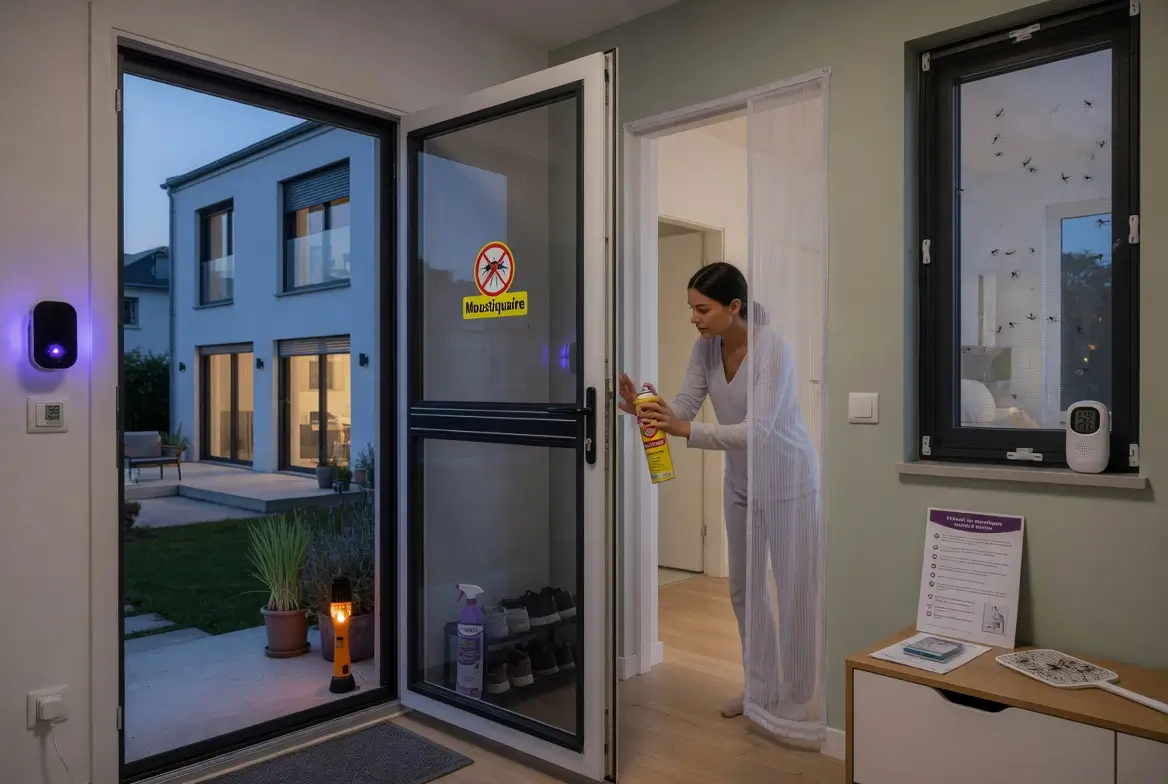
The best strategy is to keep mosquitos out. A set of simple measures significantly reduces the number of intrusions.
Install mosquito nets on the windows. It is the most effective and sustainable measure. Mosquito nets with fixed or roll-up frames adapt to all window configurations. Choose a mesh size of up to 1 mm (the tiger mosquito measures 2-3 mm). Check the condition of the nets every spring: the smallest hole voids the protection. A repair kit (2-5 €) allows you to seal small tears without replacing the whole set.
Manage your openings. In the evening, limit the amount of time windows and doors stay open, especially with the lights on. If you ventilate in the evening, turn off the interior lights during the opening to avoid attracting insects. Patio doors to the garden are the most common entry ways: consider a magnetic or fringed door curtain that closes automatically after each pass.
Adjust your lighting. Replace cool white light bulbs in rooms near windows with warm-colored LED bulbs (2700K or less). The yellow-amber light is much less attractive to flying insects. So-called “anti-insect” bulbs specifically filter attractive wavelengths (blue and UV) while maintaining comfortable lighting.
Check the ventilation. Mosquitos cannot fly against an air current of more than 5 km/h. A ceiling fan or fan in the bedroom creates enough flow to keep them from landing and pricking. It is a particularly effective complement on nights when you want to sleep with the window open without a mosquito net.
The solution at the source: treating the garden to protect the house
Mosquitos that enter your home almost always come from your immediate garden or from the immediate vicinity (radius of 100 to 200 m). Acting on the outside population is therefore the most effective way to reduce internal intrusions.
The Garden Reclaimer GréCo terminal captures female mosquitoes within a radius of 60 meters around your home. Positioned in the garden between mosquito rest areas and the house, it intercepts females before they reach your windows. After 6 to 8 weeks of continuous operation, the local population falls by 80 to 95%, resulting in a proportionate reduction in nocturnal intrusions.
This approach solves the problem at its root instead of treating it symptom by symptom. Instead of multiplying indoor devices (sockets, snowshoes, mosquito nets on each window), a single outdoor trap eliminates the majority of mosquitoes before they try to enter. The operating cost (€50-100 per season) is comparable to that of refilling electric diffusers annually, for much greater efficiency.
To find out more about how GréCo technology works and how it is optimally positioned, consult our page GréCo technology. And to understand where mosquitoes come from in your garden, read our guide on Mosquito larvae and their lodgings.
Mosquito in the house: a comparison of interior solutions
The table highlights an important observation: the most effective and most comfortable solution to avoid mosquitoes indoors is to eliminate them beforehand, in the garden. The GréCo terminal treats the problem at the source without imposing any constraints inside the house (no chemical product, no mosquito net, no fan noise).
Mosquito in the house: mistakes that make the problem worse
Some common reflexes, far from resolving the situation, make it worse or create additional problems.
Leave standing water inside. Houseplant saucers, vases with stale water, and rarely changed animal bowls provide nesting sites for mosquitoes that are already present in the house. A female tiger mosquito can lay eggs in a glass of water forgotten on a window sill. Change the water in the vases every 2-3 days and empty the saucers regularly.
Open the windows with the lights on. It is the most effective combination for attracting mosquitos indoors. The light guides them to the opening, and the escaping CO₂ confirms the presence of hosts. If you need to ventilate in the evening, first turn off the lights in the room concerned for the duration of the opening.
Use spray insecticides in the rooms. Conventional insecticide bombs contain pyrethroids in high concentrations. Sprayed into a closed room just before bed, they expose you to problem concentrations throughout the night. Prefer mechanical methods (racket, mosquito net) or treat the room by airing widely for at least 30 minutes before sleeping.
Rely on anti-mosquito applications. Smartphone applications that emit ultrasound have no proven effectiveness. As explained in Cochrane studies, ultrasound does not repel mosquitoes. These applications offer a false sense of security and delay the adoption of truly effective solutions.
The particular case of the tiger mosquito indoors
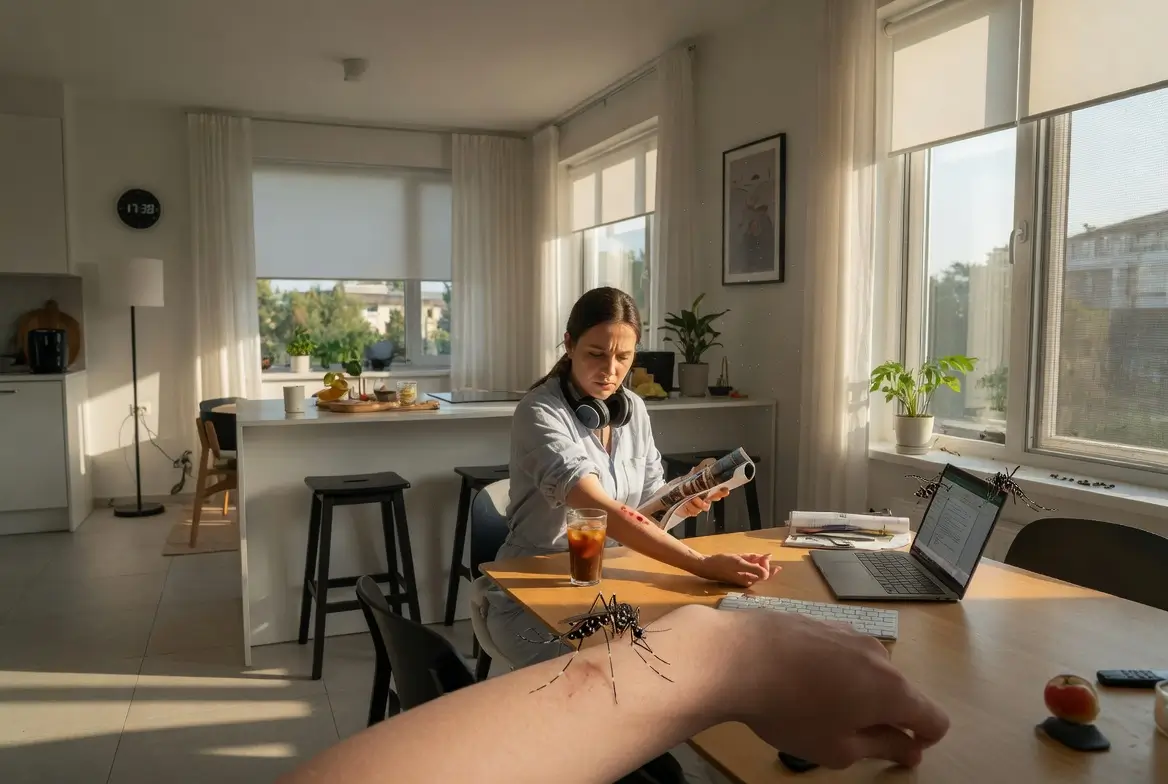
The tiger mosquito (Aedes albopictus) behaves differently from the common mosquito (Culex pipiens). While Culex bites mainly at night, the tiger mosquito is active during the day, with peaks in the early morning and late afternoon. That means you can be stung in your living room, office, or kitchen during work hours.
The tiger mosquito is also more discreet than its common cousin: it flies silently and bites quickly, often in the ankles and calves. Its presence indoors is often detected by bites rather than by the characteristic buzzing sound. If you observe bites during the day, especially on the lower extremities, there is a good chance that a tiger mosquito has found its way into your interior.
To protect you from the tiger mosquito indoors during the day, window screens remain the most effective barrier. Complete with covering clothing (long sleeves, pants) if the pressure is strong. Skin repellents based on DEET (30-50%) or icaridin provide protection for 4 to 8 hours for indoor activities near windows or in poorly protected rooms.
The good news: the tiger mosquito is very sensitive to CO2 trapping. The GréCo terminal works day and night and captures both Aedes albopictus and Culex pipiens. To identify the species present around your home and adapt your strategy, consult our guide on How to recognize and report the tiger mosquito.
FAQ: mosquito in the house
Why do mosquitos bite more at night?
The common mosquito (Culex pipiens), the most common indoor species, is naturally active at dusk and at night. It is mainly detected thanks to the CO₂ exhaled by the sleepers, which accumulates in a closed room and creates a powerful attraction signal. Body heat under the sheets and skin odors amplify this signal. This is why you are particularly vulnerable during sleep. The tiger mosquito is an exception: it bites mainly during the day, in the early morning and in the late afternoon.
How do you keep mosquitos out of the house?
The most effective method is to install mosquito nets on all windows that you open regularly (maximum mesh size 1 mm). Complete with magnetic curtains on patio doors overlooking the garden. In the evening, turn off the interior lights before opening the windows to ventilate. A ceiling fan creates a draft that prevents mosquitos from flying into the room. Finally, the most radical solution is to reduce the mosquito population around your home with a GréCo terminal, which eliminates 80 to 95% of mosquitoes within a radius of 60 meters.
Are electric diffusers dangerous for your health?
Pyrethroid diffusers (platelets or liquid) release chemical substances into the indoor air. ANSES has identified risks of respiratory irritation and endocrine disruption in the event of prolonged exposure. People with asthma, young children, and pregnant women are particularly sensitive. The agency recommends not using them in bedrooms or, if unavoidable, plugging them in with the window open and unplugging them 30 minutes before bedtime. Non-chemical alternatives (mosquito nets, ventilator, outdoor CO₂ trap) are safer for daily use.
Can a mosquito in the house transmit diseases?
In mainland France, the risk of disease transmission by a mosquito indoors exists but remains low. The tiger mosquito (Aedes albopictus), a potential vector of dengue, chikungunya and Zika, was present in 71 departments in 2026. Indigenous cases are on the rise, with more than 80 cases of local dengue recorded in 2024. The common mosquito (Culex pipiens) can transmit the West Nile virus, although human cases remain rare in France. Protection against bites is therefore not only a question of comfort but also a preventive health gesture.
Is treating the garden enough to get rid of mosquitos inside?
A trap like the GréCo terminal reduces the mosquito population by 85 to 95% within a radius of 60 meters, which proportionally decreases indoor intrusions. However, a few mosquitos from uncovered areas (neighbors, public areas) may occasionally come in. For maximum protection, combine the exterior treatment with mosquito nets on the windows. This double barrier provides almost total protection without any chemical products inside your home. Contact Garden Reclaimer for positioning advice adapted to your configuration.