Tackling the proliferation of biting insects represents a major environmental and public health challenge in 2026. Understanding how to eliminate breeding sites is key to an effective defense strategy. This article details scientifically proven methods to eradicate mosquito larvae before they reach the adult stage. Taking action at the source is vital, as targeting the larval phase is statistically far more effective than simply hunting adult mosquitoes. This expert guide provides the tools you need to sustainably restore balance to your outdoor environment.
Garden Reclaimer is the leading expert in ecological and technological pest management. Our expertise is built on a deep understanding of entomology and the development of innovative solutions that respect biodiversity. At Garden Reclaimer, we advocate for a proactive approach: neutralizing the mosquito life cycle at its source. Through our research in bio-management and our cutting-edge devices, we support individuals and communities in a reasoned, effective mosquito control strategy that is non-toxic to fragile ecosystems.
Understanding the mosquito life cycle to better neutralize it?
To effectively combat dipteran populations, mastering the stages of the mosquito life cycle is essential. This complete biological process, known as metamorphosis, is divided into four distinct phases: egg, larva, pupa, and adult mosquito. The female mosquito is the primary driver of this proliferation. After taking a blood meal—which is necessary for egg development—the female searches for standing water to lay her eggs. A single female can lay up to 150 eggs on the surface or against the walls of a damp habitat.
Once the egg comes into contact with water, it hatches to release a larva. It is during this larval phase that the insect is most vulnerable, as it is confined to a restricted aquatic environment. The larva undergoes several molts to grow, feeding on organic matter present in the water. It then develops into a pupa, a transitional non-feeding stage where it prepares for emergence. Finally, the insect breaks free from its pupal case to emerge as a winged adult mosquito. By targeting mosquito larvae, we break this cycle before mosquitoes can start biting and spreading diseases.

Where do mosquito larvae develop in gardens?
Domestic environments are full of micro-habitats ideal for mosquito larva development. The defining factor is the presence of water, even in minuscule amounts. Female mosquitoes are opportunistic and take advantage of every tiny crevice where water can turn stagnant. The tiger mosquito, remarkably well adapted to urban settings, favors artificial breeding sites. A simple saucer beneath a flowerpot, an abandoned tire, or a child's toy left in the garden quickly becomes a nursery where they thrive and multiply by the thousands.
Rainwater storage areas are critical hotspots. An unprotected rain barrel is essentially an open-air incubator. Female mosquitoes slip inside to lay their eggs, sheltered from natural predators. It is just as crucial to check clogged gutters where water gathers beneath dead leaves, as this clean yet stagnant water creates an ideal environment for egg laying. Pinpointing where these breeding sites develop is the first step toward strategically ridding your property of larvae once and for all.
Breeding sites: how to identify high-risk areas?
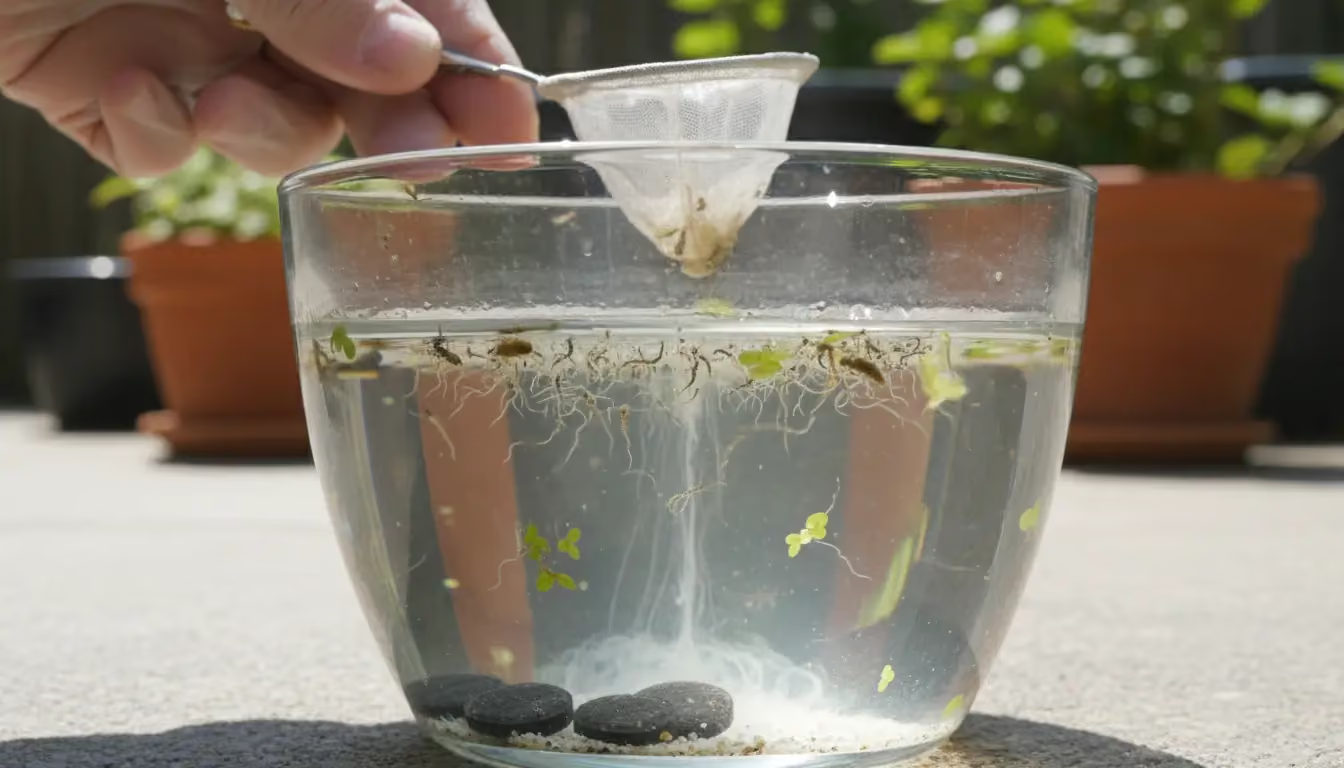
Identifying a breeding site requires a close inspection of the water's surface. A mosquito larva has a distinctive appearance: it looks like a small, segmented worm that moves with sudden, jerky motions whenever a shadow or vibration disturbs its environment. At this stage, the mosquito breathes atmospheric air through a siphon located at the tip of its abdomen, hanging upside down just beneath the surface tension. A dense cluster of larvae is often a sign of recent egg laying by multiple females.
High-risk zones are not limited to visible surface water. Mosquitoes can easily breed in dark, humid cavities such as holding tanks or drainage inspection chambers. At Garden reclaimer, we remind property owners that while only females bite, every male mosquito that emerges in your garden will help fertilize future generations. By learning to identify these breeding sites, you can stay ahead of larval surges and intervene before facing a massive infestation of adult mosquitoes.
How to eliminate mosquito larvae with a biological larvicide?
When a breeding site is identified in a water feature that cannot be drained (such as a large pond or a well), using a biological larvicide is the ideal solution. A biological larvicide based on Bacillus thuringiensis israelensis (BTI) represents the most targeted weapon in mosquito control. This larval treatment works by ingestion: once consumed by the larva, it produces crystal proteins that disrupt its digestive system, resulting in rapid mortality. It is an eco-friendly solution that is non-toxic to other aquatic life, including fish and amphibians.
The main advantage of using a biological larvicide lies in its selectivity. Unlike certain chemical mosquito treatments that can contaminate soil and water, BTI targets dipteran larvae with surgical precision. It enables you to kill mosquito larvae without causing long-term resistance. To eliminate mosquito larvae, Garden reclaimer recommends applying this larvicide regularly throughout the warm season, treating mosquito larvae from their very first molt. This targeted larval control preserves your garden’s natural balance while keeping future adult mosquitoes from ever taking flight.

Mosquito control: why target the larval stage?
Mosquito control often focuses on adults, but this approach is merely reactive and frequently falls short. In contrast, taking action during the larval phase is a genuinely preventive strategy. A larva is trapped within its water source, making it far easier to eliminate before populations take flight and disperse. By destroying a clutch of 150 eggs, you systematically prevent the emergence of dozens of female mosquitoes ready to bite. It comes down to sheer efficiency: treating a single bucket of standing water is infinitely simpler than defending an entire acre against flying insects.
Furthermore, an adult mosquito can travel hundreds of meters, whereas the larva remains trapped within its breeding site. Eradicating the reproductive source drastically reduces local biting pressure. Garden reclaimer points out that while some individuals get bitten more frequently due to their specific scent profile, overall insect abundance directly reflects how many survive the larval stage. By targeting mosquito larvae in standing water, you also significantly lower the risk of mosquito-borne diseases like dengue and Zika.
Tiger mosquito: how to eliminate specific mosquito larvae?
The tiger mosquito (Aedes albopictus) has unique egg-laying behaviors that set it apart from the common mosquito. Tiger mosquitoes do not lay their eggs directly on water, but rather on the dry inner walls of containers, just above the waterline. A tiger mosquito egg can survive desiccation for several months. As soon as rainfall raises the water level, the mosquito eggs hatch all at once, triggering a massive surge in larvae. To effectively eliminate tiger mosquito larvae, emptying the water is not enough—you must thoroughly scrub the walls of containers to dislodge the eggs.
The tiger mosquito is a daytime biter, which means only females bite throughout the day, quickly ruining any outdoor activity. Its larval development is rapid, and it readily colonizes tiny pockets of water—even an upturned bottle cap can suffice. Successful tiger mosquito control demands meticulous care in eliminating artificial breeding sites. Garden reclaimer recommends paying close attention to decorative garden features and drainage systems, as the tiger mosquito is an expert at thriving in urban environments.
How to eliminate larvae present in a rainwater collector?
A rainwater collection barrel is often the primary source of mosquitoes in a garden. The water inside is rich in organic matter, providing abundant nourishment for larvae. To clear these tanks of larvae without contaminating the water you use to water your plants, several options are available. The most effective approach is installing ultra-fine insect mesh over every opening of the collector. This physically prevents female mosquitoes from reaching the surface to lay their eggs.
If your rainwater barrel is already infested, using a biological larvicide is the best solution. BTI will not make the water toxic to garden plants or pets that might drink from it. Another handy tip is introducing natural predators like goldfish (where water volume permits), as they eagerly feed on mosquito larvae. By treating storage tanks, you neutralize your property’s primary mosquito nursery, guaranteeing a much more peaceful summer.

Mosquito traps and repellents: what is the best solution for adults?
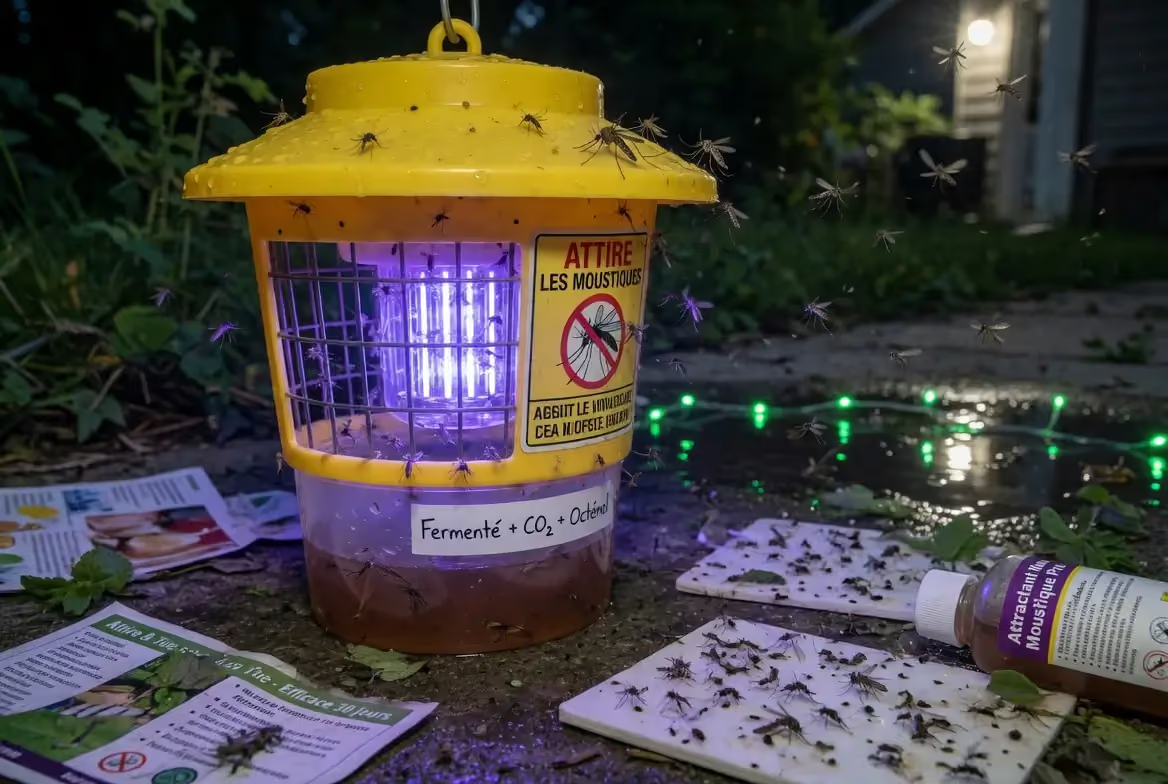
While the main goal is to eliminate mosquito larvae, adults will inevitably fly in from neighboring areas. When that happens, your plan should incorporate mosquito traps and repellents. Modern mosquito traps mimic human respiration and skin odors to lure and catch adult mosquitoes. This serves as an indispensable complement to eradicating breeding sites, intercepting adults that managed to slip past the larval control phase.
For personal protection, applying repellents directly to skin or clothing will temporarily deter mosquitoes. However, these measures do not resolve the root cause. At Garden reclaimer, we view topical mosquito repellents as a last line of defense. True mosquito control relies on an integrated pest management approach: eliminating larvae, trapping adult insects, and using technology to monitor egg-laying sites. This multi-layered strategy is the only proven way to effectively manage mosquito nuisance over the long haul.
Tips and best practices: how to get rid of mosquito eggs?
Building good habits into your daily routine is often far more effective than reactive treatments. The golden rule is simple: drain any container after it rains. A plant saucer, a forgotten bucket, or even the fold of a tarp can harbor growing larvae. When it comes to removing eggs, a simple trick is to scrub the inside edges of flowerpots with soapy water and a stiff brush. This physically destroys any mosquito eggs clinging to the sides, preventing them from hatching later on.
Gardeners must also keep a close eye on their swimming pools and ornamental ponds. Properly filtered and treated water will not attract female mosquitoes. Conversely, a covered pool that collects pools of rainwater on its tarp is a prime breeding ground. Successful mosquito control comes down to steady attention to these small details. By eliminating egg clutches right away, you stop these pests in their tracks before they ever have the chance to turn into mobile larvae.
Getting rid of larvae: what is the best solution for an ecological garden?
Choosing an eco-friendly solution to rid your yard of larvae protects beneficial garden wildlife. By fostering biodiversity, you introduce nature's own pest control. For instance, dragonfly larvae and certain aquatic beetles are formidable natural predators that devour mosquito larvae with ease. Creating a well-balanced pond with oxygenating plants and natural predators is the ideal solution to keep mosquito populations under control without constant intervention.
Ultimately, eliminating mosquito larvae comes down to method and consistency. Combining the mechanical removal of breeding sites, the sensible use of a biological larvicide, and the support of local biodiversity provides the strongest defense. Garden Reclaimer is dedicated to providing you with the technology and advice needed to turn your garden into a protected haven where mosquitoes no longer belong. Modern mosquito control is smart control, targeted right at the root of the problem: the larvae.
Summary of the most important points to remember
- The mosquito life cycle requires an aquatic phase (egg, larva, pupa).
- Only females bite, as they need blood to develop their eggs.
- Targeting mosquito larvae is far more effective than going after adults alone.
- Standing water is the ultimate breeding ground; be sure to empty every plant saucer and seal every rain barrel.
- A biological larvicide (BTI) is an ideal solution because it is selective and non-toxic to the environment.
- The tiger mosquito lays its eggs on dry inner surfaces, making it essential to scrub containers to destroy them.
- Effective mosquito control requires weekly inspections of all standing water around the home.
- Garden Reclaimer provides expert guidance for comprehensive, eco-friendly mosquito management.
Frequently Asked Questions (FAQ)
How long do larvae live in water before becoming adults?
The length of the larval stage depends primarily on water temperature and the availability of organic matter. In summer, when temperatures are high, the transition from egg to adult mosquito can take just 7 to 10 days. This means a weekly check is essential to kill mosquito larvae before they take flight.
Can white vinegar eliminate mosquito larvae?
White vinegar can alter water pH, which may affect the larvae, but it is not considered an effective large-scale larvicide. What's more, it can harm plants if you use that water for watering. To safely eliminate larvae, opt instead for a certified biological larvicide or simply empty the containers.
How to prevent mosquitoes from laying eggs in a rainwater collector?
The most reliable method is physical exclusion. Use a tight-fitting lid or secure fine mesh netting over the top of your rain barrel. Make sure there are no gaps larger than 2 mm, as females are masters at slipping through. If you can't seal off access, regularly add a BTI tablet to kill the larvae as soon as they hatch.
What is the most effective trick for eliminating larvae naturally?
The most effective strategy is simply eliminating standing water. For features that cannot be drained, such as garden ponds, introducing fish (like mosquitofish or goldfish) is remarkably effective, as they devour mosquito larvae the moment they twitch. It’s the perfect eco-friendly solution for a balanced pond.
Why is the tiger mosquito more difficult to eradicate at the larval stage?
The tiger mosquito is particularly challenging because it thrives in tiny artificial breeding sites. Unlike species that breed in open marshes, it settles right into urban gardens. Its eggs stick to container walls and wait for rain, meaning tiger mosquito control relies heavily on neighbors staying vigilant and cleaning out every small container.
Are biological larvicides dangerous for pets?
No, a BTI-based biological larvicide is specifically engineered to target the digestive systems of dipteran larvae. It is completely harmless to dogs, cats, birds, and even pollinating insects. That makes it the ideal solution for treating a rainwater collector that pets might drink from.
Protecting your home from mosquitoes starts today with an inspection of all standing water. By taking control of the larvae, you take back your garden.