
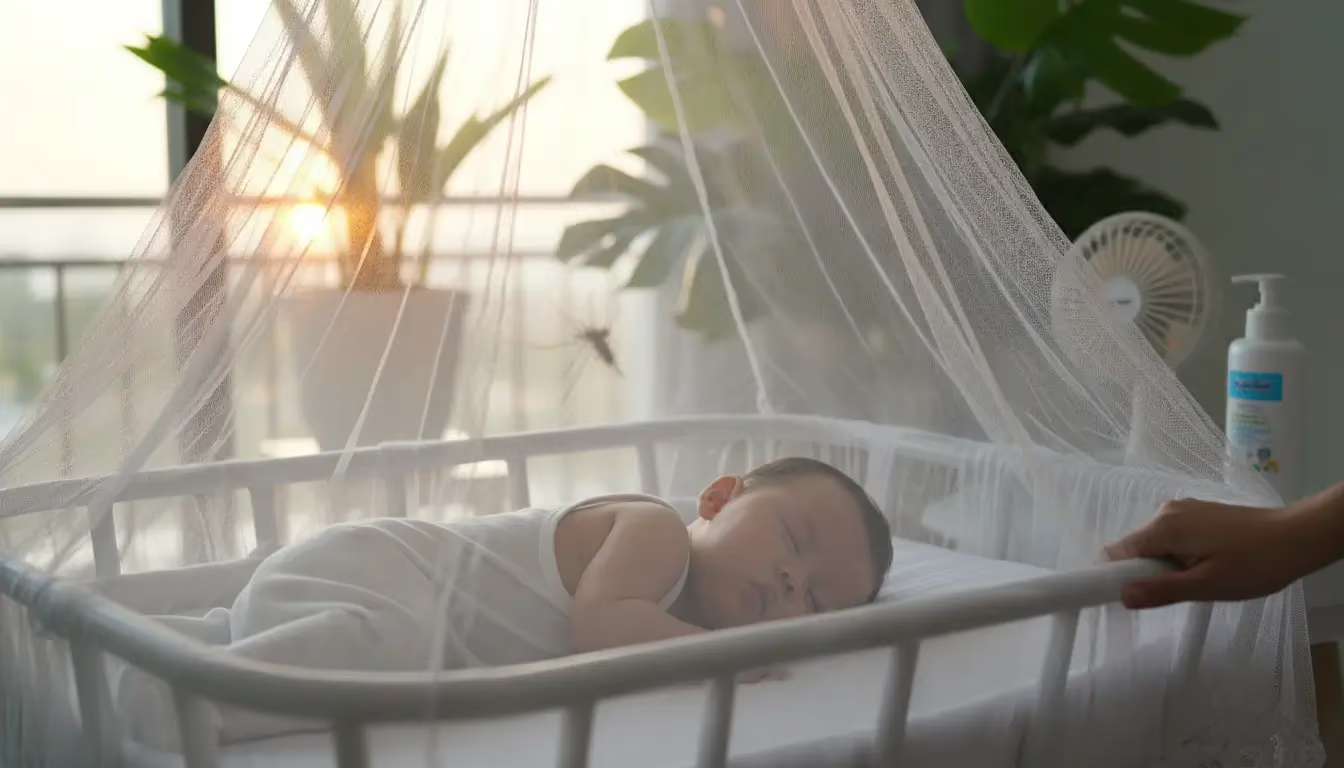
Protecting infants from environmental hazards is a top priority for every parent and early childhood professional. With seasonal insect surges, knowing how to protect baby from mosquitoes becomes a matter of public health. This article takes an in-depth look at natural mosquito repellent options, the effectiveness of physical barriers, and the sensible use of repellents to protect your baby against the infection and allergy risks linked to bites. This guide provides expert advice on how to prevent mosquito bites, choose the right remedy, and ensure a safe, peaceful environment for your little one.
Why is it crucial to protect your baby from mosquitoes from an early age?
An infant's delicate skin requires constant vigilance. Unlike adults, a baby's skin is exceptionally thin and permeable, making the impact of a mosquito bite potentially far more inflammatory. A mosquito does not simply draw blood; it injects anticoagulant saliva that triggers an immediate immune response. In babies, this reaction can cause significant swelling or persistent redness, increasing the risk of secondary infection if the child scratches the area.
The spread of the tiger mosquito across our regions also increases the risk of vector-borne diseases. It is therefore vital to put strategies in place to keep mosquitoes away without exposing your child to neurotoxic chemicals. Protecting children, and specifically protecting a baby, calls for a multi-layered approach combining physical barriers with natural solutions.
What are the best mosquito repellent solutions for a baby's room?
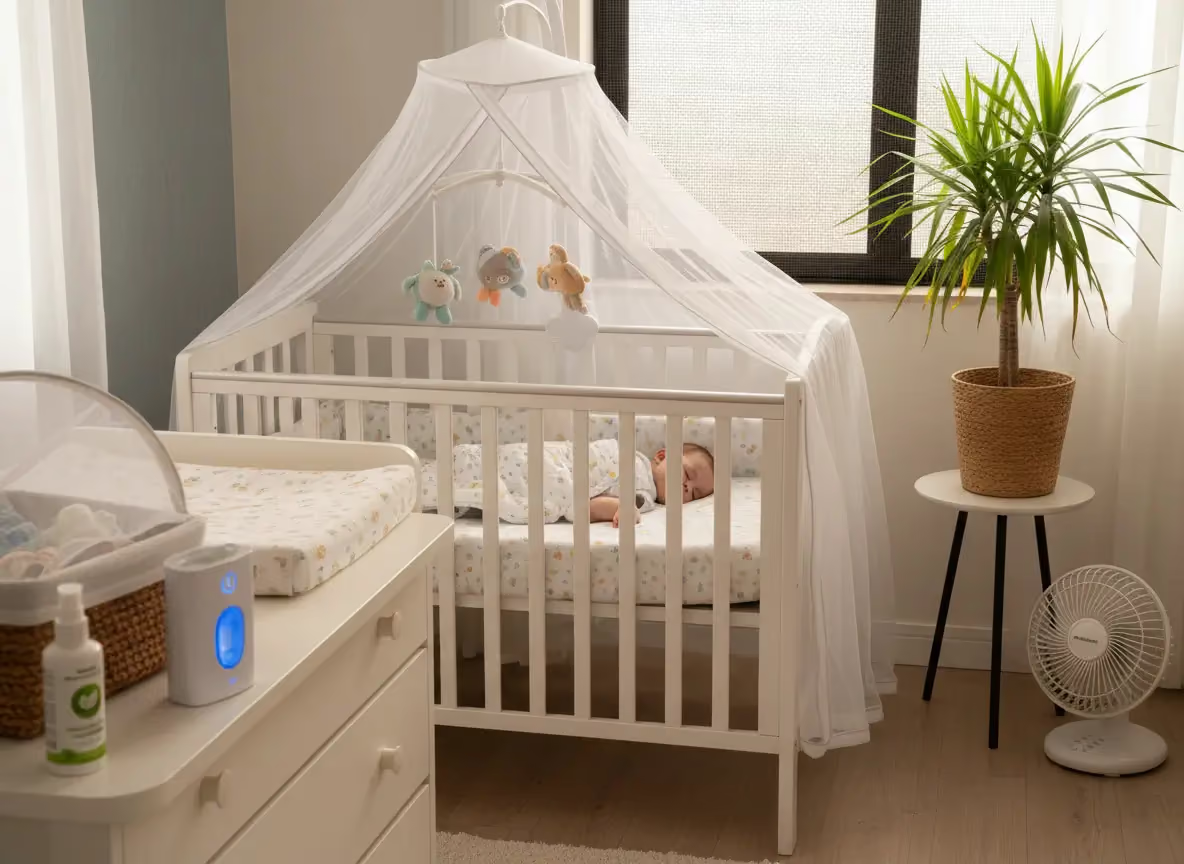
To secure the nursery, passive methods should always come first. Fitting a mosquito net on windows and over the crib remains the most effective and safest approach. It acts as a mechanical mosquito barrier that requires no chemicals whatsoever. Fine mesh keeps every last insect out of the sleeping area, ensuring your little one can sleep peacefully without the risk of getting bitten.
Additionally, mosquito control solutions like UV LED lamps can be considered, provided they are kept well out of reach. At Garden Reclaimer, we recommend tackling the immediate surroundings: eliminating standing water in plant saucers or gutters is essential to stop the insects from breeding at the source. Prevention is always better than relying heavily on biocides.
How do you choose a mosquito repellent suitable for infants?
Choosing a repellent for children under 36 months requires great care. Most commercial products contain DEET, an effective ingredient whose concentration must be strictly controlled for young children. To protect baby's skin, it is best to opt for formulations specifically tested under pediatric supervision. A mosquito repellent should always be selected based on age; direct skin application is generally discouraged before 6 months.
For babies and young children, using a natural mosquito repellent made with Citriodiol (derived from lemon eucalyptus) is often recommended as an alternative to DEET. However, you should never apply these products directly to the skin on an infant's face or hands to avoid accidental ingestion or eye irritation. Applying repellent directly to clothing remains a very safe way to prevent mosquito bites.
Is citronella really an effective natural mosquito repellent?
Citronella is frequently touted as the ultimate remedy. While it does have properties that repel mosquitoes, its effects are unfortunately short-lived and highly volatile. When it comes to protecting baby, relying solely on a citronella candle or plant is not enough. However, when formulated into a complex natural mosquito repellent alongside other natural ingredients, it can help create an effective scent barrier.
Citronella essential oil, while natural, is potent. It should never be applied undiluted to a baby's skin. A more comprehensive natural solution involves combining room diffusion (only when the child is not in the room) with protective clothing. When protecting your baby, true efficacy comes from combining multiple methods rather than relying on a single product.
How can you protect your baby from mosquitoes while out with a stroller?
Out on walks, the risk of bites increases. The one must-have accessory is a stroller mosquito net. It creates a complete physical barrier against mosquitoes and other flying insects. Just be sure the mesh fits snugly around the frame so no bugs can sneak in. It is the simplest answer to protecting baby outdoors without chemicals.
If you are traveling in high-density areas, applying a repellent spray strictly to the stroller fabric can reinforce the barrier. Dressing your baby in clothing that is long, loose, and light-colored is another proven, expert-backed strategy. Dark colors are much more attractive to the tiger mosquito. By pairing long clothing with physical barriers, you dramatically reduce the chances of your child getting bitten by a mosquito.
Which essential oils are safe to use for toddlers?
The use of essential oils in children under 3 is subject to strict guidelines. Most essential oils are neurotoxic or irritating to infants. However, a select few—such as True Lavender—can be used sparingly for their soothing properties after an encounter. To keep mosquitoes away, only Lemon Eucalyptus oil (in a purified, standardized formulation) is recognized by health authorities for its proven mosquito repellent efficacy.
Always consult a healthcare professional before applying any product. An improperly used natural remedy can be more harmful than a conventional product. To protect baby, choose products specifically labeled for infants, which guarantee they are free from terpene derivatives. Your baby's health depends on this level of care when selecting active biochemical ingredients.

What should you do if your baby gets a mosquito bite to relieve the itching?
If, despite your best efforts, your baby does get bitten by a mosquito, the priority is to soothe the itching before they scratch and break the skin. A mosquito bite can flare up quickly. Start by gently washing the area with mild soap and water. Then, applying a soothing balm formulated specifically for babies will help reduce swelling.
To relieve bites, you can apply a cold damp cloth, which calms the itching through a cooling effect. Keep a close eye on your baby's fingernails and keep them trimmed short to minimize scratching damage. If the mosquito bite shows abnormal swelling or if your baby develops a fever within minutes of the bite, seek prompt medical attention to rule out a severe allergic reaction.
What kind of clothing should you choose to prevent mosquito bites?
Clothing is your first line of defense when it comes to protecting baby's skin. A baby dressed in lightweight cotton covering their arms and legs is significantly less vulnerable. Most insect bites occur on exposed skin. We recommend dressing your little one in loose-fitting clothes, as a mosquito can sometimes bite right through tight fabrics.
Textile innovations now offer clothing treated with repellent (often permethrin-based), but for everyday wear, standard light-colored clothing does the job. Light colors are far less noticeable to an insect's visual system. It is a completely safe, cost-free way to prevent bites during summer evenings or outdoor naps.
Are mosquito repellent bracelets effective for protecting children?
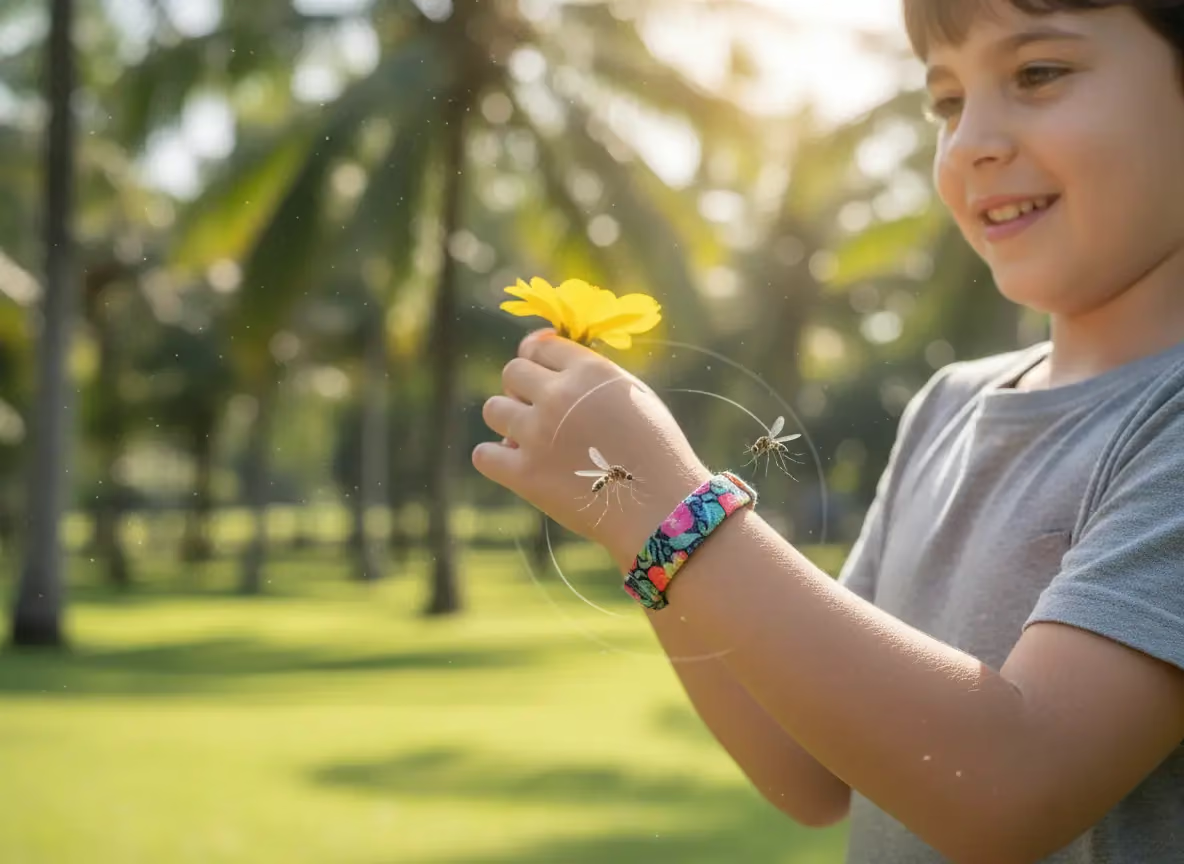
Mosquito wristbands are very popular, but their effectiveness is widely questioned by scientific studies. When it comes to protecting children, their range of protection is simply too small; they protect the wrist while leaving the rest of the body completely exposed. What's more, there is always the risk of a baby putting the band in their mouth and ingesting the active ingredients.
To protect their skin, it is better to use repellents in lotion form or as a spray (applied indirectly) or stick to physical barriers. Protecting children requires proven solutions that cover the entire body. A wristband should only ever be considered a minor supplement, never a primary defense against mosquitoes.
How can you clean up your outdoor space with Garden Reclaimer to avoid mosquitoes?
Outdoor pest management is no longer just about controlling breeding sites; it is now an integral part of a modern preventive strategy. Garden Reclaimer is revolutionizing vector control by turning your yard into a fundamentally inhospitable space for insects. While eliminating standing water remains an essential step to prevent breeding, adding our high-performance mosquito trap delivers the ultimate barrier against adult populations.
Engineered with cutting-edge electronics and durable mass 3D-printed materials (PC, PPA-CF, ASA), the Garden Reclaimer terminal acts as an "ecological reactor." It generates a powerful patented alternating signal—combining CO2, heat, and moisture—that mimics a human presence with irresistible intensity for blood-seeking females. Unlike obsolete solutions, this technology requires no gas bottles: it recycles ambient gases for a carbon-neutral footprint and delivers complete autonomy all season long.
Summary of key points for protecting your baby:
- Prioritize physical barriers: Always use a mosquito net on the crib and stroller.
- Suitable clothing: Opt for long, loose-fitting, light-colored clothing to prevent bites.
- Rigorous product selection: Only use repellents approved for the child's age and avoid DEET before 6 months.
- Environmental hygiene: Eliminate all standing water around the house to limit breeding.
- Post-bite care: In case of a bite, use a soothing treatment and keep your baby's nails short.
- Medical consultation: Seek advice from a healthcare professional before using any essential oil.
FAQ: Your questions about protecting your baby from insects
How can you tell the difference between a normal reaction and an allergy to bites in an infant?
A typical skin reaction to a mosquito bite on a baby consists of a small pink bump a few millimeters wide and localized itching. However, some children develop a hypersensitivity reaction often referred to as "Skeeter syndrome." In such cases, the swelling can expand to several centimeters and is accompanied by an intense warm sensation. If the bite begins to restrict movement in a limb or if you notice blistering, it is crucial to consult a healthcare professional. Your baby's health depends on identifying severe inflammatory symptoms promptly to prevent respiratory distress or anaphylactic shock, although these remain exceptionally rare for this type of insect.
Is using fans a viable anti-mosquito strategy?
Scientifically speaking, a fan is an underrated yet formidable mechanical mosquito repellent. Mosquitoes are weak fliers; even a gentle breeze is enough to disrupt their flight path and scatter the chemical cues (CO2 and body odors) we emit that guide them to their target. Running a fan at moderate speed in the nursery—pointed indirectly to avoid blowing cold drafts over your child—is an extremely effective way to keep mosquitoes away. It is a natural, safe solution that perfectly complements a mosquito net for double protection throughout the night.
At what age can you actually start using repellent spray on the skin?
An infant's skin barrier does not become fully functional until several months of age. As a rule, health authorities advise against using any skin sprays or repellents before 6 months of age. Between 6 months and 12 years, application should be limited to once a day. It is critical never to apply the product directly to the skin on areas the baby might put in their mouth (such as hands) or near the eyes. To protect your baby, always favor applying repellent to fabrics (clothing, the lining of the stroller) rather than the skin, keeping systemic absorption into the bloodstream to an absolute minimum.
What are the real risks of DEET for young children?
DEET (N,N-Diethyl-meta-toluamide) is the global gold standard for repellents, but its toxicological profile calls for extreme caution in young children. At high concentrations, it has been linked to neurotoxic risks. That is why formulations meant to protect babies should never exceed 10% to 30% concentration, and its use is strictly regulated for children under 3 years old. In light of these risks, research has shifted toward active ingredients like IR3535 or milder, naturally derived mosquito control solutions that strike the optimal balance between protection and safety.
Why does the tiger mosquito require increased vigilance during the day?
Unlike Culex pipiens (the common house mosquito), which primarily hunts at dusk, the tiger mosquito (Aedes albopictus) is a daytime biter. This means staying vigilant to protect your children throughout the day, especially during naptime or outdoor play. This pest is particularly drawn to movement and thermal contrast. To prevent bites from tiger mosquitoes, landscape management with Garden Reclaimer becomes vital: clearing brush and eliminating stagnant water are the only long-term ways to curb the presence of this insect around your home.
How can you treat standing water in your garden to protect your family?
The reproduction cycle of this insect is completely reliant on standing water. Even a simple saucer left outside can turn into a breeding ground for hundreds of larvae. To protect a baby effectively, you need to manage the surrounding environment. Garden Reclaimer recommends emptying, cleaning out, or covering every water collection point after rain. If you have an ornamental pond, introducing larva-eating fish is an outstanding biological remedy. By eliminating these breeding sites, you stop mosquitoes from landing on the skin of your loved ones before they can ever take flight.
Summary for optimal protection:
- Preventive action: Organize your outdoor space with Garden Reclaimer to eliminate nests.
- No chemicals before 6 months: Rely entirely on mosquito netting and protective clothing.
- Sensible application: If a repellent is necessary, apply it to clothing.
- Quick reaction: In case of a mosquito bite, clean the area and apply a soothing treatment.