


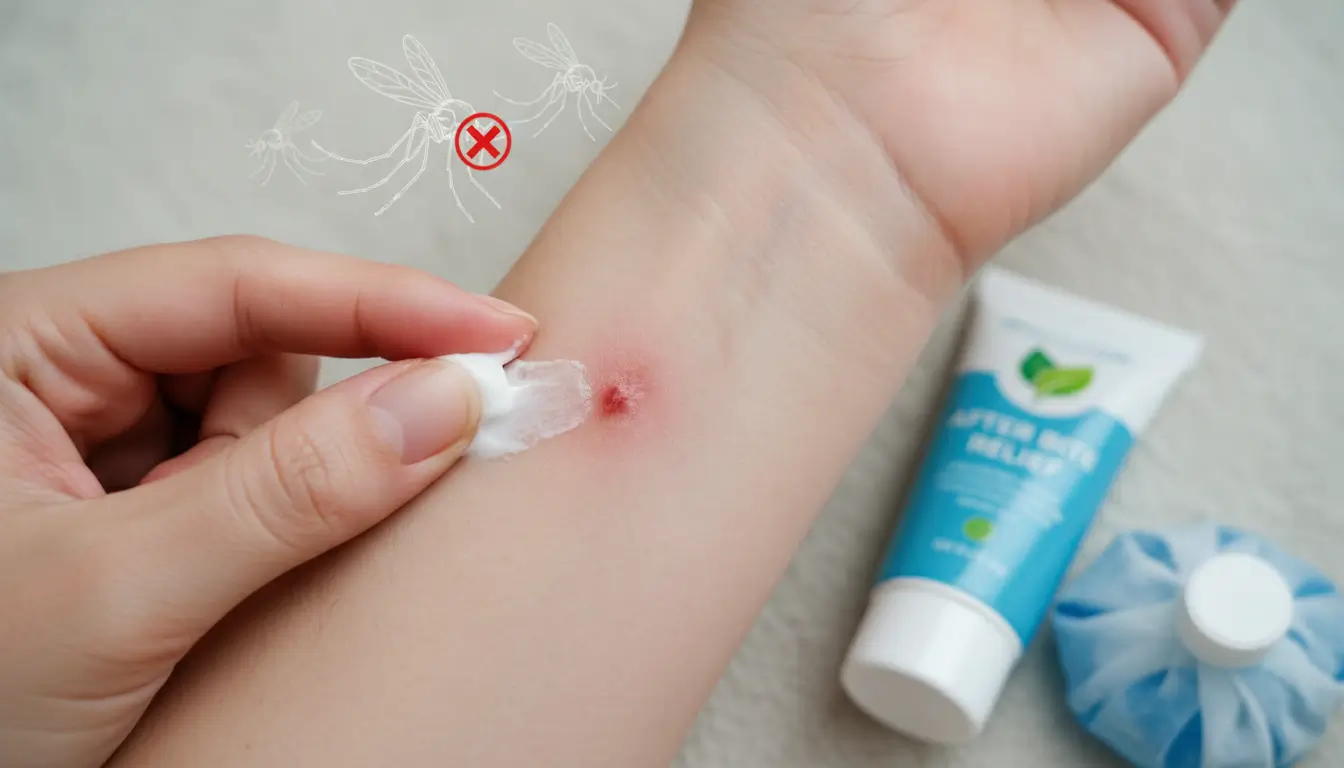
Les beaux jours s'accompagnent invariablement du retour des moustiques, ces insectes volants dont les piqûres provoquent démangeaisons intenses et inconfort. Chaque été, des millions de personnes cherchent désespérément à soulager les piqûres de moustique qui perturbent leur quotidien et leur sommeil. Comprendre les mécanismes physiologiques à l'origine de ces réactions cutanées et connaître les remèdes efficaces pour soulager rapidement les démangeaisons devient essentiel pour préserver son bien-être durant la saison estivale.
Cet article exhaustif vous dévoile les solutions scientifiquement validées pour soulager une piqûre de moustique, depuis les premiers gestes d'urgence jusqu'aux traitements préventifs durables. Que vous cherchiez des remèdes naturels, des solutions pharmaceutiques ou des stratégies de prévention, vous découvrirez des réponses concrètes adaptées à chaque situation, notamment pour les populations vulnérables comme les femmes enceintes et les enfants. En combinant expertise dermatologique et solutions innovantes comme Garden Reclaimer, vous disposerez d'un arsenal complet pour combattre efficacement cette nuisance saisonnière.
Pourquoi les piqûres de moustique démangent-elles autant ?
Lorsqu'un moustique nous pique, la réaction cutanée que nous observons résulte d'un mécanisme immunologique complexe. Seules les femelles moustiques piquent les humains, car elles nécessitent les protéines contenues dans le sang pour développer leurs œufs. Au moment de la piqûre, la femelle moustique injecte de la salive du moustique contenant des anticoagulants qui facilitent l'aspiration du sang. Ces protéines étrangères déclenchent immédiatement une réaction inflammatoire locale.
Notre système immunitaire identifie ces substances comme des agents pathogènes potentiels et libère de l'histamine, un médiateur chimique responsable des symptômes caractéristiques : rougeur, gonflement et démangeaisons intenses. L'histamine dilate les vaisseaux sanguins locaux, augmente la perméabilité capillaire et stimule les terminaisons nerveuses sensorielles, créant cette sensation irrépressible de grattage. La réaction varie considérablement selon les individus : certaines personnes développent simplement un léger bouton de moustique, tandis que d'autres présentent un gonflement important pouvant atteindre plusieurs centimètres de diamètre.
La réaction allergique peut s'intensifier avec les expositions répétées. Les personnes sensibles aux piqûres de moustiques développent parfois une sensibilisation progressive, rendant chaque nouvelle piqûre de moustique potentiellement plus symptomatique. Les enfants, dont le système immunitaire demeure en développement, manifestent généralement des réactions plus marquées que les adultes. Cette vulnérabilité particulière chez les jeunes enfants nécessite une vigilance accrue et des stratégies de prévention adaptées pour éviter les piqûres durant les périodes d'activité maximale des moustiques.
Comment reconnaître une piqûre de moustique et la différencier d'autres piqûres d'insectes ?
Reconnaître une piqûre de moustique s'avère généralement simple grâce à ses caractéristiques spécifiques. La lésion apparaît typiquement comme une petite papule rosée ou rougeâtre, légèrement surélevée, mesurant entre 2 et 10 millimètres de diamètre. Le centre présente parfois un point plus sombre correspondant à l'orifice de piqûre. Contrairement aux piqûres de puces qui se regroupent généralement en lignes ou en clusters, les piqûres de moustique se distribuent de manière aléatoire sur les zones exposées de la peau.
La temporalité de l'apparition constitue également un indicateur fiable. Après la piqûre, la réaction cutanée se manifeste rapidement, généralement dans les minutes suivant l'exposition. Les démangeaisons atteignent leur intensité maximale dans les premières heures, puis diminuent progressivement sur 24 à 48 heures. Le moustique tigre, espèce invasive particulièrement agressive, provoque fréquemment des réactions plus prononcées avec un gonflement plus important et des démangeaisons plus persistantes que les moustiques communs.
Les piqûres d'insectes d'autres espèces présentent des caractéristiques distinctes qui facilitent le diagnostic différentiel. Les piqûres de guêpes ou d'abeilles provoquent une douleur aiguë immédiate accompagnée d'un œdème important, souvent avec persistance du dard. Les punaises de lit laissent des traces alignées ou groupées, principalement sur les zones couvertes durant le sommeil. Les tiques s'accrochent à la peau et demeurent visibles jusqu'à leur retrait. Cette identification précise permet d'adapter le traitement et d'évaluer les risques sanitaires spécifiques, notamment les risques de transmission vectorielle associés au moustique tigre dans certaines régions.
.webp)
Quels sont les remèdes naturels les plus efficaces pour soulager rapidement une piqûre de moustique ?
Le bicarbonate de soude figure parmi les remèdes naturels les plus plébiscités pour soulager les démangeaisons provoquées par une piqûre de moustique. Ce composé alcalin neutralise partiellement l'acidité de la salive du moustique et possède des propriétés anti-inflammatoires légères. Préparez une pâte épaisse en mélangeant trois volumes de bicarbonate de soude avec un volume d'eau, puis appliquez directement sur la piqûre pendant 10 à 15 minutes. Ce remède apaisant procure un soulagement rapide tout en limitant le gonflement local.
Le vinaigre de cidre constitue une alternative naturelle reconnue pour calmer les démangeaisons liées aux piqûres de moustiques. Ses propriétés antiseptiques et anti-inflammatoires réduisent l'irritation cutanée tout en prévenant les surinfections potentielles dues au grattage excessif. Imbibez un coton de vinaigre de cidre non dilué et tamponnez délicatement la zone affectée. La sensation de fraîcheur initiale peut surprendre, mais l'effet apaisant se manifeste rapidement. Répétez l'application deux à trois fois par jour pour maintenir le soulagement.
Les huiles essentielles offrent également des solutions naturelles pour soulager efficacement les démangeaisons des piqûres. L'huile essentielle de lavande aspic possède des vertus anti-inflammatoires, analgésiques et cicatrisantes particulièrement adaptées au traitement des piqûres d'insectes. Déposez une goutte pure directement sur la piqûre pour un soulagement immédiat. L'huile essentielle de menthe poivrée procure un effet rafraîchissant intense qui masque temporairement la sensation de démangeaison grâce à son composant principal, le menthol. Ces solutions naturelles conviennent particulièrement aux personnes recherchant des alternatives aux traitements pharmaceutiques, bien qu'elles restent contre-indiquées chez les femmes enceintes et les jeunes enfants sans avis médical préalable.
Quelles crèmes et traitements pharmaceutiques permettent de soulager les piqûres de moustique efficacement ?
Les crèmes antihistaminiques représentent le traitement pharmacologique de première ligne pour soulager les démangeaisons dues aux piqûres de moustiques. Ces formulations topiques contiennent des molécules bloquant les récepteurs H1 de l'histamine, réduisant ainsi directement l'inflammation et les démangeaisons à leur source. Les principes actifs comme la diphénhydramine ou la chlorphénamine procurent un soulagement rapide, généralement dans les 15 à 30 minutes suivant l'application. Appliquez une fine couche sur la zone affectée jusqu'à trois fois par jour selon l'intensité des symptômes.
Les corticostéroïdes topiques de faible puissance constituent une option thérapeutique pour les réactions inflammatoires plus intenses. L'hydrocortisone à 0,5% ou 1%, disponible sans ordonnance dans la plupart des pharmacies, réduit efficacement le gonflement et les démangeaisons en inhibant la cascade inflammatoire. Ce traitement s'avère particulièrement utile lorsque la piqûre de moustique provoque un œdème important ou des lésions de grattage. Limitez l'utilisation à quelques jours consécutifs pour éviter les effets secondaires cutanés associés aux corticostéroïdes prolongés.
Pour les cas de piqûre de moustique déclenchant des réactions allergiques importantes, les antihistaminiques oraux complètent efficacement les traitements topiques. La cétirizine ou la loratadine, antihistaminiques de deuxième génération, offrent un soulagement systémique avec moins d'effets sédatifs que leurs prédécesseurs. Ces médicaments s'avèrent particulièrement bénéfiques chez les personnes développant de multiples piqûres simultanées ou présentant une sensibilité accrue. Les femmes enceintes et les enfants en bas âge doivent impérativement consulter un professionnel de santé avant toute prise d'antihistaminique pour adapter la posologie et vérifier les contre-indications spécifiques à leur situation.
Comment soulager les démangeaisons chez les enfants et les femmes enceintes en toute sécurité ?
Les jeunes enfants nécessitent une approche thérapeutique spécifique pour soulager les piqûres de moustique en raison de leur peau sensible et de leur tendance naturelle à gratter intensément. Privilégiez les vêtements longs et légers durant les périodes d'activité maximale des moustiques pour limiter l'exposition cutanée. Lorsque la piqûre survient malgré les précautions, les compresses froides constituent la méthode la plus sûre pour apaiser les démangeaisons chez les enfants. Appliquez un glaçon enveloppé dans un linge fin pendant quelques minutes pour engourdir temporairement la zone et réduire l'inflammation.
Les crèmes à base de calamine représentent une solution traditionnelle parfaitement adaptée aux enfants. Cette formulation apaisante contient de l'oxyde de zinc et de l'oxyde ferrique qui créent une barrière protectrice tout en procurant un effet rafraîchissant. L'application régulière calme les démangeaisons sans risque d'effets secondaires systémiques. Pour les réactions plus intenses chez les enfants, des crèmes antihistaminiques spécifiquement formulées pour usage pédiatrique peuvent être utilisées après consultation d'un pédiatre. Veillez à couper court les ongles des enfants pour minimiser les lésions de grattage susceptibles de s'infecter.
Les femmes enceintes et les enfants en bas âge requièrent des précautions particulières dans le choix des traitements anti-moustiques. Les huiles essentielles, bien que naturelles, demeurent généralement déconseillées durant la grossesse en raison de leur concentration en principes actifs potentiellement neurotoxiques pour le fœtus. Privilégiez les méthodes physiques comme les compresses froides, le gel d'aloe vera pur ou les crèmes à base de calamine qui n'entraînent aucune absorption systémique. En cas de piqûre multiple ou de réaction allergique, consultez rapidement un professionnel de santé pour obtenir un traitement adapté garantissant la sécurité de la mère et de l'enfant. Les bons réflexes incluent également l'installation de moustiquaires imprégnées sur les fenêtres et autour du lit pour créer une barrière physique protectrice durant la nuit.
Pourquoi certaines personnes se font-elles plus piquer par les moustiques que d'autres ?
L'attractivité différentielle face aux moustiques s'explique par une combinaison complexe de facteurs biologiques, génétiques et comportementaux. Les moustiques sont attirés par les couleurs sombres qui absorbent davantage la chaleur et créent un contraste visuel facilitant le repérage des cibles potentielles. Les personnes portant des vêtements noirs, bleus foncés ou rouges présentent statistiquement un risque accru de se faire piquer par les moustiques. À l'inverse, les vêtements clairs réfléchissent la lumière et offrent une protection passive contre ces insectes.
Le dioxyde de carbone expiré constitue le principal attractif chimique pour les moustiques femelles qui détectent ce gaz à plusieurs dizaines de mètres de distance. Les individus présentant un métabolisme élevé, les personnes en surpoids ou les femmes enceintes émettent des quantités supérieures de CO2, ce qui attire les moustiques de manière préférentielle. L'activité physique augmente également la production de CO2 et d'acide lactique dans la sueur, créant un cocktail chimique irrésistible pour ces insectes hématophages. Cette réalité biologique explique pourquoi les sportifs durant l'exercice constituent des cibles privilégiées.
La composition chimique de la sueur varie considérablement selon les individus et influence directement l'attractivité face aux moustiques. Certaines personnes sécrètent naturellement des composés volatils comme l'acide urique, l'ammoniaque ou certains acides gras qui attirent intensément ces insectes. Des études génétiques récentes suggèrent que jusqu'à 85% de l'attractivité individuelle face aux moustiques serait déterminée par notre patrimoine génétique. Le groupe sanguin joue également un rôle : les personnes de groupe O se font piquer par un moustique environ deux fois plus fréquemment que celles de groupe A. Comprendre ces mécanismes permet d'adapter les stratégies de prévention selon son profil de risque personnel.
.webp)
Comment prévenir les piqûres de moustiques de manière durable et écologique ?
La prévention durable des piqûres de moustique commence par l'élimination des gîtes larvaires dans l'environnement immédiat. Les moustiques se reproduisent exclusivement dans l'eau stagnante, où la femelle moustique dépose ses œufs. Inspectez méticuleusement votre jardin et éliminez tous les récipients pouvant accumuler de l'eau : soucoupes de pots de fleurs, gouttières obstruées, pneus usagés, jouets d'enfants oubliés. Un simple bouchon de bouteille contenant quelques millilitres d'eau suffit au développement larvaire, d'où l'importance d'une vigilance constante durant les beaux jours.
Garden Reclaimer propose une solution technologique innovante pour contrôler durablement la population de moustiques sans recourir aux insecticides chimiques. Ce système automatisé détecte et traite les gîtes larvaires difficiles d'accès grâce à des capteurs environnementaux intelligents. L'appareil diffuse des larvicides biologiques à base de Bacillus thuringiensis israelensis (Bti), une bactérie naturelle qui cible spécifiquement les larves de moustiques sans affecter les autres organismes aquatiques, les pollinisateurs ou les animaux domestiques. Cette approche écologique s'intègre parfaitement dans une stratégie de lutte intégrée contre les moustiques.
Les répulsifs cutanés constituent un complément indispensable pour éviter les piqûres lors des activités extérieures. Privilégiez les formulations contenant du DEET à concentration adaptée (30-50% pour les adultes, 10-30% pour les enfants), de l'icaridine ou du IR3535, molécules dont l'efficacité a été scientifiquement démontrée contre les moustiques. Appliquez le produit uniformément sur toutes les zones exposées en évitant le contour des yeux et de la bouche. Pour une protection optimale, combinez l'application de répulsif avec le port de vêtements longs et clairs imprégnés de perméthrine. L'installation de moustiquaires aux fenêtres et autour du lit crée une barrière physique protectrice durant les périodes de repos, réduisant drastiquement le risque de se faire piquer par les moustiques durant le sommeil.
Que faire si la piqûre de moustique s'infecte ou provoque une réaction allergique importante ?
Une piqûre de moustique peut se compliquer d'une surinfection bactérienne lorsque le grattage répété brise la barrière cutanée et introduit des germes pathogènes. Les signes évocateurs d'infection incluent une augmentation progressive de la douleur, un gonflement s'étendant au-delà de la zone initiale, une rougeur intense avec chaleur locale, et parfois l'apparition de pus ou de croûtes jaunâtres. Les boutons infectés nécessitent une désinfection rigoureuse avec un antiseptique local et, dans certains cas, un traitement antibiotique prescrit par un médecin.
Les réactions allergiques sévères aux piqûres de moustique, bien que rares, requièrent une prise en charge médicale urgente. Le syndrome de Skeeter représente la manifestation la plus spectaculaire d'hypersensibilité, caractérisé par un œdème massif pouvant s'étendre sur plusieurs centimètres, accompagné parfois de fièvre et de symptômes généraux. Cette réaction immunologique disproportionnée touche principalement les enfants et les personnes immunodéprimées. Si la piqûre provoque un gonflement du visage, des difficultés respiratoires, des vertiges ou une urticaire généralisée, contactez immédiatement les services d'urgence car ces symptômes peuvent indiquer un choc anaphylactique potentiellement mortel.
Certaines populations présentent une vulnérabilité accrue face aux complications des piqûres d'insectes. Les femmes enceintes et les enfants immunodéprimés nécessitent une surveillance particulière en cas de réaction inhabituelle. Les personnes présentant des antécédents d'allergie sévère devraient consulter un allergologue pour évaluer la pertinence de porter une trousse d'urgence contenant de l'adrénaline auto-injectable. La prévention demeure la stratégie la plus efficace pour ces populations à risque : utilisation systématique de répulsifs adaptés, port de vêtements protecteurs et élimination rigoureuse des gîtes larvaires autour du domicile avec des solutions comme Garden Reclaimer pour réduire drastiquement l'exposition aux moustiques.
Quelles sont les différences entre le moustique commun et le moustique tigre en termes de piqûres ?
Le moustique tigre (Aedes albopictus) se distingue du moustique commun (Culex pipiens) par plusieurs caractéristiques comportementales et sanitaires importantes. Contrairement au moustique commun qui pique principalement au crépuscule et durant la nuit, le moustique tigre manifeste une activité diurne agressive, avec des pics de piqûres en milieu de matinée et en fin d'après-midi. Cette différence comportementale modifie considérablement les stratégies de protection : les moustiquaires nocturnes seules ne suffisent plus contre cette espèce invasive qui attaque en plein jour.
Les piqûres de moustique tigre provoquent généralement des réactions cutanées plus intenses que celles du moustique commun. La salive de cette espèce contient des protéines allergisantes plus diversifiées, déclenchant une réponse immunitaire souvent plus marquée. Les personnes sensibles développent fréquemment un gonflement plus important, des démangeaisons plus persistantes et parfois des lésions de grattage plus sévères. La papule peut atteindre 2 à 3 centimètres de diamètre avec un érythème périphérique étendu, là où une piqûre de moustique commun ne dépasse généralement pas quelques millimètres.
Le risque sanitaire associé au moustique tigre dépasse la simple nuisance locale. Cette espèce constitue un vecteur potentiel de maladies tropicales comme la dengue, le chikungunya et le zika dans les régions où ces virus circulent. Bien que la transmission autochtone demeure rare en France métropolitaine, l'extension géographique progressive du moustique tigre augmente ce risque épidémiologique. Après la piqûre, une vigilance particulière s'impose durant la période d'incubation : l'apparition de fièvre, de douleurs articulaires ou de symptômes généraux dans les 15 jours suivant une piqûre en zone à risque justifie une consultation médicale rapide. Cette dimension sanitaire renforce l'importance des stratégies de contrôle vectoriel comme celles proposées par Garden Reclaimer pour limiter la prolifération de cette espèce invasive.
.png)
Les solutions technologiques modernes peuvent-elles vraiment réduire les piqûres de moustique ?
L'innovation technologique a révolutionné les stratégies de lutte contre les moustiques en proposant des solutions automatisées, ciblées et respectueuses de l'environnement. Garden Reclaimer incarne cette nouvelle génération d'outils de démoustication écologique qui dépassent largement l'efficacité des méthodes traditionnelles. Le système intègre des capteurs météorologiques et hydrologiques qui identifient automatiquement les conditions favorables au développement larvaire : température, humidité, présence d'eau stagnante. Cette intelligence artificielle permet une intervention préventive avant même l'émergence des moustiques adultes.
Le traitement ciblé des gîtes larvaires représente l'approche la plus efficace pour contrôler durablement la population de moustiques. Garden Reclaimer diffuse des larvicides biologiques à base de Bti exclusivement dans les zones identifiées comme gîtes potentiels, minimisant ainsi l'impact environnemental tout en maximisant l'efficacité. Cette précision technologique évite la pulvérisation massive d'insecticides qui détruit indistinctement tous les insectes, y compris les pollinisateurs essentiels comme les abeilles et les papillons. Le système s'adapte automatiquement aux conditions changeantes, intensifiant le traitement durant les périodes de reproduction maximale et le réduisant lorsque les conditions deviennent défavorables aux moustiques.
Les données collectées par Garden Reclaimer génèrent également une cartographie précise de l'activité des moustiques sur votre propriété, permettant d'optimiser continuellement la stratégie de prévention. Les utilisateurs constatent généralement une réduction de 80 à 90% des piqûres de moustique dès la première saison d'utilisation, cette efficacité augmentant progressivement à mesure que le cycle de reproduction se trouve interrompu. Cette approche technologique s'intègre parfaitement aux autres mesures préventives : élimination manuelle des gîtes évidents, utilisation de répulsifs personnels et installation de barrières physiques. La synergie de ces méthodes offre une protection quasi-totale contre les moustiques, transformant radicalement le confort de vie durant les beaux jours tout en préservant l'équilibre écologique de votre jardin.
Questions Fréquentes (FAQ)
Combien de temps durent les démangeaisons après une piqûre de moustique ?
Les démangeaisons atteignent leur intensité maximale dans les 2 à 6 heures suivant la piqûre, puis diminuent progressivement. Dans la plupart des cas, les symptômes disparaissent complètement en 24 à 48 heures. Chez les personnes sensibles ou en cas de grattage intensif, les démangeaisons peuvent persister 3 à 7 jours. L'application précoce d'un traitement apaisant réduit significativement cette durée.
Peut-on devenir immunisé contre les piqûres de moustique ?
L'immunisation complète contre les piqûres de moustique reste impossible. Certaines personnes développent une tolérance partielle avec l'exposition répétée, tandis que d'autres développent une sensibilisation croissante. Les enfants présentent généralement des réactions plus importantes en raison de leur système immunitaire en développement. Cette variabilité souligne l'importance de maintenir des stratégies préventives constantes.
Les moustiques peuvent-ils transmettre des maladies graves en France métropolitaine ?
Le risque demeure faible mais non nul, particulièrement depuis l'implantation du moustique tigre. Cette espèce peut transmettre la dengue, le chikungunya et le zika dans certaines conditions. Des cas autochtones sporadiques ont été documentés dans le sud de la France. Les voyageurs revenant de zones tropicales doivent se protéger durant 15 jours après leur retour.
Pourquoi faut-il éviter de gratter une piqûre de moustique ?
Le grattage stimule la libération d'histamine supplémentaire, intensifiant les démangeaisons et le gonflement. Les ongles brisent la barrière cutanée, créant des portes d'entrée pour les bactéries pathogènes. Les surinfections peuvent entraîner des complications nécessitant un traitement antibiotique. Privilégiez l'application de traitements apaisants pour un soulagement sans risque.
Cet article exhaustif vous dévoile les solutions scientifiquement validées pour soulager une piqûre de moustique, depuis les premiers gestes d'urgence jusqu'aux traitements préventifs durables. Que vous cherchiez des remèdes naturels, des solutions pharmaceutiques ou des stratégies de prévention, vous découvrirez des réponses concrètes adaptées à chaque situation, notamment pour les populations vulnérables comme les femmes enceintes et les enfants. En combinant expertise dermatologique et solutions innovantes comme Garden Reclaimer, vous disposerez d'un arsenal complet pour combattre efficacement cette nuisance saisonnière.
Pourquoi les piqûres de moustique démangent-elles autant ?
Lorsqu'un moustique nous pique, la réaction cutanée que nous observons résulte d'un mécanisme immunologique complexe. Seules les femelles moustiques piquent les humains, car elles nécessitent les protéines contenues dans le sang pour développer leurs œufs. Au moment de la piqûre, la femelle moustique injecte de la salive du moustique contenant des anticoagulants qui facilitent l'aspiration du sang. Ces protéines étrangères déclenchent immédiatement une réaction inflammatoire locale.
Notre système immunitaire identifie ces substances comme des agents pathogènes potentiels et libère de l'histamine, un médiateur chimique responsable des symptômes caractéristiques : rougeur, gonflement et démangeaisons intenses. L'histamine dilate les vaisseaux sanguins locaux, augmente la perméabilité capillaire et stimule les terminaisons nerveuses sensorielles, créant cette sensation irrépressible de grattage. La réaction varie considérablement selon les individus : certaines personnes développent simplement un léger bouton de moustique, tandis que d'autres présentent un gonflement important pouvant atteindre plusieurs centimètres de diamètre.
La réaction allergique peut s'intensifier avec les expositions répétées. Les personnes sensibles aux piqûres de moustiques développent parfois une sensibilisation progressive, rendant chaque nouvelle piqûre de moustique potentiellement plus symptomatique. Les enfants, dont le système immunitaire demeure en développement, manifestent généralement des réactions plus marquées que les adultes. Cette vulnérabilité particulière chez les jeunes enfants nécessite une vigilance accrue et des stratégies de prévention adaptées pour éviter les piqûres durant les périodes d'activité maximale des moustiques.
Comment reconnaître une piqûre de moustique et la différencier d'autres piqûres d'insectes ?
Reconnaître une piqûre de moustique s'avère généralement simple grâce à ses caractéristiques spécifiques. La lésion apparaît typiquement comme une petite papule rosée ou rougeâtre, légèrement surélevée, mesurant entre 2 et 10 millimètres de diamètre. Le centre présente parfois un point plus sombre correspondant à l'orifice de piqûre. Contrairement aux piqûres de puces qui se regroupent généralement en lignes ou en clusters, les piqûres de moustique se distribuent de manière aléatoire sur les zones exposées de la peau.
La temporalité de l'apparition constitue également un indicateur fiable. Après la piqûre, la réaction cutanée se manifeste rapidement, généralement dans les minutes suivant l'exposition. Les démangeaisons atteignent leur intensité maximale dans les premières heures, puis diminuent progressivement sur 24 à 48 heures. Le moustique tigre, espèce invasive particulièrement agressive, provoque fréquemment des réactions plus prononcées avec un gonflement plus important et des démangeaisons plus persistantes que les moustiques communs.
Les piqûres d'insectes d'autres espèces présentent des caractéristiques distinctes qui facilitent le diagnostic différentiel. Les piqûres de guêpes ou d'abeilles provoquent une douleur aiguë immédiate accompagnée d'un œdème important, souvent avec persistance du dard. Les punaises de lit laissent des traces alignées ou groupées, principalement sur les zones couvertes durant le sommeil. Les tiques s'accrochent à la peau et demeurent visibles jusqu'à leur retrait. Cette identification précise permet d'adapter le traitement et d'évaluer les risques sanitaires spécifiques, notamment les risques de transmission vectorielle associés au moustique tigre dans certaines régions.
Quels sont les remèdes naturels les plus efficaces pour soulager rapidement une piqûre de moustique ?
Le bicarbonate de soude figure parmi les remèdes naturels les plus plébiscités pour soulager les démangeaisons provoquées par une piqûre de moustique. Ce composé alcalin neutralise partiellement l'acidité de la salive du moustique et possède des propriétés anti-inflammatoires légères. Préparez une pâte épaisse en mélangeant trois volumes de bicarbonate de soude avec un volume d'eau, puis appliquez directement sur la piqûre pendant 10 à 15 minutes. Ce remède apaisant procure un soulagement rapide tout en limitant le gonflement local.
Le vinaigre de cidre constitue une alternative naturelle reconnue pour calmer les démangeaisons liées aux piqûres de moustiques. Ses propriétés antiseptiques et anti-inflammatoires réduisent l'irritation cutanée tout en prévenant les surinfections potentielles dues au grattage excessif. Imbibez un coton de vinaigre de cidre non dilué et tamponnez délicatement la zone affectée. La sensation de fraîcheur initiale peut surprendre, mais l'effet apaisant se manifeste rapidement. Répétez l'application deux à trois fois par jour pour maintenir le soulagement.
Les huiles essentielles offrent également des solutions naturelles pour soulager efficacement les démangeaisons des piqûres. L'huile essentielle de lavande aspic possède des vertus anti-inflammatoires, analgésiques et cicatrisantes particulièrement adaptées au traitement des piqûres d'insectes. Déposez une goutte pure directement sur la piqûre pour un soulagement immédiat. L'huile essentielle de menthe poivrée procure un effet rafraîchissant intense qui masque temporairement la sensation de démangeaison grâce à son composant principal, le menthol. Ces solutions naturelles conviennent particulièrement aux personnes recherchant des alternatives aux traitements pharmaceutiques, bien qu'elles restent contre-indiquées chez les femmes enceintes et les jeunes enfants sans avis médical préalable.
Quelles crèmes et traitements pharmaceutiques permettent de soulager les piqûres de moustique efficacement ?
Les crèmes antihistaminiques représentent le traitement pharmacologique de première ligne pour soulager les démangeaisons dues aux piqûres de moustiques. Ces formulations topiques contiennent des molécules bloquant les récepteurs H1 de l'histamine, réduisant ainsi directement l'inflammation et les démangeaisons à leur source. Les principes actifs comme la diphénhydramine ou la chlorphénamine procurent un soulagement rapide, généralement dans les 15 à 30 minutes suivant l'application. Appliquez une fine couche sur la zone affectée jusqu'à trois fois par jour selon l'intensité des symptômes.
Les corticostéroïdes topiques de faible puissance constituent une option thérapeutique pour les réactions inflammatoires plus intenses. L'hydrocortisone à 0,5% ou 1%, disponible sans ordonnance dans la plupart des pharmacies, réduit efficacement le gonflement et les démangeaisons en inhibant la cascade inflammatoire. Ce traitement s'avère particulièrement utile lorsque la piqûre de moustique provoque un œdème important ou des lésions de grattage. Limitez l'utilisation à quelques jours consécutifs pour éviter les effets secondaires cutanés associés aux corticostéroïdes prolongés.
Pour les cas de piqûre de moustique déclenchant des réactions allergiques importantes, les antihistaminiques oraux complètent efficacement les traitements topiques. La cétirizine ou la loratadine, antihistaminiques de deuxième génération, offrent un soulagement systémique avec moins d'effets sédatifs que leurs prédécesseurs. Ces médicaments s'avèrent particulièrement bénéfiques chez les personnes développant de multiples piqûres simultanées ou présentant une sensibilité accrue. Les femmes enceintes et les enfants en bas âge doivent impérativement consulter un professionnel de santé avant toute prise d'antihistaminique pour adapter la posologie et vérifier les contre-indications spécifiques à leur situation.
Comment soulager les démangeaisons chez les enfants et les femmes enceintes en toute sécurité ?
Les jeunes enfants nécessitent une approche thérapeutique spécifique pour soulager les piqûres de moustique en raison de leur peau sensible et de leur tendance naturelle à gratter intensément. Privilégiez les vêtements longs et légers durant les périodes d'activité maximale des moustiques pour limiter l'exposition cutanée. Lorsque la piqûre survient malgré les précautions, les compresses froides constituent la méthode la plus sûre pour apaiser les démangeaisons chez les enfants. Appliquez un glaçon enveloppé dans un linge fin pendant quelques minutes pour engourdir temporairement la zone et réduire l'inflammation.
Les crèmes à base de calamine représentent une solution traditionnelle parfaitement adaptée aux enfants. Cette formulation apaisante contient de l'oxyde de zinc et de l'oxyde ferrique qui créent une barrière protectrice tout en procurant un effet rafraîchissant. L'application régulière calme les démangeaisons sans risque d'effets secondaires systémiques. Pour les réactions plus intenses chez les enfants, des crèmes antihistaminiques spécifiquement formulées pour usage pédiatrique peuvent être utilisées après consultation d'un pédiatre. Veillez à couper court les ongles des enfants pour minimiser les lésions de grattage susceptibles de s'infecter.
Les femmes enceintes et les enfants en bas âge requièrent des précautions particulières dans le choix des traitements anti-moustiques. Les huiles essentielles, bien que naturelles, demeurent généralement déconseillées durant la grossesse en raison de leur concentration en principes actifs potentiellement neurotoxiques pour le fœtus. Privilégiez les méthodes physiques comme les compresses froides, le gel d'aloe vera pur ou les crèmes à base de calamine qui n'entraînent aucune absorption systémique. En cas de piqûre multiple ou de réaction allergique, consultez rapidement un professionnel de santé pour obtenir un traitement adapté garantissant la sécurité de la mère et de l'enfant. Les bons réflexes incluent également l'installation de moustiquaires imprégnées sur les fenêtres et autour du lit pour créer une barrière physique protectrice durant la nuit.
Pourquoi certaines personnes se font-elles plus piquer par les moustiques que d'autres ?
L'attractivité différentielle face aux moustiques s'explique par une combinaison complexe de facteurs biologiques, génétiques et comportementaux. Les moustiques sont attirés par les couleurs sombres qui absorbent davantage la chaleur et créent un contraste visuel facilitant le repérage des cibles potentielles. Les personnes portant des vêtements noirs, bleus foncés ou rouges présentent statistiquement un risque accru de se faire piquer par les moustiques. À l'inverse, les vêtements clairs réfléchissent la lumière et offrent une protection passive contre ces insectes.
Le dioxyde de carbone expiré constitue le principal attractif chimique pour les moustiques femelles qui détectent ce gaz à plusieurs dizaines de mètres de distance. Les individus présentant un métabolisme élevé, les personnes en surpoids ou les femmes enceintes émettent des quantités supérieures de CO2, ce qui attire les moustiques de manière préférentielle. L'activité physique augmente également la production de CO2 et d'acide lactique dans la sueur, créant un cocktail chimique irrésistible pour ces insectes hématophages. Cette réalité biologique explique pourquoi les sportifs durant l'exercice constituent des cibles privilégiées.
La composition chimique de la sueur varie considérablement selon les individus et influence directement l'attractivité face aux moustiques. Certaines personnes sécrètent naturellement des composés volatils comme l'acide urique, l'ammoniaque ou certains acides gras qui attirent intensément ces insectes. Des études génétiques récentes suggèrent que jusqu'à 85% de l'attractivité individuelle face aux moustiques serait déterminée par notre patrimoine génétique. Le groupe sanguin joue également un rôle : les personnes de groupe O se font piquer par un moustique environ deux fois plus fréquemment que celles de groupe A. Comprendre ces mécanismes permet d'adapter les stratégies de prévention selon son profil de risque personnel.
Comment prévenir les piqûres de moustiques de manière durable et écologique ?
La prévention durable des piqûres de moustique commence par l'élimination des gîtes larvaires dans l'environnement immédiat. Les moustiques se reproduisent exclusivement dans l'eau stagnante, où la femelle moustique dépose ses œufs. Inspectez méticuleusement votre jardin et éliminez tous les récipients pouvant accumuler de l'eau : soucoupes de pots de fleurs, gouttières obstruées, pneus usagés, jouets d'enfants oubliés. Un simple bouchon de bouteille contenant quelques millilitres d'eau suffit au développement larvaire, d'où l'importance d'une vigilance constante durant les beaux jours.
Garden Reclaimer propose une solution technologique innovante pour contrôler durablement la population de moustiques sans recourir aux insecticides chimiques. Ce système automatisé détecte et traite les gîtes larvaires difficiles d'accès grâce à des capteurs environnementaux intelligents. L'appareil diffuse des larvicides biologiques à base de Bacillus thuringiensis israelensis (Bti), une bactérie naturelle qui cible spécifiquement les larves de moustiques sans affecter les autres organismes aquatiques, les pollinisateurs ou les animaux domestiques. Cette approche écologique s'intègre parfaitement dans une stratégie de lutte intégrée contre les moustiques.
Les répulsifs cutanés constituent un complément indispensable pour éviter les piqûres lors des activités extérieures. Privilégiez les formulations contenant du DEET à concentration adaptée (30-50% pour les adultes, 10-30% pour les enfants), de l'icaridine ou du IR3535, molécules dont l'efficacité a été scientifiquement démontrée contre les moustiques. Appliquez le produit uniformément sur toutes les zones exposées en évitant le contour des yeux et de la bouche. Pour une protection optimale, combinez l'application de répulsif avec le port de vêtements longs et clairs imprégnés de perméthrine. L'installation de moustiquaires aux fenêtres et autour du lit crée une barrière physique protectrice durant les périodes de repos, réduisant drastiquement le risque de se faire piquer par les moustiques durant le sommeil.
Que faire si la piqûre de moustique s'infecte ou provoque une réaction allergique importante ?
Une piqûre de moustique peut se compliquer d'une surinfection bactérienne lorsque le grattage répété brise la barrière cutanée et introduit des germes pathogènes. Les signes évocateurs d'infection incluent une augmentation progressive de la douleur, un gonflement s'étendant au-delà de la zone initiale, une rougeur intense avec chaleur locale, et parfois l'apparition de pus ou de croûtes jaunâtres. Les boutons infectés nécessitent une désinfection rigoureuse avec un antiseptique local et, dans certains cas, un traitement antibiotique prescrit par un médecin.
Les réactions allergiques sévères aux piqûres de moustique, bien que rares, requièrent une prise en charge médicale urgente. Le syndrome de Skeeter représente la manifestation la plus spectaculaire d'hypersensibilité, caractérisé par un œdème massif pouvant s'étendre sur plusieurs centimètres, accompagné parfois de fièvre et de symptômes généraux. Cette réaction immunologique disproportionnée touche principalement les enfants et les personnes immunodéprimées. Si la piqûre provoque un gonflement du visage, des difficultés respiratoires, des vertiges ou une urticaire généralisée, contactez immédiatement les services d'urgence car ces symptômes peuvent indiquer un choc anaphylactique potentiellement mortel.
Certaines populations présentent une vulnérabilité accrue face aux complications des piqûres d'insectes. Les femmes enceintes et les enfants immunodéprimés nécessitent une surveillance particulière en cas de réaction inhabituelle. Les personnes présentant des antécédents d'allergie sévère devraient consulter un allergologue pour évaluer la pertinence de porter une trousse d'urgence contenant de l'adrénaline auto-injectable. La prévention demeure la stratégie la plus efficace pour ces populations à risque : utilisation systématique de répulsifs adaptés, port de vêtements protecteurs et élimination rigoureuse des gîtes larvaires autour du domicile avec des solutions comme Garden Reclaimer pour réduire drastiquement l'exposition aux moustiques.
Quelles sont les différences entre le moustique commun et le moustique tigre en termes de piqûres ?
Le moustique tigre (Aedes albopictus) se distingue du moustique commun (Culex pipiens) par plusieurs caractéristiques comportementales et sanitaires importantes. Contrairement au moustique commun qui pique principalement au crépuscule et durant la nuit, le moustique tigre manifeste une activité diurne agressive, avec des pics de piqûres en milieu de matinée et en fin d'après-midi. Cette différence comportementale modifie considérablement les stratégies de protection : les moustiquaires nocturnes seules ne suffisent plus contre cette espèce invasive qui attaque en plein jour.
Les piqûres de moustique tigre provoquent généralement des réactions cutanées plus intenses que celles du moustique commun. La salive de cette espèce contient des protéines allergisantes plus diversifiées, déclenchant une réponse immunitaire souvent plus marquée. Les personnes sensibles développent fréquemment un gonflement plus important, des démangeaisons plus persistantes et parfois des lésions de grattage plus sévères. La papule peut atteindre 2 à 3 centimètres de diamètre avec un érythème périphérique étendu, là où une piqûre de moustique commun ne dépasse généralement pas quelques millimètres.
Le risque sanitaire associé au moustique tigre dépasse la simple nuisance locale. Cette espèce constitue un vecteur potentiel de maladies tropicales comme la dengue, le chikungunya et le zika dans les régions où ces virus circulent. Bien que la transmission autochtone demeure rare en France métropolitaine, l'extension géographique progressive du moustique tigre augmente ce risque épidémiologique. Après la piqûre, une vigilance particulière s'impose durant la période d'incubation : l'apparition de fièvre, de douleurs articulaires ou de symptômes généraux dans les 15 jours suivant une piqûre en zone à risque justifie une consultation médicale rapide. Cette dimension sanitaire renforce l'importance des stratégies de contrôle vectoriel comme celles proposées par Garden Reclaimer pour limiter la prolifération de cette espèce invasive.
Les solutions technologiques modernes peuvent-elles vraiment réduire les piqûres de moustique ?
L'innovation technologique a révolutionné les stratégies de lutte contre les moustiques en proposant des solutions automatisées, ciblées et respectueuses de l'environnement. Garden Reclaimer incarne cette nouvelle génération d'outils de démoustication écologique qui dépassent largement l'efficacité des méthodes traditionnelles. Le système intègre des capteurs météorologiques et hydrologiques qui identifient automatiquement les conditions favorables au développement larvaire : température, humidité, présence d'eau stagnante. Cette intelligence artificielle permet une intervention préventive avant même l'émergence des moustiques adultes.
Le traitement ciblé des gîtes larvaires représente l'approche la plus efficace pour contrôler durablement la population de moustiques. Garden Reclaimer diffuse des larvicides biologiques à base de Bti exclusivement dans les zones identifiées comme gîtes potentiels, minimisant ainsi l'impact environnemental tout en maximisant l'efficacité. Cette précision technologique évite la pulvérisation massive d'insecticides qui détruit indistinctement tous les insectes, y compris les pollinisateurs essentiels comme les abeilles et les papillons. Le système s'adapte automatiquement aux conditions changeantes, intensifiant le traitement durant les périodes de reproduction maximale et le réduisant lorsque les conditions deviennent défavorables aux moustiques.
Les données collectées par Garden Reclaimer génèrent également une cartographie précise de l'activité des moustiques sur votre propriété, permettant d'optimiser continuellement la stratégie de prévention. Les utilisateurs constatent généralement une réduction de 80 à 90% des piqûres de moustique dès la première saison d'utilisation, cette efficacité augmentant progressivement à mesure que le cycle de reproduction se trouve interrompu. Cette approche technologique s'intègre parfaitement aux autres mesures préventives : élimination manuelle des gîtes évidents, utilisation de répulsifs personnels et installation de barrières physiques. La synergie de ces méthodes offre une protection quasi-totale contre les moustiques, transformant radicalement le confort de vie durant les beaux jours tout en préservant l'équilibre écologique de votre jardin.
Questions Fréquentes (FAQ)
Combien de temps durent les démangeaisons après une piqûre de moustique ?
Les démangeaisons atteignent leur intensité maximale dans les 2 à 6 heures suivant la piqûre, puis diminuent progressivement. Dans la plupart des cas, les symptômes disparaissent complètement en 24 à 48 heures. Chez les personnes sensibles ou en cas de grattage intensif, les démangeaisons peuvent persister 3 à 7 jours. L'application précoce d'un traitement apaisant réduit significativement cette durée.
Peut-on devenir immunisé contre les piqûres de moustique ?
L'immunisation complète contre les piqûres de moustique reste impossible. Certaines personnes développent une tolérance partielle avec l'exposition répétée, tandis que d'autres développent une sensibilisation croissante. Les enfants présentent généralement des réactions plus importantes en raison de leur système immunitaire en développement. Cette variabilité souligne l'importance de maintenir des stratégies préventives constantes.
Les moustiques peuvent-ils transmettre des maladies graves en France métropolitaine ?
Le risque demeure faible mais non nul, particulièrement depuis l'implantation du moustique tigre. Cette espèce peut transmettre la dengue, le chikungunya et le zika dans certaines conditions. Des cas autochtones sporadiques ont été documentés dans le sud de la France. Les voyageurs revenant de zones tropicales doivent se protéger durant 15 jours après leur retour.
Pourquoi faut-il éviter de gratter une piqûre de moustique ?
Le grattage stimule la libération d'histamine supplémentaire, intensifiant les démangeaisons et le gonflement. Les ongles brisent la barrière cutanée, créant des portes d'entrée pour les bactéries pathogènes. Les surinfections peuvent entraîner des complications nécessitant un traitement antibiotique. Privilégiez l'application de traitements apaisants pour un soulagement sans risque.
Cet article exhaustif vous dévoile les solutions scientifiquement validées pour soulager une piqûre de moustique, depuis les premiers gestes d'urgence jusqu'aux traitements préventifs durables. Que vous cherchiez des remèdes naturels, des solutions pharmaceutiques ou des stratégies de prévention, vous découvrirez des réponses concrètes adaptées à chaque situation, notamment pour les populations vulnérables comme les femmes enceintes et les enfants. En combinant expertise dermatologique et solutions innovantes comme Garden Reclaimer, vous disposerez d'un arsenal complet pour combattre efficacement cette nuisance saisonnière.
Pourquoi les piqûres de moustique démangent-elles autant ?
Lorsqu'un moustique nous pique, la réaction cutanée que nous observons résulte d'un mécanisme immunologique complexe. Seules les femelles moustiques piquent les humains, car elles nécessitent les protéines contenues dans le sang pour développer leurs œufs. Au moment de la piqûre, la femelle moustique injecte de la salive du moustique contenant des anticoagulants qui facilitent l'aspiration du sang. Ces protéines étrangères déclenchent immédiatement une réaction inflammatoire locale.
Notre système immunitaire identifie ces substances comme des agents pathogènes potentiels et libère de l'histamine, un médiateur chimique responsable des symptômes caractéristiques : rougeur, gonflement et démangeaisons intenses. L'histamine dilate les vaisseaux sanguins locaux, augmente la perméabilité capillaire et stimule les terminaisons nerveuses sensorielles, créant cette sensation irrépressible de grattage. La réaction varie considérablement selon les individus : certaines personnes développent simplement un léger bouton de moustique, tandis que d'autres présentent un gonflement important pouvant atteindre plusieurs centimètres de diamètre.
La réaction allergique peut s'intensifier avec les expositions répétées. Les personnes sensibles aux piqûres de moustiques développent parfois une sensibilisation progressive, rendant chaque nouvelle piqûre de moustique potentiellement plus symptomatique. Les enfants, dont le système immunitaire demeure en développement, manifestent généralement des réactions plus marquées que les adultes. Cette vulnérabilité particulière chez les jeunes enfants nécessite une vigilance accrue et des stratégies de prévention adaptées pour éviter les piqûres durant les périodes d'activité maximale des moustiques.
Comment reconnaître une piqûre de moustique et la différencier d'autres piqûres d'insectes ?
Reconnaître une piqûre de moustique s'avère généralement simple grâce à ses caractéristiques spécifiques. La lésion apparaît typiquement comme une petite papule rosée ou rougeâtre, légèrement surélevée, mesurant entre 2 et 10 millimètres de diamètre. Le centre présente parfois un point plus sombre correspondant à l'orifice de piqûre. Contrairement aux piqûres de puces qui se regroupent généralement en lignes ou en clusters, les piqûres de moustique se distribuent de manière aléatoire sur les zones exposées de la peau.
La temporalité de l'apparition constitue également un indicateur fiable. Après la piqûre, la réaction cutanée se manifeste rapidement, généralement dans les minutes suivant l'exposition. Les démangeaisons atteignent leur intensité maximale dans les premières heures, puis diminuent progressivement sur 24 à 48 heures. Le moustique tigre, espèce invasive particulièrement agressive, provoque fréquemment des réactions plus prononcées avec un gonflement plus important et des démangeaisons plus persistantes que les moustiques communs.
Les piqûres d'insectes d'autres espèces présentent des caractéristiques distinctes qui facilitent le diagnostic différentiel. Les piqûres de guêpes ou d'abeilles provoquent une douleur aiguë immédiate accompagnée d'un œdème important, souvent avec persistance du dard. Les punaises de lit laissent des traces alignées ou groupées, principalement sur les zones couvertes durant le sommeil. Les tiques s'accrochent à la peau et demeurent visibles jusqu'à leur retrait. Cette identification précise permet d'adapter le traitement et d'évaluer les risques sanitaires spécifiques, notamment les risques de transmission vectorielle associés au moustique tigre dans certaines régions.
Quels sont les remèdes naturels les plus efficaces pour soulager rapidement une piqûre de moustique ?
Le bicarbonate de soude figure parmi les remèdes naturels les plus plébiscités pour soulager les démangeaisons provoquées par une piqûre de moustique. Ce composé alcalin neutralise partiellement l'acidité de la salive du moustique et possède des propriétés anti-inflammatoires légères. Préparez une pâte épaisse en mélangeant trois volumes de bicarbonate de soude avec un volume d'eau, puis appliquez directement sur la piqûre pendant 10 à 15 minutes. Ce remède apaisant procure un soulagement rapide tout en limitant le gonflement local.
Le vinaigre de cidre constitue une alternative naturelle reconnue pour calmer les démangeaisons liées aux piqûres de moustiques. Ses propriétés antiseptiques et anti-inflammatoires réduisent l'irritation cutanée tout en prévenant les surinfections potentielles dues au grattage excessif. Imbibez un coton de vinaigre de cidre non dilué et tamponnez délicatement la zone affectée. La sensation de fraîcheur initiale peut surprendre, mais l'effet apaisant se manifeste rapidement. Répétez l'application deux à trois fois par jour pour maintenir le soulagement.
Les huiles essentielles offrent également des solutions naturelles pour soulager efficacement les démangeaisons des piqûres. L'huile essentielle de lavande aspic possède des vertus anti-inflammatoires, analgésiques et cicatrisantes particulièrement adaptées au traitement des piqûres d'insectes. Déposez une goutte pure directement sur la piqûre pour un soulagement immédiat. L'huile essentielle de menthe poivrée procure un effet rafraîchissant intense qui masque temporairement la sensation de démangeaison grâce à son composant principal, le menthol. Ces solutions naturelles conviennent particulièrement aux personnes recherchant des alternatives aux traitements pharmaceutiques, bien qu'elles restent contre-indiquées chez les femmes enceintes et les jeunes enfants sans avis médical préalable.
Quelles crèmes et traitements pharmaceutiques permettent de soulager les piqûres de moustique efficacement ?
Les crèmes antihistaminiques représentent le traitement pharmacologique de première ligne pour soulager les démangeaisons dues aux piqûres de moustiques. Ces formulations topiques contiennent des molécules bloquant les récepteurs H1 de l'histamine, réduisant ainsi directement l'inflammation et les démangeaisons à leur source. Les principes actifs comme la diphénhydramine ou la chlorphénamine procurent un soulagement rapide, généralement dans les 15 à 30 minutes suivant l'application. Appliquez une fine couche sur la zone affectée jusqu'à trois fois par jour selon l'intensité des symptômes.
Les corticostéroïdes topiques de faible puissance constituent une option thérapeutique pour les réactions inflammatoires plus intenses. L'hydrocortisone à 0,5% ou 1%, disponible sans ordonnance dans la plupart des pharmacies, réduit efficacement le gonflement et les démangeaisons en inhibant la cascade inflammatoire. Ce traitement s'avère particulièrement utile lorsque la piqûre de moustique provoque un œdème important ou des lésions de grattage. Limitez l'utilisation à quelques jours consécutifs pour éviter les effets secondaires cutanés associés aux corticostéroïdes prolongés.
Pour les cas de piqûre de moustique déclenchant des réactions allergiques importantes, les antihistaminiques oraux complètent efficacement les traitements topiques. La cétirizine ou la loratadine, antihistaminiques de deuxième génération, offrent un soulagement systémique avec moins d'effets sédatifs que leurs prédécesseurs. Ces médicaments s'avèrent particulièrement bénéfiques chez les personnes développant de multiples piqûres simultanées ou présentant une sensibilité accrue. Les femmes enceintes et les enfants en bas âge doivent impérativement consulter un professionnel de santé avant toute prise d'antihistaminique pour adapter la posologie et vérifier les contre-indications spécifiques à leur situation.
Comment soulager les démangeaisons chez les enfants et les femmes enceintes en toute sécurité ?
Les jeunes enfants nécessitent une approche thérapeutique spécifique pour soulager les piqûres de moustique en raison de leur peau sensible et de leur tendance naturelle à gratter intensément. Privilégiez les vêtements longs et légers durant les périodes d'activité maximale des moustiques pour limiter l'exposition cutanée. Lorsque la piqûre survient malgré les précautions, les compresses froides constituent la méthode la plus sûre pour apaiser les démangeaisons chez les enfants. Appliquez un glaçon enveloppé dans un linge fin pendant quelques minutes pour engourdir temporairement la zone et réduire l'inflammation.
Les crèmes à base de calamine représentent une solution traditionnelle parfaitement adaptée aux enfants. Cette formulation apaisante contient de l'oxyde de zinc et de l'oxyde ferrique qui créent une barrière protectrice tout en procurant un effet rafraîchissant. L'application régulière calme les démangeaisons sans risque d'effets secondaires systémiques. Pour les réactions plus intenses chez les enfants, des crèmes antihistaminiques spécifiquement formulées pour usage pédiatrique peuvent être utilisées après consultation d'un pédiatre. Veillez à couper court les ongles des enfants pour minimiser les lésions de grattage susceptibles de s'infecter.
Les femmes enceintes et les enfants en bas âge requièrent des précautions particulières dans le choix des traitements anti-moustiques. Les huiles essentielles, bien que naturelles, demeurent généralement déconseillées durant la grossesse en raison de leur concentration en principes actifs potentiellement neurotoxiques pour le fœtus. Privilégiez les méthodes physiques comme les compresses froides, le gel d'aloe vera pur ou les crèmes à base de calamine qui n'entraînent aucune absorption systémique. En cas de piqûre multiple ou de réaction allergique, consultez rapidement un professionnel de santé pour obtenir un traitement adapté garantissant la sécurité de la mère et de l'enfant. Les bons réflexes incluent également l'installation de moustiquaires imprégnées sur les fenêtres et autour du lit pour créer une barrière physique protectrice durant la nuit.
Pourquoi certaines personnes se font-elles plus piquer par les moustiques que d'autres ?
L'attractivité différentielle face aux moustiques s'explique par une combinaison complexe de facteurs biologiques, génétiques et comportementaux. Les moustiques sont attirés par les couleurs sombres qui absorbent davantage la chaleur et créent un contraste visuel facilitant le repérage des cibles potentielles. Les personnes portant des vêtements noirs, bleus foncés ou rouges présentent statistiquement un risque accru de se faire piquer par les moustiques. À l'inverse, les vêtements clairs réfléchissent la lumière et offrent une protection passive contre ces insectes.
Le dioxyde de carbone expiré constitue le principal attractif chimique pour les moustiques femelles qui détectent ce gaz à plusieurs dizaines de mètres de distance. Les individus présentant un métabolisme élevé, les personnes en surpoids ou les femmes enceintes émettent des quantités supérieures de CO2, ce qui attire les moustiques de manière préférentielle. L'activité physique augmente également la production de CO2 et d'acide lactique dans la sueur, créant un cocktail chimique irrésistible pour ces insectes hématophages. Cette réalité biologique explique pourquoi les sportifs durant l'exercice constituent des cibles privilégiées.
La composition chimique de la sueur varie considérablement selon les individus et influence directement l'attractivité face aux moustiques. Certaines personnes sécrètent naturellement des composés volatils comme l'acide urique, l'ammoniaque ou certains acides gras qui attirent intensément ces insectes. Des études génétiques récentes suggèrent que jusqu'à 85% de l'attractivité individuelle face aux moustiques serait déterminée par notre patrimoine génétique. Le groupe sanguin joue également un rôle : les personnes de groupe O se font piquer par un moustique environ deux fois plus fréquemment que celles de groupe A. Comprendre ces mécanismes permet d'adapter les stratégies de prévention selon son profil de risque personnel.
Comment prévenir les piqûres de moustiques de manière durable et écologique ?
La prévention durable des piqûres de moustique commence par l'élimination des gîtes larvaires dans l'environnement immédiat. Les moustiques se reproduisent exclusivement dans l'eau stagnante, où la femelle moustique dépose ses œufs. Inspectez méticuleusement votre jardin et éliminez tous les récipients pouvant accumuler de l'eau : soucoupes de pots de fleurs, gouttières obstruées, pneus usagés, jouets d'enfants oubliés. Un simple bouchon de bouteille contenant quelques millilitres d'eau suffit au développement larvaire, d'où l'importance d'une vigilance constante durant les beaux jours.
Garden Reclaimer propose une solution technologique innovante pour contrôler durablement la population de moustiques sans recourir aux insecticides chimiques. Ce système automatisé détecte et traite les gîtes larvaires difficiles d'accès grâce à des capteurs environnementaux intelligents. L'appareil diffuse des larvicides biologiques à base de Bacillus thuringiensis israelensis (Bti), une bactérie naturelle qui cible spécifiquement les larves de moustiques sans affecter les autres organismes aquatiques, les pollinisateurs ou les animaux domestiques. Cette approche écologique s'intègre parfaitement dans une stratégie de lutte intégrée contre les moustiques.
Les répulsifs cutanés constituent un complément indispensable pour éviter les piqûres lors des activités extérieures. Privilégiez les formulations contenant du DEET à concentration adaptée (30-50% pour les adultes, 10-30% pour les enfants), de l'icaridine ou du IR3535, molécules dont l'efficacité a été scientifiquement démontrée contre les moustiques. Appliquez le produit uniformément sur toutes les zones exposées en évitant le contour des yeux et de la bouche. Pour une protection optimale, combinez l'application de répulsif avec le port de vêtements longs et clairs imprégnés de perméthrine. L'installation de moustiquaires aux fenêtres et autour du lit crée une barrière physique protectrice durant les périodes de repos, réduisant drastiquement le risque de se faire piquer par les moustiques durant le sommeil.
Que faire si la piqûre de moustique s'infecte ou provoque une réaction allergique importante ?
Une piqûre de moustique peut se compliquer d'une surinfection bactérienne lorsque le grattage répété brise la barrière cutanée et introduit des germes pathogènes. Les signes évocateurs d'infection incluent une augmentation progressive de la douleur, un gonflement s'étendant au-delà de la zone initiale, une rougeur intense avec chaleur locale, et parfois l'apparition de pus ou de croûtes jaunâtres. Les boutons infectés nécessitent une désinfection rigoureuse avec un antiseptique local et, dans certains cas, un traitement antibiotique prescrit par un médecin.
Les réactions allergiques sévères aux piqûres de moustique, bien que rares, requièrent une prise en charge médicale urgente. Le syndrome de Skeeter représente la manifestation la plus spectaculaire d'hypersensibilité, caractérisé par un œdème massif pouvant s'étendre sur plusieurs centimètres, accompagné parfois de fièvre et de symptômes généraux. Cette réaction immunologique disproportionnée touche principalement les enfants et les personnes immunodéprimées. Si la piqûre provoque un gonflement du visage, des difficultés respiratoires, des vertiges ou une urticaire généralisée, contactez immédiatement les services d'urgence car ces symptômes peuvent indiquer un choc anaphylactique potentiellement mortel.
Certaines populations présentent une vulnérabilité accrue face aux complications des piqûres d'insectes. Les femmes enceintes et les enfants immunodéprimés nécessitent une surveillance particulière en cas de réaction inhabituelle. Les personnes présentant des antécédents d'allergie sévère devraient consulter un allergologue pour évaluer la pertinence de porter une trousse d'urgence contenant de l'adrénaline auto-injectable. La prévention demeure la stratégie la plus efficace pour ces populations à risque : utilisation systématique de répulsifs adaptés, port de vêtements protecteurs et élimination rigoureuse des gîtes larvaires autour du domicile avec des solutions comme Garden Reclaimer pour réduire drastiquement l'exposition aux moustiques.
Quelles sont les différences entre le moustique commun et le moustique tigre en termes de piqûres ?
Le moustique tigre (Aedes albopictus) se distingue du moustique commun (Culex pipiens) par plusieurs caractéristiques comportementales et sanitaires importantes. Contrairement au moustique commun qui pique principalement au crépuscule et durant la nuit, le moustique tigre manifeste une activité diurne agressive, avec des pics de piqûres en milieu de matinée et en fin d'après-midi. Cette différence comportementale modifie considérablement les stratégies de protection : les moustiquaires nocturnes seules ne suffisent plus contre cette espèce invasive qui attaque en plein jour.
Les piqûres de moustique tigre provoquent généralement des réactions cutanées plus intenses que celles du moustique commun. La salive de cette espèce contient des protéines allergisantes plus diversifiées, déclenchant une réponse immunitaire souvent plus marquée. Les personnes sensibles développent fréquemment un gonflement plus important, des démangeaisons plus persistantes et parfois des lésions de grattage plus sévères. La papule peut atteindre 2 à 3 centimètres de diamètre avec un érythème périphérique étendu, là où une piqûre de moustique commun ne dépasse généralement pas quelques millimètres.
Le risque sanitaire associé au moustique tigre dépasse la simple nuisance locale. Cette espèce constitue un vecteur potentiel de maladies tropicales comme la dengue, le chikungunya et le zika dans les régions où ces virus circulent. Bien que la transmission autochtone demeure rare en France métropolitaine, l'extension géographique progressive du moustique tigre augmente ce risque épidémiologique. Après la piqûre, une vigilance particulière s'impose durant la période d'incubation : l'apparition de fièvre, de douleurs articulaires ou de symptômes généraux dans les 15 jours suivant une piqûre en zone à risque justifie une consultation médicale rapide. Cette dimension sanitaire renforce l'importance des stratégies de contrôle vectoriel comme celles proposées par Garden Reclaimer pour limiter la prolifération de cette espèce invasive.
Les solutions technologiques modernes peuvent-elles vraiment réduire les piqûres de moustique ?
L'innovation technologique a révolutionné les stratégies de lutte contre les moustiques en proposant des solutions automatisées, ciblées et respectueuses de l'environnement. Garden Reclaimer incarne cette nouvelle génération d'outils de démoustication écologique qui dépassent largement l'efficacité des méthodes traditionnelles. Le système intègre des capteurs météorologiques et hydrologiques qui identifient automatiquement les conditions favorables au développement larvaire : température, humidité, présence d'eau stagnante. Cette intelligence artificielle permet une intervention préventive avant même l'émergence des moustiques adultes.
Le traitement ciblé des gîtes larvaires représente l'approche la plus efficace pour contrôler durablement la population de moustiques. Garden Reclaimer diffuse des larvicides biologiques à base de Bti exclusivement dans les zones identifiées comme gîtes potentiels, minimisant ainsi l'impact environnemental tout en maximisant l'efficacité. Cette précision technologique évite la pulvérisation massive d'insecticides qui détruit indistinctement tous les insectes, y compris les pollinisateurs essentiels comme les abeilles et les papillons. Le système s'adapte automatiquement aux conditions changeantes, intensifiant le traitement durant les périodes de reproduction maximale et le réduisant lorsque les conditions deviennent défavorables aux moustiques.
Les données collectées par Garden Reclaimer génèrent également une cartographie précise de l'activité des moustiques sur votre propriété, permettant d'optimiser continuellement la stratégie de prévention. Les utilisateurs constatent généralement une réduction de 80 à 90% des piqûres de moustique dès la première saison d'utilisation, cette efficacité augmentant progressivement à mesure que le cycle de reproduction se trouve interrompu. Cette approche technologique s'intègre parfaitement aux autres mesures préventives : élimination manuelle des gîtes évidents, utilisation de répulsifs personnels et installation de barrières physiques. La synergie de ces méthodes offre une protection quasi-totale contre les moustiques, transformant radicalement le confort de vie durant les beaux jours tout en préservant l'équilibre écologique de votre jardin.
Questions Fréquentes (FAQ)
Combien de temps durent les démangeaisons après une piqûre de moustique ?
Les démangeaisons atteignent leur intensité maximale dans les 2 à 6 heures suivant la piqûre, puis diminuent progressivement. Dans la plupart des cas, les symptômes disparaissent complètement en 24 à 48 heures. Chez les personnes sensibles ou en cas de grattage intensif, les démangeaisons peuvent persister 3 à 7 jours. L'application précoce d'un traitement apaisant réduit significativement cette durée.
Peut-on devenir immunisé contre les piqûres de moustique ?
L'immunisation complète contre les piqûres de moustique reste impossible. Certaines personnes développent une tolérance partielle avec l'exposition répétée, tandis que d'autres développent une sensibilisation croissante. Les enfants présentent généralement des réactions plus importantes en raison de leur système immunitaire en développement. Cette variabilité souligne l'importance de maintenir des stratégies préventives constantes.
Les moustiques peuvent-ils transmettre des maladies graves en France métropolitaine ?
Le risque demeure faible mais non nul, particulièrement depuis l'implantation du moustique tigre. Cette espèce peut transmettre la dengue, le chikungunya et le zika dans certaines conditions. Des cas autochtones sporadiques ont été documentés dans le sud de la France. Les voyageurs revenant de zones tropicales doivent se protéger durant 15 jours après leur retour.
Pourquoi faut-il éviter de gratter une piqûre de moustique ?
Le grattage stimule la libération d'histamine supplémentaire, intensifiant les démangeaisons et le gonflement. Les ongles brisent la barrière cutanée, créant des portes d'entrée pour les bactéries pathogènes. Les surinfections peuvent entraîner des complications nécessitant un traitement antibiotique. Privilégiez l'application de traitements apaisants pour un soulagement sans risque.
This comprehensive article reveals scientifically validated solutions to relieve a mosquito bite, from the first emergency actions to lasting preventive treatments. Whether you are looking for natural remedies, pharmaceutical solutions or prevention strategies, you will discover concrete answers adapted to each situation, especially for vulnerable populations such as pregnant women and children. By combining dermatological expertise and innovative solutions such as Garden Reclaimer, you will have a complete arsenal to effectively combat this seasonal nuisance.
Why do mosquito bites itch so much?
When a mosquito bites us, the skin reaction we observe is the result of a complex immunological mechanism. Only female mosquitoes bite humans because they require proteins in the blood to develop their eggs. At the time of the bite, the female mosquito injects mosquito saliva containing anticoagulants that facilitate the suction of blood. These foreign proteins immediately trigger a local inflammatory reaction.
Our immune system identifies these substances as potential pathogens and releases histamine, a chemical mediator responsible for the characteristic symptoms: redness, swelling, and intense itching. Histamine dilates local blood vessels, increases capillary permeability, and stimulates sensory nerve endings, creating that irrepressible scratching sensation. The reaction varies considerably between individuals: some people simply develop a mild mosquito pimple, while others have a significant swelling that can reach several centimeters in diameter.
The allergic reaction may intensify with repeated exposure. People who are sensitive to mosquito bites sometimes develop a gradual sensitization, making each new Mosquito bite potentially more symptomatic. Children, whose immune systems are still developing, generally have stronger reactions than adults. This particular vulnerability among young children requires increased vigilance and adapted prevention strategies to avoid bites during periods of maximum mosquito activity.
How do you recognize a mosquito bite and differentiate it from other insect bites?
Recognizing a mosquito bite is generally simple thanks to its specific characteristics. The lesion typically appears as a small pink or reddish papule, slightly raised, measuring between 2 and 10 millimeters in diameter. The center sometimes has a darker spot corresponding to the sting hole. Unlike flea bites, which generally cluster in lines or clusters, mosquito bites are distributed randomly over exposed areas of the skin.
The temporality of onset is also a reliable indicator. After the sting, the skin reaction occurs quickly, usually within minutes of exposure. The itching reaches its maximum intensity in the first few hours and then gradually decreases over 24 to 48 hours. The tiger mosquito, a particularly aggressive invasive species, frequently causes more pronounced reactions with greater swelling and more persistent itching than common mosquitoes.
Insect bites from other species have distinct characteristics that facilitate differential diagnosis. Wasp or bee stings cause immediate acute pain accompanied by significant edema, often with persistence of the stinger. Bed bugs leave traces in rows or groups, mainly on areas covered during sleep. Ticks stick to the skin and remain visible until removed. This precise identification makes it possible to adapt the treatment and to assess specific health risks, in particular the risks of vector transmission associated with the tiger mosquito in certain regions.
What are the most effective natural remedies to quickly relieve a mosquito bite?
Baking soda is one of the most popular natural remedies for relieving itching caused by a mosquito bite. This alkaline compound partially neutralizes the acidity of mosquito saliva and has mild anti-inflammatory properties. Make a thick paste by mixing three parts baking soda with one part water, then apply directly to the sting for 10 to 15 minutes. This soothing remedy provides rapid relief while limiting local swelling.
Apple cider vinegar is a natural alternative known to calm the itching associated with mosquito bites. Its antiseptic and anti-inflammatory properties reduce skin irritation while preventing potential superinfections due to excessive scratching. Soak a cotton pad in undiluted apple cider vinegar and gently dab the affected area. The initial feeling of freshness may come as a surprise, but the calming effect comes quickly. Repeat the application two to three times daily to maintain relief.
Essential oils also offer natural solutions to effectively relieve itchy bites. Lavender aspic essential oil has anti-inflammatory, analgesic and healing properties that are particularly suitable for the treatment of insect bites. Place a pure drop directly onto the sting for immediate relief. Peppermint essential oil provides an intense refreshing effect that temporarily masks the itching sensation thanks to its main component, menthol. These natural solutions are particularly suitable for people looking for alternatives to pharmaceutical treatments, although they remain contraindicated in pregnant women and young children without prior medical advice.
What pharmaceutical creams and treatments can effectively relieve mosquito bites?
Les Antihistamine creams represent the first-line pharmacological treatment for relieving itching due to mosquito bites. These topical formulations contain molecules that block histamine H1 receptors, thereby directly reducing inflammation and itching at their source. Active ingredients such as diphenhydramine or chlorphenamine provide rapid relief, usually within 15 to 30 minutes after application. Apply a thin layer to the affected area up to three times a day depending on the severity of the symptoms.
Low potency topical corticosteroids are a treatment option for more intense inflammatory reactions. Hydrocortisone at 0.5% or 1%, available without a prescription in most pharmacies, effectively reduces swelling and itching by inhibiting the inflammatory cascade. This treatment is particularly useful when a mosquito bite causes significant edema or scratch injuries. Limit use to a few consecutive days to avoid cutaneous side effects associated with prolonged corticosteroids.
For cases of mosquito bites that trigger significant allergic reactions, oral antihistamines effectively complement topical treatments. Cetirizine or loratadine, second-generation antihistamines, offer systemic relief with fewer sedative effects than their predecessors. These medications are particularly beneficial in people who develop multiple simultaneous bites or who have increased sensitivity. Pregnant women and young children should consult a health professional before taking an antihistamine to adapt the dosage and check the contraindications specific to their situation.
How to relieve itching in children and pregnant women safely?
Young children require a specific therapeutic approach to relieve mosquito bites because of their sensitive skin and their natural tendency to scratch intensely. Choose long and light clothing during periods of maximum mosquito activity to limit skin exposure. When the sting occurs despite precautions, cold packs are the safest method for soothing itching in children. Apply an ice cube wrapped in a thin cloth for a few minutes to temporarily numb the area and reduce inflammation.
Calamine-based creams represent a traditional solution that is perfectly suited to children. This soothing formulation contains zinc oxide and ferric oxide that create a protective barrier while providing a refreshing effect. Regular application relieves itching without the risk of systemic side effects. For more intense reactions in children, antihistamine creams specifically formulated for pediatric use may be used after consultation with a pediatrician. Be sure to cut children's nails short to minimize scratch injuries that may become infected.
Pregnant women and young children require special care in choosing anti-mosquito treatments. Essential oils, although natural, are generally not recommended during pregnancy because of their concentration of active ingredients that are potentially neurotoxic to the fetus. Use physical methods such as cold packs, pure aloe vera gel, or calamine-based creams that do not cause systemic absorption. In the event of a multiple sting or allergic reaction, consult a health professional as soon as possible to obtain appropriate treatment that guarantees the safety of mother and child. Good habits also include installing impregnated mosquito nets on windows and around the bed to create a protective physical barrier during the night.
Why do some people get bitten by mosquitoes more than others?
Differential attractiveness to mosquitoes is explained by a complex combination of biological, genetic and behavioral factors. Mosquitos are attracted to dark colors that absorb more heat and create visual contrast that makes it easier to spot potential targets. People wearing black, dark blue, or red clothing are statistically at increased risk of being bitten by mosquitoes. Conversely, light-colored clothing reflects light and provides passive protection against these insects.
Exhaled carbon dioxide is the main chemical attractant for female mosquitoes, which detect this gas several tens of meters away. Individuals with a high metabolism, overweight people or pregnant women emit higher amounts of CO2, which preferentially attracts mosquitoes. Physical activity also increases the production of CO2 and lactic acid in sweat, creating an irresistible chemical cocktail for these blood-sucking insects. This biological reality explains why athletes during exercise are prime targets.
The chemical composition of sweat varies considerably between individuals and directly influences attractiveness to mosquitoes. Some people naturally secrete volatile compounds such as uric acid, ammonia, or certain fatty acids that are intensely attractive to these insects. Recent genetic studies suggest that up to 85% of individual attractiveness to mosquitoes is determined by our genetic heritage. Blood type also plays a role: people in group O are bitten by a mosquito about twice as frequently as those in group A. Understanding these mechanisms makes it possible to adapt prevention strategies according to one's personal risk profile.
How to prevent mosquito bites in a sustainable and ecological way?
The sustainable prevention of mosquito bites begins with the elimination of breeding sites in the immediate environment. Mosquitoes breed exclusively in stagnant water, where the female mosquito deposits her eggs. Inspect your garden meticulously and eliminate any containers that may accumulate water: flower pot saucers, clogged gutters, used tires, forgotten children's toys. A simple bottle cap containing a few milliliters of water is sufficient for larval development, hence the importance of constant vigilance during sunny days.
Garden Reclaimer offers an innovative technological solution to sustainably control the mosquito population without using chemical insecticides. This automated system detects and treats hard-to-reach larval sites using intelligent environmental sensors. The device delivers biological larvicides based on Bacillus thuringiensis israelensis (Bti), a natural bacterium that specifically targets mosquito larvae without affecting other aquatic organisms, pollinators, or domestic animals. This ecological approach fits perfectly into an integrated mosquito control strategy.
Skin repellents are an essential complement to avoid bites during outdoor activities. Choose formulations containing DEET at an appropriate concentration (30-50% for adults, 10-30% for children), icaridin or IR3535, molecules whose effectiveness has been scientifically demonstrated against mosquitoes. Apply the product evenly to all exposed areas, avoiding the area around the eyes and mouth. For optimal protection, combine the application of repellent with the wearing of long, clear clothing impregnated with permethrin. Installing mosquito nets on windows and around the bed creates a protective physical barrier during periods of rest, drastically reducing the risk of being bitten by mosquitoes during sleep.
What to do if a mosquito bite becomes infected or causes a severe allergic reaction?
A mosquito bite can be complicated by bacterial superinfection when repeated scratching breaks the skin barrier and introduces pathogenic germs. Signs suggestive of infection include a gradual increase in pain, swelling extending beyond the initial area, intense redness with local heat, and sometimes the appearance of pus or yellowish scabs. Infected pimples require thorough disinfection with a local antiseptic and, in some cases, antibiotic treatment prescribed by a doctor.
Severe allergic reactions to mosquito bites, although rare, require urgent medical attention. Skeeter's syndrome represents the most spectacular manifestation of hypersensitivity, characterized by massive edema that can extend over several centimeters, sometimes accompanied by fever and general symptoms. This disproportionate immunological reaction mainly affects children and people who are immunocompromised. If the sting causes facial swelling, breathing difficulties, dizziness, or generalized hives, contact emergency services immediately as these symptoms may indicate a life-threatening anaphylactic shock.
Some populations have an increased vulnerability to the complications of insect bites. Immunocompromised pregnant women and children require special monitoring in case of unusual reactions. People with a history of severe allergy should consult an allergist to assess the suitability of carrying an emergency kit containing self-injecting adrenaline. Prevention remains the most effective strategy for these at-risk populations: systematic use of adapted repellents, wearing protective clothing and rigorous elimination of breeding sites around the home with solutions such as Garden Reclaimer to drastically reduce exposure to mosquitoes.
What are the differences between the common mosquito and the tiger mosquito in terms of bites?
The tiger mosquito (Aedes albopictus) differs from the common mosquito (Culex pipiens) by several important behavioral and health characteristics. Unlike the common mosquito that bites mainly at dusk and during the night, the tiger mosquito shows aggressive daytime activity, with peaks of bites in the middle of the morning and late afternoon. This behavioral difference considerably changes protection strategies: nocturnal mosquito nets alone are no longer sufficient against this invasive species that attacks in broad daylight.
Tiger mosquito bites generally cause skin reactions that are more intense than those of the common mosquito. The saliva of this species contains more diverse allergenic proteins, triggering an immune response that is often more pronounced. Sensitive individuals frequently develop greater swelling, more persistent itching, and sometimes more severe scratching lesions. The papule can reach 2 to 3 centimeters in diameter with extensive peripheral erythema, where a common mosquito bite usually does not exceed a few millimeters.
The health risk associated with the tiger mosquito goes beyond the simple local nuisance. This species is a potential vector of tropical diseases such as dengue, chikungunya and zika in regions where these viruses circulate. Although indigenous transmission remains rare in metropolitan France, the gradual geographical spread of the tiger mosquito increases this epidemiological risk. After the sting, particular vigilance is required during the incubation period: the appearance of fever, joint pain or general symptoms within 15 days following a sting in a risk zone justifies a rapid medical consultation. This health dimension reinforces the importance of vector control strategies such as those proposed by Garden Reclaimer to limit the proliferation of this invasive species.
Can modern technological solutions really reduce mosquito bites?
Technological innovation has revolutionized mosquito control strategies by offering automated, targeted and environmentally friendly solutions. Garden Reclaimer embodies this new generation of ecological mosquito control tools that far exceed the effectiveness of traditional methods. The system integrates meteorological and hydrological sensors that automatically identify conditions favorable to larval development: temperature, humidity, presence of stagnant water. This artificial intelligence allows preventive intervention even before the emergence of adult mosquitoes.
Targeted treatment of breeding sites is the most effective approach to sustainably control the mosquito population. Garden Reclaimer distributes biological larvicides based on Bti exclusively in areas identified as potential sites, thus minimizing environmental impact while maximizing efficiency. This technological precision avoids the massive spraying of insecticides that indiscriminately destroys all insects, including essential pollinators such as bees and butterflies. The system automatically adapts to changing conditions, intensifying treatment during peak breeding periods and reducing treatment when conditions become unfavorable for mosquitoes.
The data collected by Garden Reclaimer also generates an accurate map of mosquito activity on your property, allowing the prevention strategy to be continuously optimized. Users generally see an 80-90% reduction in mosquito bites within the first season of use, with this effectiveness gradually increasing as the breeding cycle is interrupted. This technological approach integrates perfectly with other preventive measures: manual removal of obvious lodges, use of personal repellents and installation of physical barriers. The synergy of these methods offers almost total protection against mosquitoes, radically transforming the comfort of life during sunny days while maintaining the ecological balance of your garden.
Frequently asked questions (FAQ)
How long does itching last after a mosquito bite?
The itching reaches its maximum intensity within 2 to 6 hours after the bite and then gradually decreases. In most cases, symptoms disappear completely within 24 to 48 hours. In sensitive people or in cases of intensive scratching, itching may persist for 3 to 7 days. Early application of a soothing treatment significantly reduces this duration.
Can you become immune to mosquito bites?
Complete immunization against mosquito bites remains impossible. Some people develop partial tolerance with repeated exposure, while others develop increasing sensitization. Children generally have greater reactions due to their developing immune systems. This variability highlights the importance of maintaining consistent preventive strategies.
Can mosquitoes transmit serious diseases in mainland France?
The risk remains low but not zero, especially since the establishment of the tiger mosquito. This species can transmit dengue, chikungunya, and zika under certain conditions. Sporadic aboriginal cases have been documented in southern France. Travelers returning from tropical areas should protect themselves for 15 days after returning.
Why should you avoid scratching a mosquito bite?
Scratching stimulates the release of additional histamine, intensifying itching and swelling. Nails break the skin barrier, creating entry doors for pathogenic bacteria. Superinfections can cause complications that require antibiotic treatment. Prefer the application of soothing treatments for risk-free relief.



.webp)