Planning a trip to a tropical zone demands uncompromising preventive discipline, given the severe vector-borne risks. This comprehensive guide reviews proven methods of mosquito protection to safeguard your health during your upcoming tropical travel. By understanding how to prepare your defense and assembling a thorough checklist, you dramatically reduce your exposure to endemic pathogens. This guide is an essential resource, combining clinical insights and practical measures to turn an infested area into a safe, controlled environment.
Why is it vital to properly prepare for your trip to a tropical zone regarding mosquito risks?
The tropical ecosystem is home to diverse mosquito species whose threat goes far beyond simple skin irritation. Unlike temperate climates, the tropics are a hotspot for the transmission of serious diseases such as malaria, dengue fever, and chikungunya. Proper trip preparation is not optional—it is vital to prevent mosquito bites from turning an exciting adventure into a medical emergency. High insect populations and virulent viral strains call for a multi-layered defense strategy.
Planning ahead lets you choose the most effective repellents for the length of your stay and local disease risks. A single bite from an infected mosquito can compromise your health with just one bite. That is why the Garden Reclaimer approach advocates securing your personal space—even on the go—by pairing physical and chemical barriers. Understanding mosquito biology is the first step toward effectively protecting your health.
How do you create an effective anti-mosquito checklist before departure?
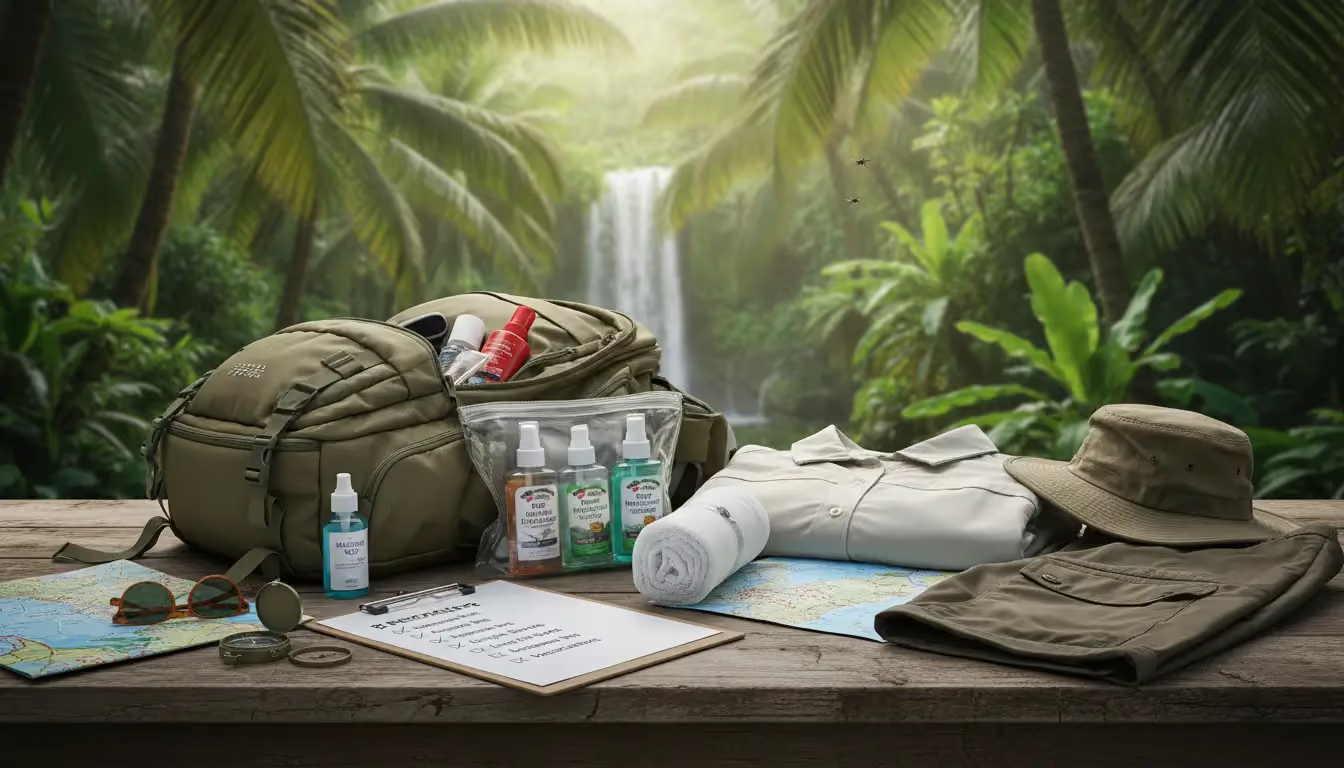
A meticulous checklist is the cornerstone of your travel health strategy. It should begin with a detailed review of your destination country and its specific hazards. Is it an active zone for yellow fever or Japanese encephalitis? Your checklist must include physical barriers such as a mosquito net, which is indispensable whenever lodging cannot guarantee insect-proof accommodations.
In addition, your travel kit should include topical solutions and preventive medications. Wondering how to pack without leaving out the essentials? Prioritize systematically: first your sleep protection, then daywear (long clothing), and finally chemical active ingredients. This structured approach guarantees you have every tool to fight off infestations, regardless of any unexpected challenges on the ground.

What vaccines and basic medications should you plan for based on your destination?
Vaccination is your fundamental biological shield. Depending on your destination, certain vaccines are mandatory or strongly advised. For instance, yellow fever vaccination is an entry requirement in several countries across Africa and South America. It is essential to consult a doctor before departure to bring your vaccines up to date and determine whether you need chemoprophylaxis for malaria.
Alongside vaccines, essential basic medications must be in your first aid kit: pain relievers to manage headaches (often the earliest symptom of a viral infection) and oral rehydration salts. Mosquito protection also relies on priming your immune system. Never overlook international public health guidelines, as they are built on up-to-the-minute epidemiological data.
Which mosquito net should you bring for a trip to the tropics?
A mosquito net is the most cost-effective investment for protecting against mosquitoes while traveling. To be truly effective against disease vectors, it should feature a fine mesh (meeting WHO standards) and, ideally, be treated with a long-lasting insecticide. During travel in the tropics, accommodation standards can vary widely; bringing your own net guarantees nights free of mosquito bites.
Compact, lightweight models are readily available and easy to pack in a backpack. Look for simple suspension systems (like a single hanging point) to adapt to any room layout. By keeping female mosquitoes away from their host while you sleep, you cut off the primary route of disease transmission. It is an eco-friendly, lasting solution that Garden Reclaimer strongly recommends for safeguarding restorative sleep.
How do you choose the best mosquito repellents for an infested area?
In an infested area, choosing a repellent should never be left to chance. Opt for mosquito repellents formulated with gold-standard active ingredients such as DEET (at 30% to 50% concentrations), Picaridin (Icaridin), or IR3535. These compounds have proven they can effectively protect against the most aggressive mosquitoes for hours at a time. The efficacy of any insect repellent depends on its longevity and its resistance to sweat—a key factor in the heat of the tropics.
Repellents must be applied thoroughly to all exposed skin. Take care, however, when selecting products for pregnant women or young children, who require dedicated formulations. An effective mosquito repellent routine should also be paired with clothing treatment. This dual chemical defense is the most dependable way to fight off persistent insect swarms in humid rainforests or wetlands.
What clothes should you wear to avoid getting bitten while outdoors?
Wearing protective clothing is a simple, often underestimated measure that is vital to prevent bites. Choose loose-fitting, long-sleeved garments in lightweight fabrics, preferably in light colors. Dark shades tend to attract mosquitoes, while tight-fitting clothes allow a mosquito to pierce straight through the weave. The goal is to leave as little skin accessible as possible.
For optimal protection, treating your clothes with permethrin is highly recommended before you travel. This approach protects effectively even through multiple wash cycles. By combining a topical skin repellent with treated clothing, you build a protective chemical shield that deters most mosquito species—the preferred method for professionals working in challenging environments.

How can you protect yourself from mosquitoes while traveling, depending on the time of day?
Mosquito behavior varies significantly depending on your destination and the local species. The Anopheles mosquito, which transmits malaria, feeds predominantly from dusk to dawn. In contrast, Aedes, the vector for dengue and chikungunya, bites primarily during daylight hours. Knowing how to protect yourself therefore requires vigilance around the clock.
Exercise extra caution at dusk, when the number of active mosquitoes surges dramatically. Reapply your repellent strictly according to the product guidelines. Never let your guard down; getting bitten by a mosquito during a brief lapse can be all it takes to contract a debilitating illness. Consistency is the secret to dependable mosquito protection.
What specific precautions are needed for pregnant women and children?
Pregnant women and young children are at elevated risk when it comes to mosquito-borne illnesses. Certain chemical active ingredients in standard insect repellents may be contraindicated. Always inspect product labels carefully and select suitable repellents, while maximizing physical defenses such as stroller netting and full-coverage clothing.
For these vulnerable groups, environmental sanitation is vital. Eliminating standing water around your living quarters keeps local insect populations in check. Mosquito protection must be comprehensive and continuous. A consultation with a pediatrician or obstetrician prior to travel is essential to finalize a safe product checklist that poses no risk to expectant mothers or infants.
How do you treat a bite to avoid secondary infection in a tropical environment?
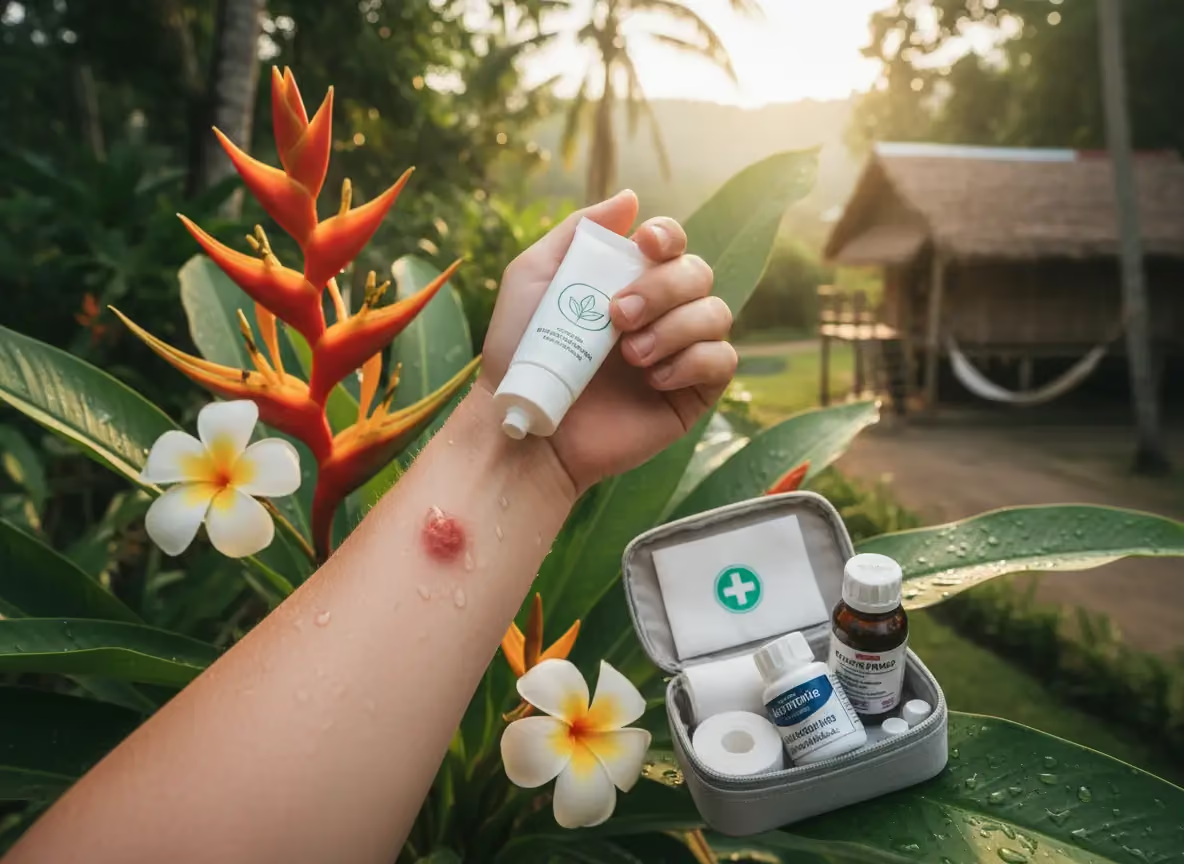
Even with thorough precautions, you may still get bitten by a mosquito. Your immediate priority should be to resist scratching the bite, preventing damage to the skin barrier. In a tropical climate, heat and humidity accelerate bacterial growth, meaning a simple itch can swiftly turn into an infected sore. Maintaining good local hygiene is essential.
Apply an antiseptic solution and, if necessary, an anti-itch cream. If you develop unusual swelling, spreading redness, or a fever, seek medical evaluation promptly. A mosquito injects anticoagulants that trigger an inflammatory response; managing this reaction with appropriate basic medications prevents avoidable complications that could disrupt your trip.
Focus on vector biology: Understand the enemy to better counter it
The success of your mosquito protection depends on a thorough understanding of how female mosquitoes behave. Unlike males, which feed on flower nectar, females need blood proteins to develop their eggs. In the tropics, competition is fierce, and the insect has evolved thermal and chemical receptors with pinpoint precision. They can detect the carbon dioxide in your breath from over 100 feet away. This is where the Garden Reclaimer strategy shines: the goal is not merely to repel, but to actively disrupt the pest's sensory tracking systems.
Every infested area has its own dynamics. For example, in South America, the Aedes aegypti mosquito has colonized urban areas, breeding in the smallest container of clean water. In contrast, in the forests of Central Africa, the Anopheles mosquito prefers stagnant, shaded water. This distinction is crucial for properly planning your route. If you are traveling through mangrove or dense forest areas, the density of mosquitoes per cubic meter can become crippling without professional gear. Your checklist must therefore be tailored not only to the country, but to the specific biome you plan to explore.
What are the final recommendations for a worry-free stay?
Ultimately, the success of your tropical trip depends on your ability to anticipate biological threats. Mosquito protection relies on a coordinated set of measures: vaccination, physical barriers, and the sensible use of repellents. By following this checklist, you give yourself the means to make the most of your destination without the fear of disease vectors.
Garden Reclaimer supports you in taking back your comfort, even on the other side of the world. The fight against mosquitoes is a battle of precision that demands the best tools. Stay vigilant, learn about the specifics of each tropical region, and remember that prevention is always less costly than treatment. Safe travels to all savvy explorers!
Summary of key points for your protection:
- Medical consultation: Schedule an appointment with a doctor before departure for vaccines (yellow fever, etc.) and malaria medication.
- Mechanical barrier: An impregnated mosquito net is your best ally for the night.
- Chemical protection: Use repellents containing DEET or Icaridin and treat your clothing with permethrin.
- Clothing: Opt for long, loose-fitting, and light-colored clothing to minimize visual attraction and skin exposure.
- Time-based vigilance: Protect yourself 24/7, as different mosquito species are active during the day and night.
- Hygiene: Disinfect every bite to prevent skin infections in humid environments.
FAQ: Optimizing your mosquito protection
What is the most effective repellent in tropical zones?
For maximum effectiveness, 50% DEET remains the global gold standard. However, depending on your destination country, Picaridin may be preferable because it is gentler on plastics and synthetic fabrics while remaining just as effective against Anopheles and Aedes mosquitoes.
Can you use a non-impregnated mosquito net?
Yes, but it is less reliable. Treatment kills any mosquito that lands on the netting, preventing it from finding a gap to slip through. In infested areas, an insecticidal net provides significant extra security to protect you effectively.
How can you change your behavior to avoid attracting mosquitoes?
Avoid strong perfumes and scented cosmetics that can attract mosquitoes. Likewise, try to stay as cool as possible, as body heat and carbon dioxide emissions (from breathing and sweating) are the primary detection cues for female mosquitoes.
What are the most common mosquito-borne diseases?
Malaria remains the primary threat, followed by dengue, chikungunya, and the Zika virus. Yellow fever is also present, but it can be prevented through vaccination. Every trip to the tropics requires a specific risk assessment.
Are mosquito repellent bracelets effective?
No. In tropical areas, health authorities consider mosquito bands insufficiently effective. They only protect a very limited zone around the wrist. To protect against mosquitoes, nothing beats thoroughly applying repellents to all exposed skin and wearing treated clothing.
How should you pack your medical kit based on your destination?
Your kit should be adapted to the length of your stay and how far you will be from medical facilities. Always include pain relievers (acetaminophen), a thermometer, bandages, and your preventive medications for local diseases. Your checklist should be reviewed and approved by a travel medicine expert.
Would you like me to delve deeper into the specifics of a particular destination, such as Southeast Asia or Central Africa, to fine-tune your mosquito prevention strategy?