


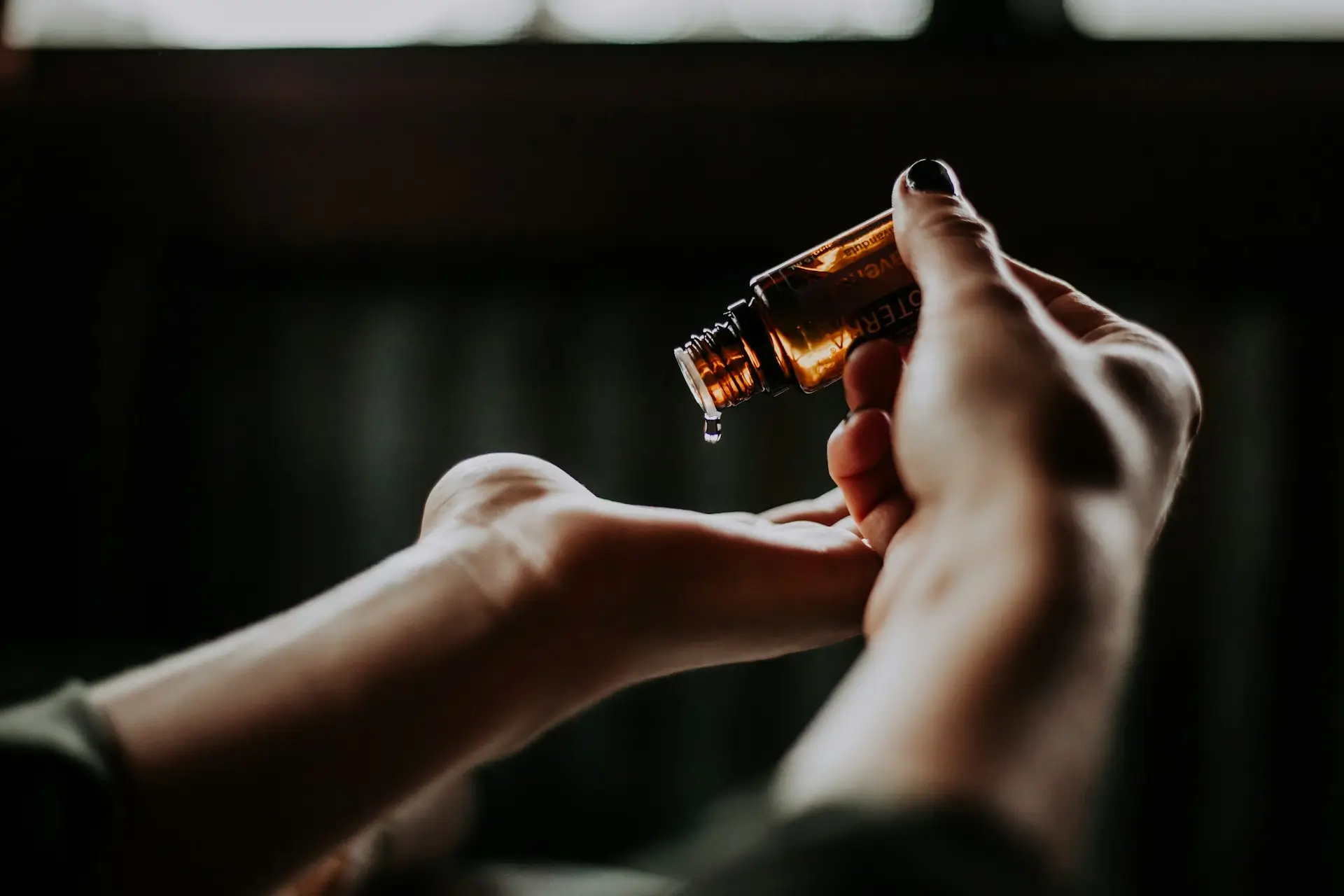
Choosing a good mosquito repellent essential oil requires a bit more thought than one might imagine. Pharmacy shelves and specialized websites are overflowing with bottles making similar promises, but their actual effectiveness varies from twofold to fivefold depending on the active molecule, dilution, and method of use. At Garden Reclaimer, creators of the GRéco mosquito trap, we receive questions every season from gardeners looking for a more natural solution than DEET sprays. This guide aims to detail the mosquito repellent essential oils that truly work in 2026, their scientifically documented limitations, and the strategy to adopt for combining personal use with lasting outdoor protection. To learn more about our comprehensive approach, you can consult our autonomous mosquito trap designed in Lyon.
Before choosing a bottle, it's important to understand what essential oils actually do. They don't kill mosquitoes. Instead, they disrupt the olfactory receptors of female mosquitoes that detect CO₂, lactic acid, and other volatile compounds you emit. This chemical interference reduces the likelihood of bites within a 1 to 2-meter radius around the skin or diffuser, but the effect wears off in 1 to 2 hours. Therefore, it offers temporary protection, complementing a permanent capture device installed in the garden.

The 6 Most Effective Mosquito Repellent Essential Oils
Six mosquito repellent essential oils stand out in scientific literature. Their effectiveness has been measured in comparative studies published by INRAE, Anses, and several reference journals. Here are the figures and modes of action for each.
Java Citronella (Cymbopogon winterianus)
This is the mosquito repellent essential oil that is most well-known, but also the most misused. Its active molecule, citronellal, achieves 50 to 65% repellent efficacy when applied topically and diluted, according to comparative studies published in 2023. The duration of action is 60 to 90 minutes, compared to 6 to 8 hours for 30% DEET. Dilute it to a maximum of 10% in a vegetable oil (jojoba, sweet almond) before applying to forearms and ankles. Avoid the face and mucous membranes.
Rose Geranium (Pelargonium graveolens)
Its geraniol approaches 60% efficacy in cage tests. This essential oil is better tolerated than citronella on sensitive skin and releases a more pleasant floral scent when diffused. However, it doesn't keep well after opening, so plan for a maximum 10 ml bottle per season. Therefore, don't stock a large format that you won't use within a few months.
Lemongrass (Cymbopogon citratus)
Rich in citral, lemongrass shows 40 to 55% efficacy against Aedes aegypti and Culex pipiens in INRAE protocols. Its pronounced lemony scent is popular with most users. However, it is dermocaustic when undiluted, so it must be diluted. Lemongrass excels in homemade sprays when combined with other mosquito repellent essential oils, particularly geranium and spike lavender.
Spike Lavender (Lavandula latifolia)
Not to be confused with true lavender (officinal), spike lavender is more camphorated and more repellent. It achieves 35 to 50% efficacy, which is respectable for a versatile essential oil that also soothes bites afterward. So, one essential oil for two uses, practical for travel. It is well tolerated by adults but remains contraindicated during the first three months of pregnancy and for children under 6 years old.
Lemon Eucalyptus (Corymbia citriodora)
It is probably the mosquito repellent essential oil the most effective on the consumer market. Its citronellal, combined with eucalyptol, reaches 65 to 75% efficacy, and the PMD (para-menthane-3,8-diol) formulation extracted from this essential oil is officially recommended by the US CDC as a natural alternative to DEET. The duration of action is 4 to 6 hours, triple that of classic citronella. However, it is prohibited for children under 3 years old and not recommended throughout pregnancy.
Peppermint (Mentha piperita)
Menthol disrupts mosquitoes' olfactory receptors with 30 to 45% efficacy. This is less than the other essential oils on this list, but peppermint has an advantage: it instantly soothes itching after a bite. So, keep a bottle in your family first-aid kit for curative use, rather than purely for prevention.
Comparative table of mosquito repellent essential oils in 2026
To help you choose the mosquito repellent essential oil suited to your situation, here is a synthetic comparison of the six options. Efficacy is measured as the percentage reduction in bites during a controlled 30-minute exposure in an entomological cage.
How to use a mosquito repellent essential oil in practice?
An essential oil mosquito repellent should never be used undiluted on the skin. The aromatic concentration of essential oils can cause irritation, burns, and photosensitivity if you apply the contents of the bottle directly. Here are three methods of use approved by aromatherapists in 2026.
Diluted Topical Application
Mix 5 to 10% essential oil in a neutral vegetable oil (jojoba, sweet almond, fractionated coconut). For 30 ml of preparation, use 30 to 60 drops of essential oil. Apply to exposed areas (forearms, ankles, neck) every 1 to 2 hours. Avoid mucous membranes, the eye contour, and wounds. Perform a patch test on the inside of your elbow 24 hours before first use to check for allergies. For children aged 6 to 12, halve the concentration.
Outdoor Atmospheric Diffusion
On a terrace or in a pergola, an ultrasonic diffuser loaded with 4-5 drops of essential oil per 100 ml of water creates a repellent cloud over 2 to 3 meters. Therefore, place the diffuser at table height during meals. Citronella torches follow the same principle in a more rustic version, but their range is limited to 1 meter around the wick. This diffusion never replaces personal protection if mosquitoes are numerous.
Multi-purpose Homemade Spray
For 100 ml of homemade spray, mix 70 ml of distilled water, 20 ml of 70% alcohol, and 30 to 50 drops distributed among lemon eucalyptus, geranium, and lemongrass. This synergy of three essential oils rather than just one extends the repellent effect up to 2 hours and limits tolerance phenomena. Shake well before each spray, and store the bottle away from light. The detailed recipe for homemade repellents is available on our blog.

Essential Precautions and Contraindications
An essential oil mosquito repellent is not harmless. Natural does not mean innocuous, and the active concentrations of essential oils can cause serious adverse effects if usage rules are not followed. TheAnses regularly publishes recommendations on repellent essential oils.
Pregnant and Breastfeeding Women. The majority of repellent essential oils are contraindicated during the first trimester of pregnancy. Lemon eucalyptus, peppermint, and spike lavender should be avoided throughout pregnancy due to their neurotonic and hormone-mimicking effects. Opt for Ceylon citronella for atmospheric diffusion only, and always after medical advice.
Children Under 3 Years Old. No repellent essential oil is recommended for topical application at this age. The immature enzymatic system does not properly metabolize aromatic molecules, and mucous membranes are particularly permeable. For a baby's room, use a crib mosquito net rather than a diffuser. However, from 3 years old, lemon eucalyptus diluted to 5% can be considered for use on clothing (never directly on the skin).
Pets. Cats are particularly sensitive to EOs due to a glucuronyl transferase enzyme deficiency. Peppermint, eucalyptus, and tea tree are toxic to them, even when diffused. Therefore, avoid diffusing any EOs in a room where a cat spends time. Dogs tolerate them better, but avoid direct application to their fur.
Photosensitization. Some citrus EOs (lemon, bergamot, grapefruit) are photosensitizing and can cause brown spots if the skin is exposed to the sun within 6 hours afterwards. Prefer applying them in the evening or cover treated areas during the day.
Limitations of essential oils: why they are never enough on their own
A mosquito repellent essential oil well-chosen protects your skin for 1 to 2 hours, sometimes 4 to 6 hours for lemon eucalyptus. But a summer evening in the garden lasts 3 to 5 hours, or even longer if you dine outdoors. So you need to reapply every 90 minutes, otherwise the bites will resume. This time constraint is the first limitation of EOs compared to synthetic repellents.
The second limitation concerns the range of action. A diffused EO covers 2 to 3 meters around the diffuser, and topical application is limited to the treated areas. But mosquitoes will find a way around. A protected arm doesn't prevent a bite on an forgotten ankle. So the coverage is partial, and the psychological effect of the scent has no power beyond the olfactory perimeter. To understand all available solutions, consult our comparison of science-backed natural mosquito repellents.
The third limitation is environmental. EOs only act on flying mosquitoes that approach you. They do not eliminate the mosquito population in your garden. A female repelled by your EO will return to your home to lay eggs in a saucer full of water, and 100 to 300 new larvae will emerge 7 to 14 days later. Therefore, the use of EOs must be part of a global strategy that combines larval prevention and active adult capture.
This is exactly the role of an outdoor mosquito trap like the GRéco. It sucks in females attracted by a plume of CO₂ + heat + pheromones mimicking the human signal, over a radius of up to 60 meters. So while your mosquito repellent essential oil protects your skin for the evening, the trap reduces the garden's mosquito population by 85 to 95% over the season. The two devices operate on complementary scales, and their combination is what we recommend to the majority of our residential clients.

Comprehensive strategy: combining EOs and a mosquito trap for lasting protection
The most effective mosquito protection in 2026 layers three complementary levels of action. Here's how to implement them practically, without ever exceeding health recommendations.
Level 1: on-demand body protection (€5-15 per month). A homemade spray or a ready-to-use bottle based on lemon eucalyptus covers exposed areas during aperitifs and dinner on the terrace. Reapply every 2 hours to forearms, ankles, and neck. It's the quickest way to stop an immediate attack, but it doesn't act on eggs or larvae.
Level 2: Larval prevention in the garden (€15-30 per season). Eliminate standing water (saucers, gutters, toys) and place Bti tablets in ornamental ponds. A weekly inspection routine breaks the breeding cycle before eggs develop into biting adults. However, this level does not address adults coming from neighboring gardens or public spaces.
Level 3: Active perimeter capture (€50-100 per operating season). A GRéco trap placed between dense vegetation and your living area captures up to 95% of female mosquitoes over 6 to 8 weeks, with no gas cylinder or refills needed. So while you enjoy your patio, protected by your mosquito repellent essential oil, the trap continuously reduces the mosquito population throughout the entire garden. Discover the full operation of the GRéco trap and its patented atmospheric concentration reactor.
This three-level combination provides a 90-95% reduction in bites over the entire season, without any synthetic chemicals. This is the approach we recommend to all gardeners who practice permaculture, organic gardening, or simply want to enjoy their outdoor space without compromising biodiversity. For personalized advice on placing your trap based on your garden's layout, you can request a free consultation with our team.
Mosquito Repellent Essential Oil: The Ideal Usage Calendar for 2026
The timing for using repellent essential oils follows the seasonality of mosquitoes in mainland France. Adapt your strategy to the month and your region.
March-April: the first females emerge in the south, then in the north. Prepare your homemade spray for the season and install the GRéco trap in parallel. Initial skin applications are rare at this stage, but larval breeding site inspection begins.
May-June: the pressure increases. This is the time to test your mosquito repellent essential oil of choice during a test evening to adjust the concentration. You identify the areas in your garden where mosquitoes concentrate and guide the placement of the trap.
July-August: peak season. Essential oils become a daily essential for outdoor evenings. The GRéco trap runs continuously, accumulating catches. This essential oil + trap synergy offers the best comfort-to-effort ratio on the market.
September-October: the pressure eases. Nighttime temperatures drop below mosquito activity thresholds (12-14 °C). You space out skin applications and prepare the trap for winter storage. Take advantage of the calm to review the season and adjust volumes for 2027.
FAQ: Mosquito Repellent Essential Oil
What is the best mosquito repellent essential oil in 2026?
Lemon eucalyptus (Corymbia citriodora) is the best mosquito repellent essential oil in 2026, with 65 to 75% effectiveness and a duration of action of 4 to 6 hours. Its active molecule, citronellal coupled with PMD, is officially recommended by the US CDC as a natural alternative to DEET. However, it is prohibited for children under 3 years old and not recommended during pregnancy. For sensitive individuals, Java citronella remains the benchmark with 50 to 65% effectiveness and better tolerance.
Can mosquito repellent essential oil be applied neat to the skin?
No, never. Pure essential oil causes irritation, burns, and photosensitivity. Always dilute it to 5-10% in a neutral carrier oil such as jojoba, sweet almond, or fractionated coconut oil. For 30 ml of preparation, use 30 to 60 drops of essential oil. Always perform a patch test on the inside of your elbow 24 hours before the first application to check for allergies. For children between 6 and 12 years old, halve the concentration and limit application to clothing rather than skin.
How long does the effect of a mosquito repellent essential oil last?
The duration of action varies depending on the active molecule. Java citronella, rose geranium, and lemongrass protect for 60 to 90 minutes after skin application. Spike lavender lasts 1 to 2 hours. Peppermint is limited to 30 to 60 minutes. Lemon eucalyptus is the only essential oil that provides 4 to 6 hours of protection thanks to its PMD. Therefore, reapply every 90 minutes for classic essential oils, or every 4 hours for lemon eucalyptus, especially after sweating or swimming.
Is a mosquito repellent essential oil enough to protect a garden?
No, a mosquito repellent essential oil only protects treated skin areas and a 2 to 3-meter radius when diffused. It does not affect the mosquito population in the garden, which continues to lay eggs in stagnant water and proliferate. For effective outdoor protection, combine the topical use of essential oils with a mosquito trap like the GRéco, which captures up to 95% of female mosquitoes within a 60-meter radius, without chemicals. This two-pronged approach provides a 90 to 95% reduction in bites over the season.
Are mosquito repellent essential oils dangerous for children?
Yes, some essential oils are contraindicated for children. No repellent essential oil is recommended for topical application before 3 years of age, as an immature enzymatic system does not properly metabolize aromatic molecules. Between 3 and 6 years old, only lemon eucalyptus diluted to 5% is advisable, and only on clothing. From 6 years old, Java citronella and rose geranium become acceptable in low dilution (5% maximum). For a baby's room, prefer a crib mosquito net over an essential oil diffuser.
How to make a homemade mosquito repellent spray with essential oils?
To make an effective homemade spray, mix 70 ml of distilled water, 20 ml of 70% alcohol, and 30 to 50 drops of repellent essential oils. The ideal synergy combines 20 drops of lemon eucalyptus, 15 drops of rose geranium, and 10 drops of lemongrass in a 100 ml spray bottle. This combination extends the repellent effect up to 2 hours and limits tolerance phenomena. Shake well before each spray and store the bottle away from light. The preparation can be stored for 2 to 3 months after making.